Key Takeaways
· Wedge wire screens use V-shaped slots to separate solids from wastewater.
· Slot opening, screen size, flow rate, and material grade should match the wastewater treatment application.
· Stainless steel grades such as 304, 316L, and duplex stainless steel can be selected according to wastewater conditions.
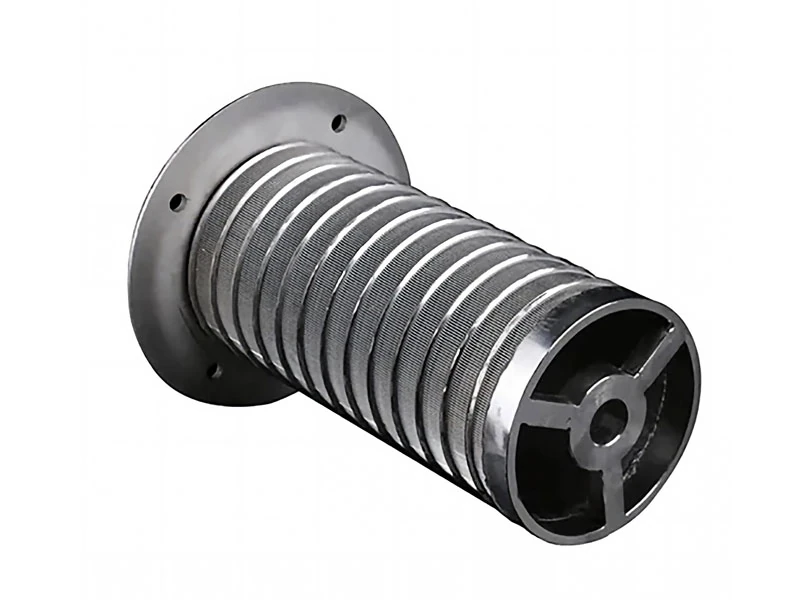
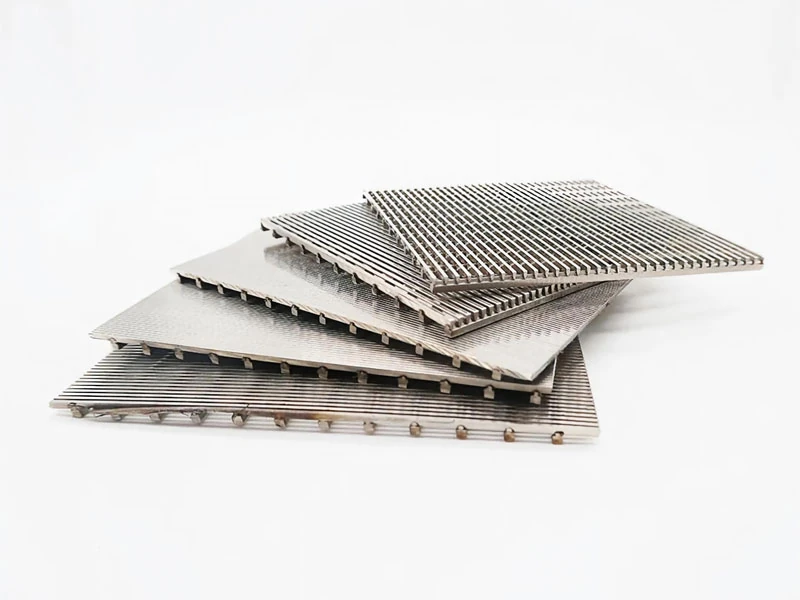
· Flat, curved, cylindrical, and basket screens are available for different treatment equipment.
· A complete RFQ should include wastewater type, target solids, flow rate, dimensions, slot opening, and material requirements.
What Is a Wedge Wire Screen?
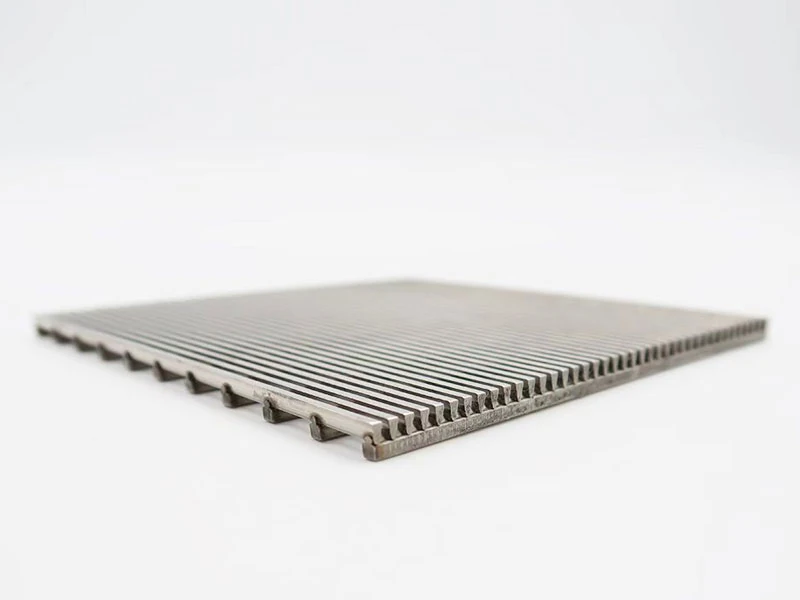
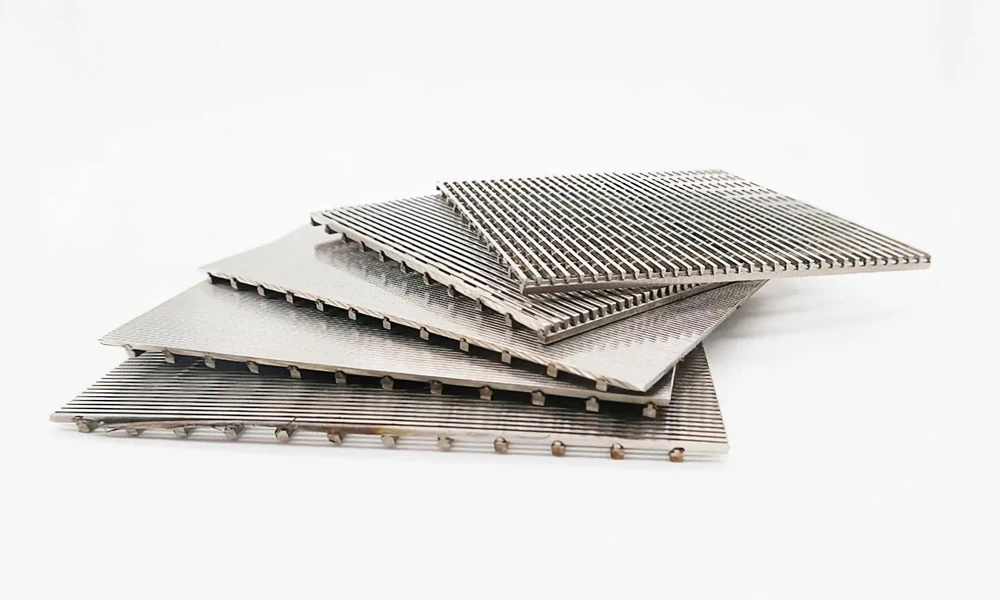
A wedge wire screen is made by welding profile wires to support rods. The wires form continuous V-shaped openings.
Unlike woven mesh, the wires are fixed by welding. This gives the screen a rigid structure for screening and solid-liquid separation.
The opening between two profile wires is called the slot opening. It determines which particles can pass through the screen.
How Wedge Wire Screens Work
During operation, liquid passes through the slots while larger solids are retained on the screen surface. Because the V-shaped slot becomes wider toward the inside, particles are less likely to become tightly lodged in the opening.
Wedge wire screens are sometimes described as wedge wire mesh. However, they are manufactured by welding profile wires rather than weaving wires together.
Applications of Wedge Wire Screens in Wastewater Treatment
Wastewater quality varies by source. Municipal wastewater may contain larger debris, while industrial wastewater often contains process solids. Mining wastewater can carry abrasive particles.
Wedge wire screens can be used at different treatment stages. The screen is selected based on the solids that need to be removed.
| Application | Purpose | Key Selection Factor |
| Primary screening | Removes larger solids before further treatment. | Slot opening |
| Fine screening | Removes smaller particles from wastewater. | Slot opening and flow rate |
| Sludge thickening | Separates water from sludge. | Solids concentration |
| Sludge dewatering | Reduces water content in sludge. | Sludge characteristics |
Benefits of Stainless Steel Wedge Wire Screens
Stainless steel is widely used for wedge wire screens in wastewater treatment. It offers good corrosion resistance and mechanical strength. The welded structure also provides a stable screening surface.
Precise and Continuous Slot Openings
The slot opening can be controlled during manufacturing. This allows the screen to retain particles within a specified size range.
The opening should still be selected according to the solids that need to be removed. Particle size, flow rate, and solids loading should be considered together.
High Strength
Profile wires are welded to support rods, creating a rigid screening surface. This structure provides good mechanical stability during operation.
For heavy-duty wastewater applications, the wire profile and support rod design should be checked before production because they affect the overall strength of the screen.
Corrosion Resistance
Stainless steel performs well in many wet environments, which makes it suitable for a wide range of wastewater applications.
304 and 304L may be considered for general conditions. When chloride exposure is higher, 316 or 316L may be more suitable because molybdenum improves resistance to localized corrosion.
More demanding conditions may require duplex stainless steel such as 2205 or 2507. The final grade should be selected after the wastewater composition, temperature, and cleaning conditions have been reviewed.
Easy Cleaning
Regular cleaning is required because solids can build up on any wastewater screen.
Depending on the application, screens can be cleaned by backwashing, water flushing, or mechanical methods. The cleaning method should match the type and amount of solids being removed.
Key Specifications of a Wastewater Treatment Screen
The right screen should match the wastewater and treatment process. The main specifications are listed below.
| Specification | What It Determines |
| Slot opening | Determines the size of particles that can pass through. |
| Open area | Affects the amount of liquid that can pass through. |
| Profile wire | Forms the screening surface. |
| Support rod | Supports the profile wires. |
| Screen size | Determines whether the screen fits the equipment. |
| Stainless steel grade | Determines suitability for different wastewater conditions. |
How to Select a Wedge Wire Screen for Wastewater Treatment
The right screen should be selected according to the actual wastewater rather than screen size alone. First, define the separation target. Then check the flow and installation requirements.
Start With the Wastewater and Separation Target
Identify what the screen needs to remove. The wastewater source also matters because municipal wastewater can differ significantly from industrial wastewater.
Particle size should be confirmed before the slot opening is selected. If fibers or hair are present, the V-shaped slot can help reduce the risk of material becoming tightly lodged. When sand is present, wear resistance should also be considered.
Match the Slot Opening to Flow Requirements
The slot opening controls which particles are retained. A smaller opening can capture finer solids, but it may also increase flow resistance.
For this reason, flow rate should be considered at the same time. The required screen area depends on the expected flow. A manufacturer can review these details to help determine a suitable screen size and configuration.
Confirm Material and Installation Requirements
The stainless steel grade should match the wastewater conditions. More corrosive applications may require a higher-grade stainless steel.
The screen must also fit the equipment correctly. Before ordering, confirm the dimensions and connection method. For replacement screens, existing drawings or photos can help verify the required design.
Jing Zhou Metal Stainless Steel Wedge Wire Screens
Once the application requirements are clear, the next step is to select a manufacturer that can produce the required screen design.
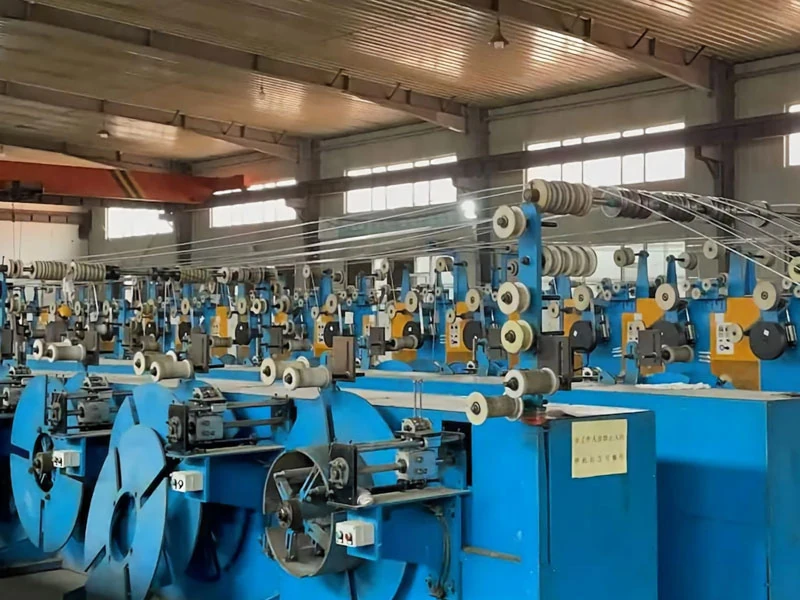
Jing Zhou Metal provides stainless steel wedge wire screens for screening, filtration, dewatering, and solid-liquid separation.
Multiple Screen Configurations
Jing Zhou Metal offers several screen configurations, including flat wedge wire screen panels, curved DSM screens, wedge wire screen cylinders, and wedge wire screen baskets.
These configurations can be designed for different wastewater treatment equipment and separation requirements.
Custom Slot Openings and Materials
Jing Zhou Metal can produce slot openings from 0.1 to 10 mm according to application requirements.
Available stainless steel grades include 304, 304L, 316, 316L, 321, 430, 2205, 2507, and 8825. Wire profiles and support rod arrangements can also be customized for different screen designs.
Quality Control and Global Supply
Jing Zhou Metal is ISO 9001 certified and applies quality control protocols to each production batch.
The company supplies wedge wire products to customers in more than 50 countries. Global shipping is available for overseas buyers.
Request a Custom Wedge Wire Screen
If you are looking for a wedge wire screen manufacturer, Jing Zhou Metal can review your application before production.
When requesting a quotation, provide the wastewater type, target solids, slot opening, flow rate, screen dimensions, and material requirements. Drawings or photos are also useful for replacement screens.
Based on these details, Jing Zhou Metal can review the required screen configuration and prepare a quotation.
FAQ
Q1. What is the difference between coarse and fine screening in wastewater treatment?
Coarse screens are generally used to remove larger debris, fibers, and other solids. Typical openings can be 6 mm or larger.
Fine screens are used to remove smaller solids, with typical openings of 1.5–6 mm. Very fine screening can use openings in the 0.2–1.5 mm range.
Jing Zhou Metal can customize wedge wire screens with slot openings from 0.1 to 10 mm according to application requirements.
Q2. Is a smaller slot opening always better for filtration?
No. A smaller slot opening can retain finer solids, but it is not always the better choice.
The selection should also consider influent solids load, flow rate, clogging risk, cleaning method, and allowable head loss. These factors need to be evaluated together when the screen is designed.
Q3. Which stainless steel grade is suitable for corrosive wastewater?
316 or 316L may be considered when chloride exposure is higher. For more demanding conditions, duplex stainless steel such as 2205 or 2507 may also be evaluated.
The final grade should be confirmed based on wastewater composition, temperature, and cleaning conditions.
Q4. Can wedge wire screens be made to custom dimensions?
Yes. Screen size, slot opening, wire profile, support rod arrangement, and screen configuration can be customized according to the application.
Q5. What information should I provide when requesting a quotation?
Provide the wastewater type, target solids, flow rate, slot opening, screen dimensions, material requirements, and installation details. Drawings or photos can also help when a replacement screen is required.
Conclusion
Choosing a wedge wire screen starts with the wastewater and the required separation. The screen should suit the solids that need to be removed, the expected flow, and the operating environment.
Slot opening is an important specification, but it should not be considered alone. Material grade, screen configuration, and installation requirements should also be confirmed before production.
Looking for a custom wedge wire screen for wastewater treatment? Contact Jing Zhou Metal with your application details. Our team can review your requirements and provide a suitable screen design and quotation.