Key Takeaways
- A Wedge Wire Drum Screen provides continuous solid-liquid separation for wastewater, food processing, pulp and paper, mining, chemical processing, and manure treatment.
- Its V-shaped slots can help reduce particle lodging and clogging under suitable operating conditions.
- A high open area allows efficient liquid flow while maintaining precise separation.
- Welded profile wires and support rods provide a stable screening surface for continuous operation.
- Slot opening, drum size, material, and flow rate should be considered when selecting a drum screen.
- Custom drum dimensions and slot openings are available when standard specifications do not fit existing equipment.
Introduction
Screening is widely used as a preliminary treatment step because unwanted solids can damage downstream equipment. The U.S. Environmental Protection Agency (EPA) notes that wastewater screening helps remove solids that may cause clogging, mechanical wear, and maintenance problems.
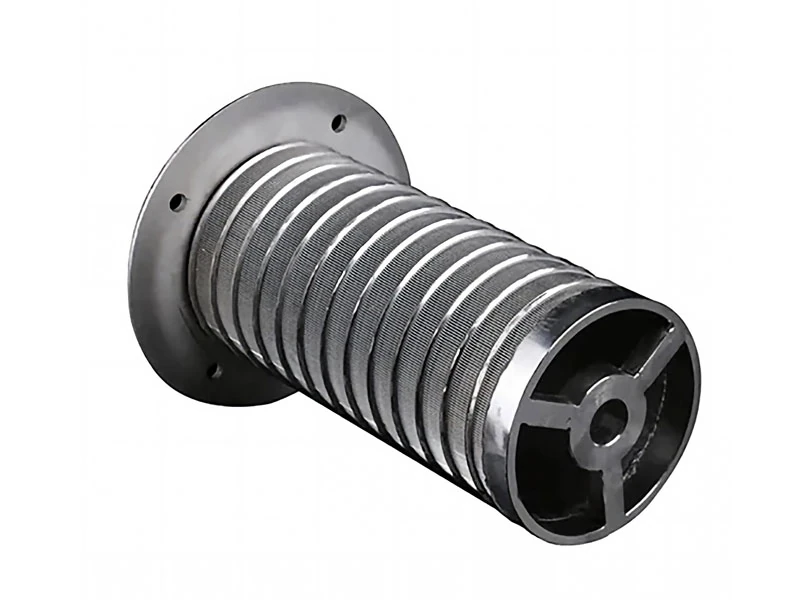
A wedge wire drum screen is designed for continuous solid-liquid separation. It uses V-shaped profile wires to form precise slots across the drum surface. Liquid passes through the openings, while larger solids are retained.
Because the slots are tapered, particles are less likely to become trapped inside the screen. This can help maintain stable flow during continuous operation.
But where is a wedge wire drum screen most suitable? The answer depends on the feed material, required separation size, and operating conditions. The following sections cover its main applications and selection considerations.
What Is a Wedge Wire Drum Screen?
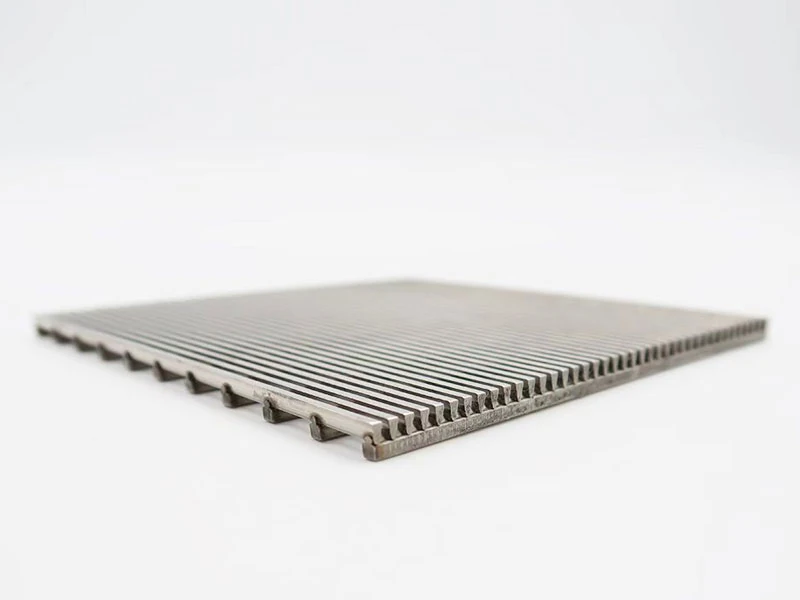
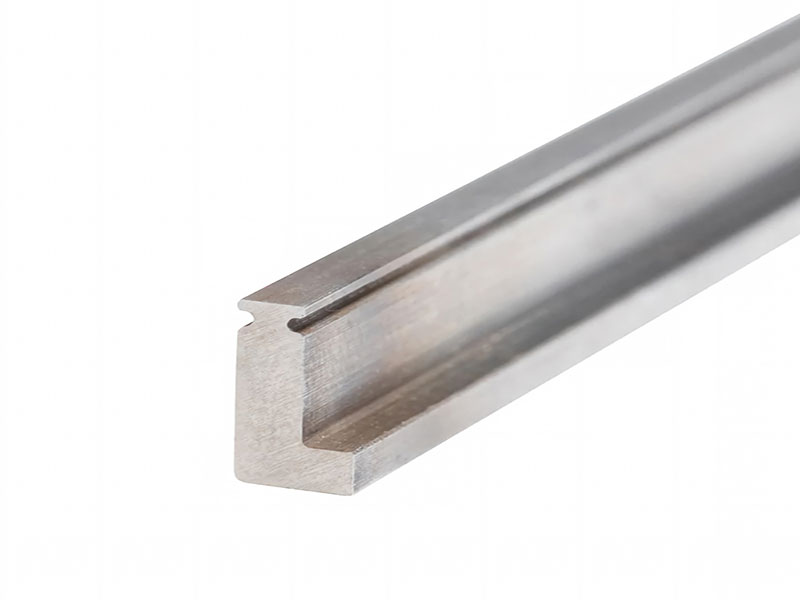
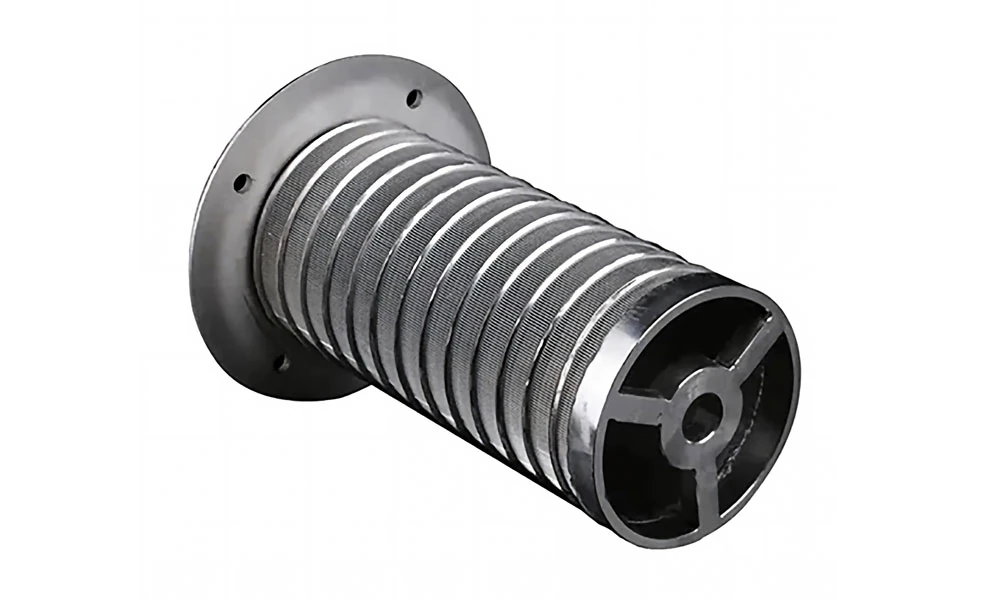
A wedge wire drum screen is a cylindrical screen used for continuous solid-liquid separation. It is usually made by welding V-shaped profile wires to support rods. This process creates continuous slots with controlled openings across the screening surface.
How Does a Wedge Wire Drum Screen Work?
A wedge wire drum screen separates solids from liquid as the cylindrical screen rotates slowly. Liquid passes through the wedge wire slots, while suspended solids remain on the screen surface.
As the drum turns, the retained solids are lifted toward the top. They can then be removed with a scraper or washed away with a spray system. As a result, screening can continue without frequent manual cleaning.
Why Use Wedge Wire Screens in Rotary Drum Screens?
The screen surface affects separation performance, flow, and cleaning requirements. wedge wire screens are often selected for rotary applications because of their slot geometry and welded construction.
V-Shaped Slots Help Reduce Clogging
Slot geometry plays an important role in wedge wire screen design. A V-shaped profile creates a narrow opening at the screening surface and a wider passage inside the screen.
When a particle is small enough to enter the slot, the wider internal passage makes it less likely to become lodged. Although wedge wire screens are not completely clog-free, this design can reduce particle buildup under suitable operating conditions.
Depending on the application, mechanical scraping or backwashing can also be used for cleaning.
Key benefits include:
- reduced tendency for particle lodging
- easier mechanical cleaning or backwashing
- more consistent flow through the screening surface
- lower risk of blinding under suitable conditions
High Open Area Supports Better Flow
According to Jingzhou Metal’s product data, wedge wire screens can provide an open area of approximately 15–65%, depending on the slot opening and profile wire design.
At a 1 mm opening, the open area is approximately:
- wedge wire screen: 35–45%
- perforated plate: 23–30%
Under the same 1 mm opening condition, wedge wire screens can also provide approximately 19–23% higher flow than perforated plates.
Welded Construction Keeps Slots Stable
Profile wires are welded to support rods to create a rigid screening surface. Because the wires are fixed in place, the slot openings can remain stable during continuous rotation.
This is important for rotary drum screens, where the screen must maintain its shape while handling repeated mechanical loads.
Wedge Wire Drum Screen vs. Perforated Plate Drum Screen
Both designs can be used for rotary screening. However, their opening geometry and flow characteristics are different.
| Feature | Wedge Wire Drum Screen | Perforated Plate Drum Screen |
| Opening design | V-shaped continuous slots | round holes |
| Clogging tendency | lower tendency due to tapered slots | higher risk of particle lodging |
| Open area at 1 mm | 35–45% | 23–30% |
| Flow at same 1 mm opening | 19–23% higher | baseline |
| Cleaning | suitable for backwashing and mechanical cleaning | may require more direct cleaning |
| Screen structure | welded profile wires with support rods | perforated sheet |
What Industries Use Wedge Wire Drum Screens?
A wedge wire drum screen is used when solids need to be separated from liquids on a continuous basis. The most suitable application depends on the feed material, required slot size, and operating conditions.
Municipal and Industrial Water Treatment
In water treatment, wedge wire screens can be used as the filter drum in rotary drum screens. They help remove solids before water enters downstream treatment processes.
Typical applications include:
- municipal wastewater: removal of hair, fibers, and larger solids
- industrial wastewater: continuous solid-liquid separation
- cooling water: removal of suspended particles
- desalination: seawater pretreatment
- aquaculture: protection of pumps and membrane units from solids
For wastewater applications, a wastewater treatment screen can be selected according to the required separation size, flow rate, and solids load.
Food and Beverage Processing
Food processing often requires continuous separation during production. wedge wire screens can be used when liquids need to be separated from process residues.
Typical applications include:
- juice processing
- beer brewing
- dairy processing
- sugar processing
- syrup clarification
- fermentation residue separation
For hygienic applications, stainless steel construction is often preferred. The equipment may also be designed to support clean-in-place (CIP) procedures and relevant food hygiene requirements.
Pulp and Paper Processing
wedge wire screens are used in pulp screening and fiber recovery. They can also be used as filter baskets in pressure screening equipment.
Typical applications include:
- pulp screening
- fiber recovery
- white water recovery
- pulp contaminant removal
Mining, Chemical, and Manure Treatment
wedge wire screens can handle applications with relatively high solids content. In mining, they may be used for slurry classification or fine-particle dewatering. In chemical processing, they can support slurry filtration or catalyst recovery.
In livestock operations, wedge wire screens can also be used to separate solids from manure. The slot opening and screen material should be selected according to the feed characteristics.
How to Choose a Wedge Wire Drum Screen Supplier?
Selecting the right supplier is as important as choosing the screen design. Price should not be the only consideration. Slot accuracy, material quality, and fabrication quality all affect long-term performance.
Check Manufacturing Accuracy
Slot size directly affects separation performance. A qualified supplier should be able to control the slot opening within a defined tolerance. The welded structure should also remain stable during continuous operation.
Material selection is equally important. Stainless steel should be considered when the screen will be exposed to corrosive liquids or frequent cleaning.
Look for Custom Manufacturing
A drum screen often needs to fit existing equipment. Standard dimensions may not always be suitable.
A capable supplier should be able to customize the drum diameter, length, slot opening, and connection design. This makes it easier to integrate the filter drum into existing equipment.
Consider Technical Support
Technical support should begin before production. The supplier needs to understand the actual screening conditions before recommending a design.
Flow rate, solids content, particle size, and liquid properties should be reviewed first. The required slot opening can then be selected more accurately.
Why Choose Jingzhou Metal for Wedge Wire Drum Screens?
Jingzhou Metal provides wedge wire drum screens for industrial filtration. Standard specifications are available for different applications. Custom designs can also be produced when standard dimensions do not meet equipment requirements.
Wide Size and Slot Range
The main specifications include:
| Specification | Range |
| screen diameter | 300–2,500 mm |
| screen length | 500–6,000 mm |
| slot opening | 0.02–10.0 mm |
| common slot range | 0.1–6.0 mm |
Custom dimensions can be provided when the standard size does not match the existing equipment.
Built for High-Load Operation
High-flow applications can place significant mechanical loads on the screen. A fully welded structure helps maintain stable slot openings during operation. Where greater strength is needed, additional support rods can be added.
Continuous screening can also lead to wear and material buildup. The tapered slot design helps reduce clogging. Proper profile orientation also helps limit the effect of surface wear on slot accuracy.
Controlled Manufacturing Quality
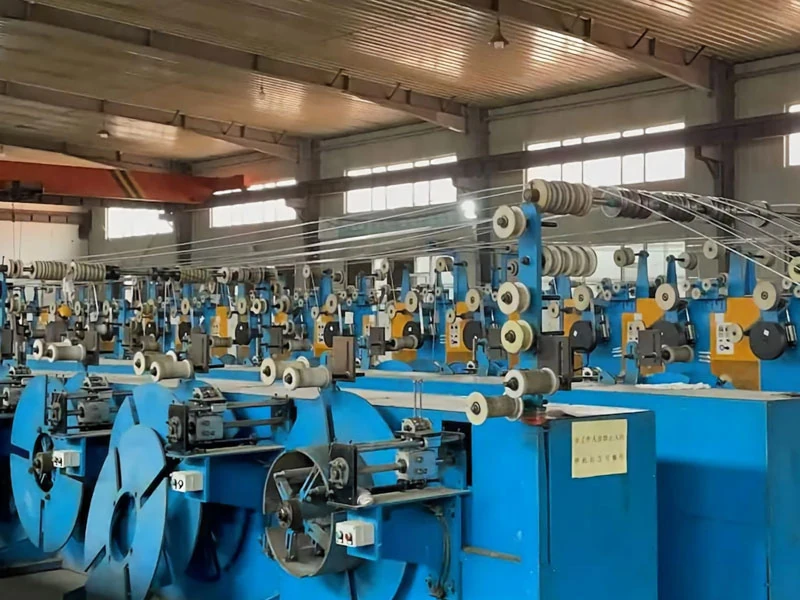
Production accuracy is controlled throughout the welding process. Automated precision welding helps maintain uniform slot openings. Dimensional checks are also carried out during production.
Each drum screen is tested to withstand a minimum differential pressure of 6 kg/cm². The surface is inspected to ensure a smooth, burr-free finish. This design supports efficient backwashing while helping maintain stable flow.
FAQ
Q1. What Is the Difference Between a Wedge Wire Drum Screen and a Perforated Plate Drum Screen?
A wedge wire drum screen uses V-shaped slots, which can help reduce particle lodging. At the same 1 mm opening, it provides approximately 35–45% open area and can achieve 19–23% higher flow. A perforated plate provides approximately 23–30% open area under the same opening condition.
Q2. Does a Wedge Wire Drum Screen Require High Maintenance?
Not necessarily. The tapered slots can reduce clogging, while scrapers or spray cleaning can be added when required. With proper operation and maintenance, the screen can provide a service life of approximately 3–5 years.
Q3. What Slot Size Should I Choose?
The slot size should match the particle size that needs to be retained. Jingzhou Metal provides slot openings from 0.02–10.0 mm, with custom sizes available for specific applications.
Q4. Can the Drum Screen Be Customized?
Yes. The drum diameter, length, slot opening, and connection design can be customized to fit existing equipment.
Conclusion
A wedge wire drum screen is a practical option for continuous solid-liquid separation. Its V-shaped slots can help reduce clogging, while a high open area supports steady liquid flow. The welded structure also provides the strength required for continuous operation.
The right screen should be selected according to the application. Slot opening should match the target particle size, while drum dimensions should suit the required flow rate. Material selection should also reflect the operating environment.
For demanding applications, custom dimensions may be required. Drum size, slot opening, flange design, and support structure can be adjusted to fit existing equipment.
If you need a suitable filter drum, contact Jingzhou Metal to discuss your requirements and find a wedge wire drum screen solution for your application.