Introduction
Picking the right screening media for ore washing, desliming and dewatering directly impacts your separation efficiency, how often you need to carry out maintenance, and overall site operational reliability.
Wedge wire screen panels perform well when you need accurate particle classification (slot openings as fine as 0.02 mm), handling corrosive or hot slurries, and keeping stable open area throughout the service life of the panel.
Polyurethane screen panels fit sites with highly abrasive yet non corrosive ores running at ambient temperatures — where tight slot precision is not a priority, usually for slot sizes above 0.15 mm.
For most mine sites dealing with changing ore characteristics and varying process conditions, wedge wire panels offer better versatility and more consistent long run performance.
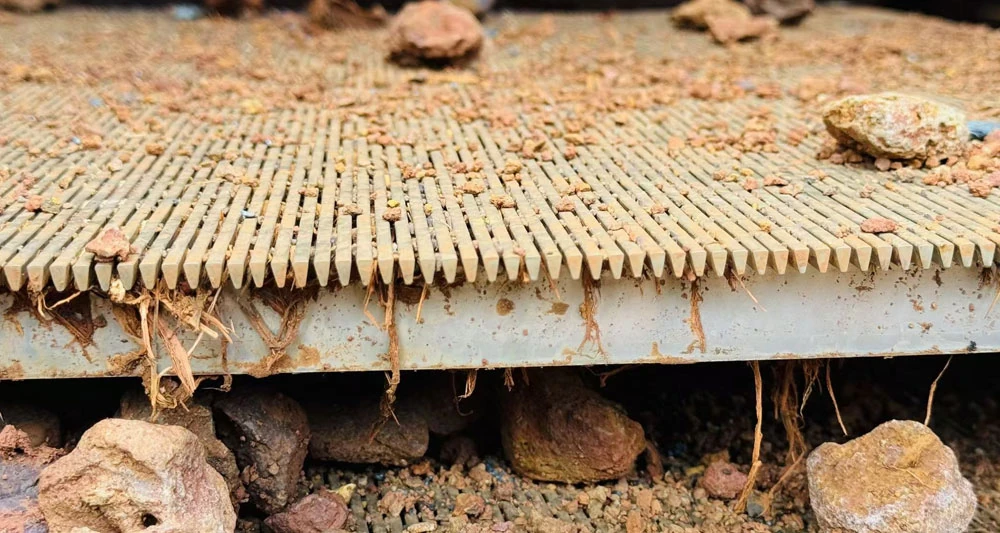
What Is a Wedge Wire Screen Panel and How Does It Work?
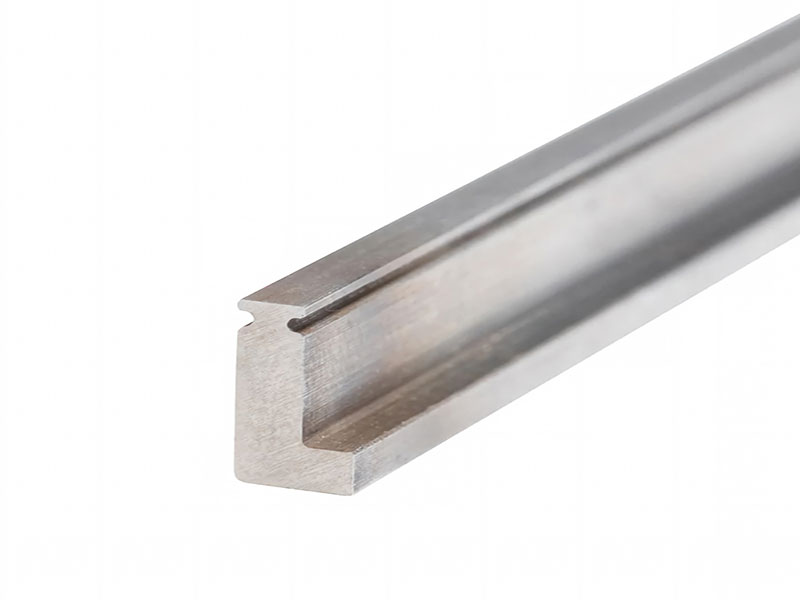
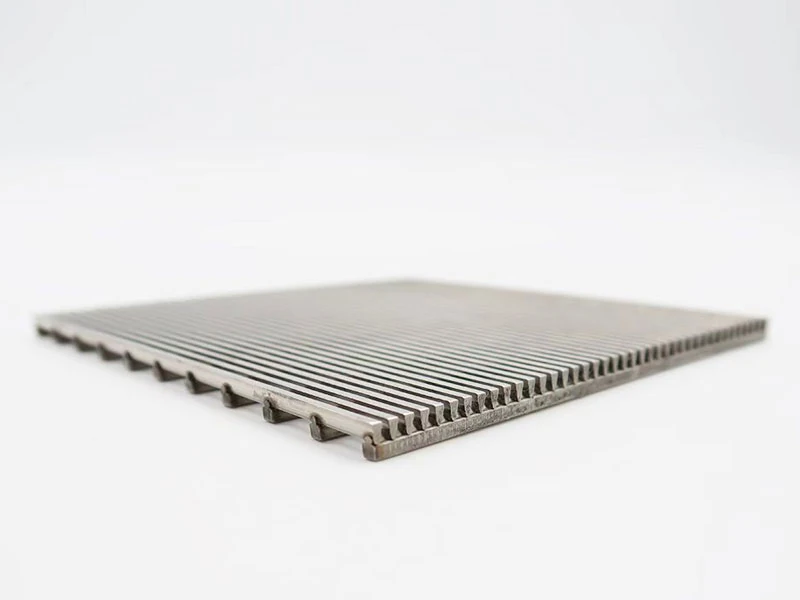
A wedge wire screen panel is a rigid screening surface made by welding V shaped stainless steel profile wires onto a set of support rods. These V profile wires run parallel to one another, forming uniform, accurately sized slots. The flat face of each wire sits on top to form the screening surface, while the narrower base is welded firmly to the underlying support rods.
Each slot is narrowest at the top opening and gradually opens wider towards the bottom. Thanks to this two point contact design, near size particles rarely get stuck inside the slots. Oversized particles roll off the screen surface, while undersized particles pass through freely without getting pinched or jammed further down. This self cleaning characteristic makes wedge wire screens far less prone to blinding in mining processes with high fines content and moist slurry.
Key Advantages of Wedge Wire Screen Panels
1. Precise Slot Tolerance for Sharp Particle Separation
Wedge wire panels hold slot tolerances as tight as ±0.02 mm across the full screening surface. This level of accuracy maintains stable cut points — critical for applications such as fine iron ore desliming, where consistent product quality relies on precise separation.
Slot sizes range from 0.02 mm up to 10 mm, covering jobs from ultra fine desliming all the way to coarse dewatering. For typical ore washing and desliming work, most operators use slots between 0.25 mm and 1.0 mm.
2. Self Cleaning V Profile Reduces Blinding Issues
The wedge shaped wire creates slots narrow at the top and flaring out downwards. When material hits the slot opening, particles only touch the top two edges of adjacent V wires. Any particle bigger than the slot opening makes only two point contact and rolls away instead of lodging in place. Particles small enough to go through the top opening meet no constriction further down as the slot widens.
This two point contact and tapered slot geometry sets wedge wire apart from woven wire mesh and PU screen panels, where particles often get trapped mid aperture. The built in self cleaning function preserves open area and cuts blinding over long working hours.
3. Corrosion Resistance & Broad Temperature Compatibility
Stainless steel wedge wire panels retain good mechanical properties across a wide temperature range. By selecting the correct material grade, you gain good resistance to acidic, alkaline and chloride rich process slurries.
By comparison, PU screen panels have a practical maximum operating temperature around 80 °C. They degrade quickly when exposed to strong acids or high chloride process fluids.
4. High Open Area Boosts Throughput
Thanks to continuous slot design and well spaced support rods, wedge wire screens deliver an open area ratio between 35 % and 60 %. This is noticeably higher than most polyurethane panels. Higher open area translates to higher material throughput using the same screen footprint.
5. Robust Build for Heavy Duty Mining Conditions
Wedge wire panels stand up to high G vibration forces from vibrating screens and the impact of falling ore feed. The fully welded construction resists bending and deformation under heavy load.
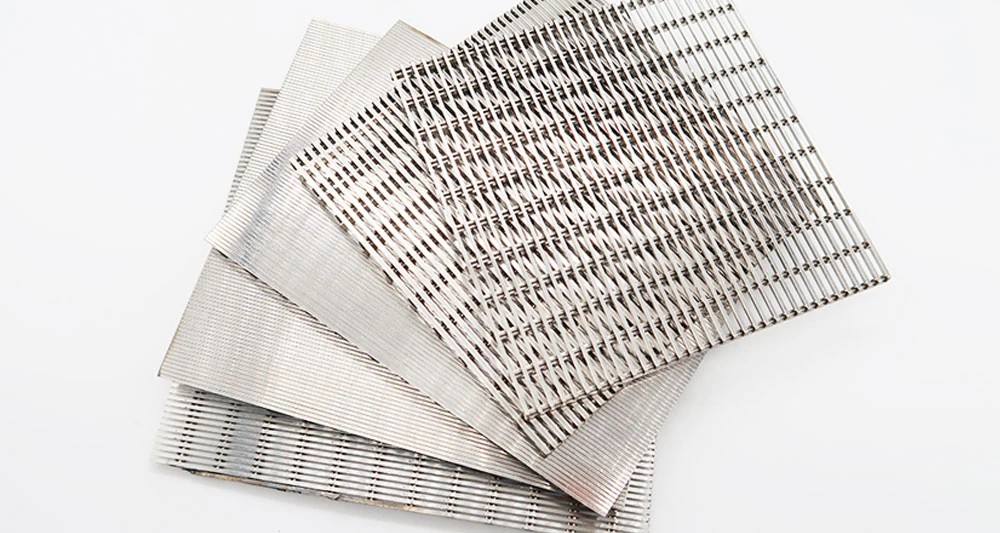
Wedge Wire versus Polyurethane Screen Panels
Polyurethane (PU) screen panels are the most widely used alternative media for mining. Knowing the strengths and limitations of each option helps plant managers make practical purchasing decisions.
Polyurethane Screen Panel Overview
Polyurethane screen panels are manufactured from moulded synthetic elastomer that combines rubber like flexibility with the wear resistance of high performance engineering plastics. They are manufactured with either round holes or slotted openings.
PU panels bring real benefits for certain use cases: excellent abrasion resistance (typically 3 5 times better than metal screens), noise dampening from impact absorption, lighter weight for easier handling, and elastic flexing that helps dislodge trapped material.
Even so, polyurethane comes with clear technical limitations. The moulding process cannot reliably produce slots finer than roughly 0.15 mm. The material also performs poorly against strong acids, alkalis and aggressive chemical streams.
Temperature is another limiting factor. Panels soften and deform above approximately 80 °C. As surface wear accumulates, slot dimensions drift out of specification. Most PU products are limited to flat panel formats; curved or cylindrical filter basket configurations are generally not achievable. These drawbacks make PU unsuitable for fine classification work, corrosive process environments or high temperature applications.
Side by Side Comparison Table
| Factor | Wedge Wire Screen Panel | Polyurethane Screen Panel |
| Slot Precision | ±0.02 mm, consistent over service life | Less consistent; accuracy drops as wear occurs |
| Minimum Slot Size | 0.02 mm | ~0.15 mm |
| Anti Blinding Performance | Excellent, V profile self cleaning design | Moderate; elastic bounce helps but blinding develops over time |
| Open Area | 35–60 % | Lower, due to thicker panel sections |
| Corrosion Resistance | Excellent; select material grade to match fluid chemistry | Poor; acids and chlorides accelerate material degradation |
| Temperature Resistance | Suitable for nearly all mining process temperature ranges | Max ~80 °C continuous operating temperature |
| Structural Strength | High; resistant to deformation under load | Rigid, but risk of cracking under heavy impact |
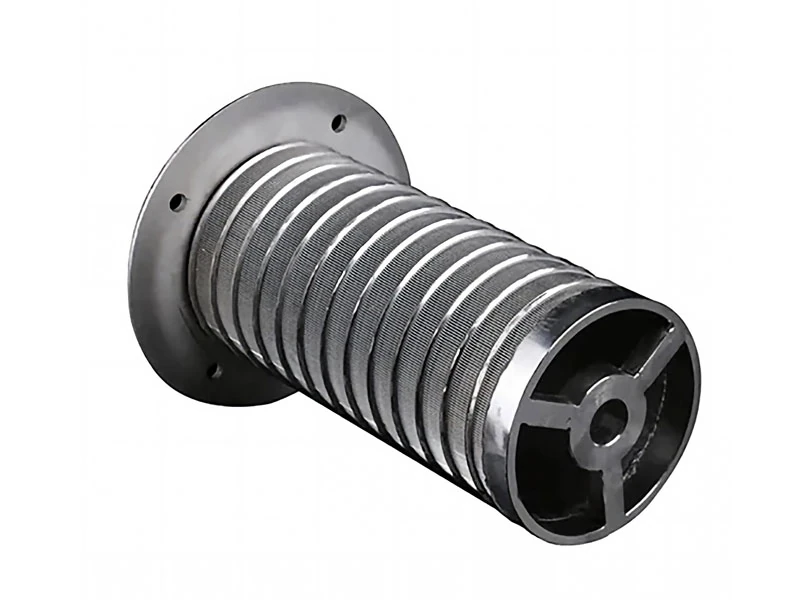
| Available Configurations | Flat, curved, cylindrical, filter baskets | Mostly flat form panels only |
| Initial Purchase Cost | Lower | Approximately twice the cost of wedge wire panels |
Why Source Wedge Wire Screen Panels from Jingzhou Metal
Tianjin Jingzhou Metal Products Co., Ltd. has been manufacturing precision stainless steel wedge wire and screen components since 2009. Our wedge wire screen panels are supplied to mining projects across Europe, the Americas, Southeast Asia and the Middle East.
Our Manufacturing Capabilities
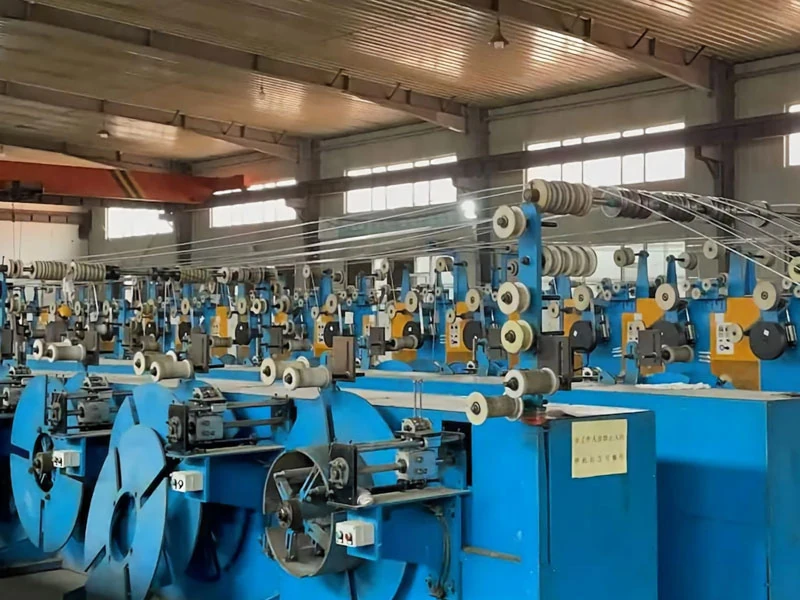
- Three production sites covering 18,000 m² total floor space
- 117 production lines, 67 rolling mills and 4 annealing furnaces
- Monthly output capacity above 1 200 tonnes; annual capacity over 10 000 tonnes
- Complete in house workflow: raw material processing all the way to finished screen panels
- ISO 9001 quality management certification
Product Specifications
- Slot openings from 0.02 mm to 10 mm, with tolerances down to ±0.02 mm
- Material grades: 202B, 304, 304L, 316, 316L, 321, 2205, 2507, 8825
- More than 200 standard panel sizes in stock
- Fully custom built dimensions to fit any vibrating screen model
- Panel thickness ranging 6 mm 40 mm
- Profile wire: 1.0 mm 10.0 mm; support rods: 2.0 mm 8.0 mm
Quality Assurance
We enforce multi stage quality control across production. This includes raw material verification via spectrometer testing, in process monitoring with infrared inspection tools, and final dimensional checks using 2D projectors and precision micrometers. Every shipment comes with a Mill Test Certificate (MTC), listing material chemical composition, slot dimensions and mechanical property data.
Frequently Asked Questions (FAQ)
Q1: What slot size should I select for my wedge wire screen panel?
For most ore washing and desliming jobs, pick a slot opening smaller than the smallest particle you need to retain on the screen surface. Typical working ranges:
0.25 0.5 mm for fine desliming
0.5 1.0 mm for standard dewatering
1.0 2.0 mm for coarse dewatering and media recovery
Q2: How exactly does wedge wire stop screen blinding?
Our V shaped wire forms slots narrow at the top and expanding downwards. Oversized particles only touch two top edges and roll off the deck. Material small enough to pass through meets no pinch points below the surface. This design greatly reduces blinding compared to woven wire and PU panels.
Q3: Which stainless steel grade best fits my site conditions?
SS 304: good general purpose choice for most fresh water ore washing circuits
SS 316L: ideal for wet processing with chloride containing or slightly acidic water
Duplex grades 2205 / 2507: best performance for seawater exposed or highly corrosive environments
Q4: Can wedge wire screen panels be custom made for my existing vibrating screen?
Yes. Panels can be custom fabricated to match almost any vibrating screen model. We offer over 200 standard sizes and can produce panel lengths up to 6000 mm.
Conclusion
Choosing the correct screening media for mining depends on your ore characteristics, particle size distribution and actual site process conditions.
Stainless steel wedge wire screen panels deliver tight slot accuracy at ±0.02 mm, self cleaning anti blinding performance from the V profile construction, corrosion resistance across broad pH ranges, wide temperature tolerance, high open area for strong throughput, plus flexible manufacturing for flat, curved and cylindrical geometries.
For most mining sites processing variable ore feeds, working with corrosive process water or requiring precise particle cut points, wedge wire screen panels deliver dependable, consistent real world performance.
Get in touch with Jingzhou Metal today to discuss your mining screen requirements or request a technical consultation.