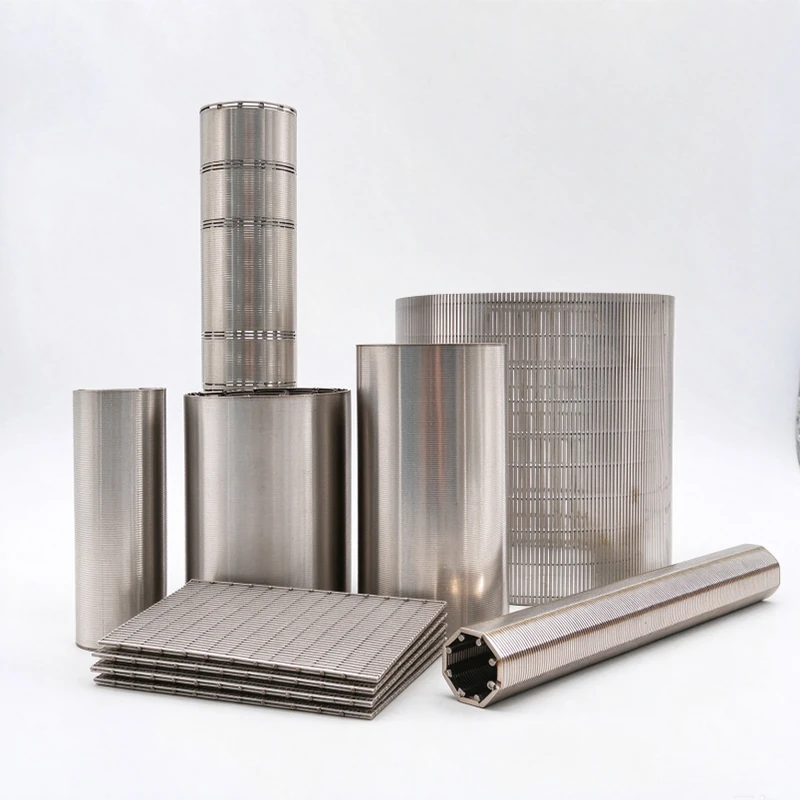
Inconel Nickel Alloy Wedge Wire Screen Panels & Baskets
Heavy-duty Inconel wedge wire screen panels, curved sieve bends, and dynamic centrifuge baskets engineered for…
View Details
Inconel nickel alloy wedge wire screens are heavy-duty, finished screening surfaces designed for terminal solid-liquid separation, sizing, and dewatering in severe environments. Distinct from raw profile wire or tubular filter elements, these products are fabricated into specific structural forms—flat panels, curved sieve bends, and high-strength baskets—engineered to endure high abrasion, extreme corrosive media, and elevated temperatures.
Because flat panels, curved screens, and rotary baskets require completely different manufacturing and structural considerations, our fabrication capabilities are tailored to each specific form:
Please note that these parameters represent our general manufacturing range. Not all extremes can be combined in a single product (e.g., ultra-fine slots are typically not available on the heaviest wire profiles).
| Parameter | Standard Capability Range |
| Slot Opening | 0.05 mm to 20.0 mm (Depending on profile wire selection) |
| Support Rod Spacing | Custom spacing (e.g., 10 mm to 50+ mm) to match mechanical load requirements |
| Edge & Mounting | Welded, Polyurethane-poured, Rubber-edged, Flanged, or Customized |
| Overall Thickness | Dependent on the combined height of the selected V-wire and support rod |
For sizing screens, maximizing flow rate while maintaining structural strength is a balancing act. The Theoretical Surface Open Area is calculated using this formula:
Surface Open Area = [Slot Opening / (Slot Opening + Effective Wire Surface Width)] x 100%.
Important Note: This formula only calculates the open area of the wire surface itself. The Effective Overall Open Area of the finished product will be lower, generally falling between 5% to 45%, because structural reinforcements, support rods, and edge framing create blind spots that reduce total throughput.
Reference Table for Theoretical Surface Open Area (Assuming structural pairing):
| Slot Opening (mm) | Recommended Wire Width (mm) | Approx. Surface Open Area (%) | Typical Separation Scenario |
| 0.10 mm | 1.0 mm | 9.1 % | Fine chemical separation |
| 0.25 mm | 1.5 mm | 14.3 % | Food / Starch processing |
| 1.00 mm | 2.0 mm | 33.3 % | Wastewater dewatering |
| 2.00 mm | 3.0 mm | 40.0 % | Heavy mineral sizing |
| (Engineers: As slot sizes increase, thicker wire profiles are required to maintain structural rigidity, which naturally limits the maximum open area.) |
We highly recommend matching the alloy specifically to your operating temperature, corrosive media, and mechanical load. (Note: Standard austenitic stainless steels like 304/316L are available via our standard materials division, but this page focuses strictly on high-performance superalloys).
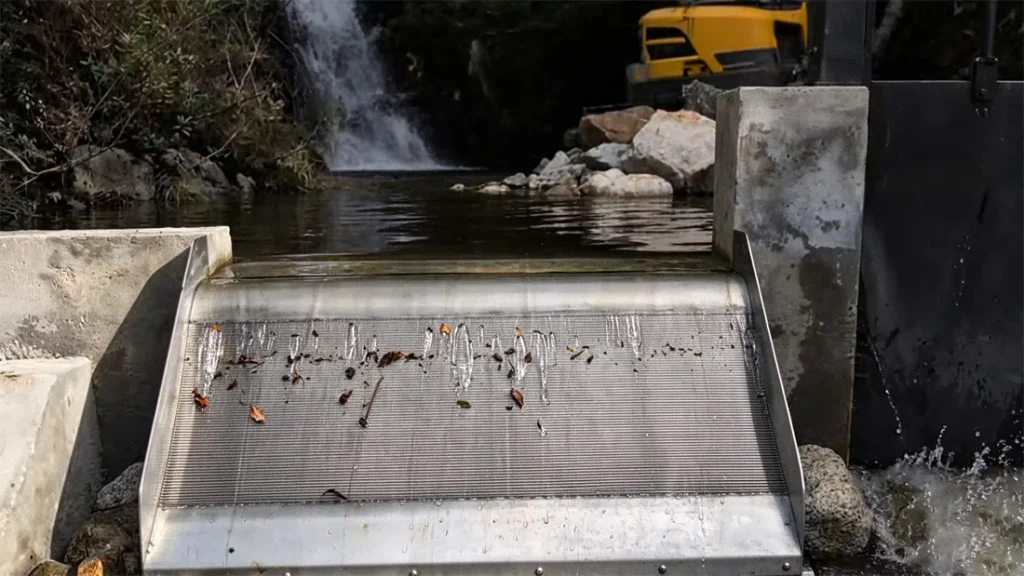
We possess the fabrication capabilities to manufacture direct drop-in replacements for existing screen panels and OEM centrifuge baskets. By providing us with original manufacturer drawings, structural specifications, or a physical sample, our team will fabricate an exact dimensional match.
Many clients utilize this service to upgrade their existing carbon steel or standard stainless screens to premium Inconel alloys to better handle severe process environments.
A: The theoretical calculation only accounts for the gap between the wedge wires. Your finished panel requires heavy-duty borders, framing, and transverse support rods to maintain structural integrity. These necessary structural elements block a portion of the flow area, resulting in a lower “effective” overall open area.
A: Yes, we can fabricate custom centrifuge baskets. However, because rotary equipment operates under immense centrifugal force, we require comprehensive engineering drawings detailing the RPM, structural tolerances, and dynamic balancing requirements to evaluate feasibility and ensure safety.
A: Not always. While we can achieve a 3000mm x 6000mm footprint for a static flat grid, rolling a screen into a precise curved sieve bend limits the maximum workable dimensions. Slot widths may also experience slight mechanical deviation during the rolling process. Please consult our engineers with your specific arc radius.
Customers who viewed this item also looked at these industrial solutions.
Heavy-duty Inconel wedge wire screen panels, curved sieve bends, and dynamic centrifuge baskets engineered for…
View Details
Tianjin Jingzhou Metal Products manufactures high-quality Wedge Wire Screen Panels, also known as Wedge Wire…
View Details
Advanced Solid-Liquid Separation for Dewatering, Desliming & Classification The Wedge Wire Curved Screen, also known…
View Details
Heavy-Duty Johnson Screen Baskets for Advanced Industrial Separation Our Wedge Wire Baskets are engineered for…
View Details