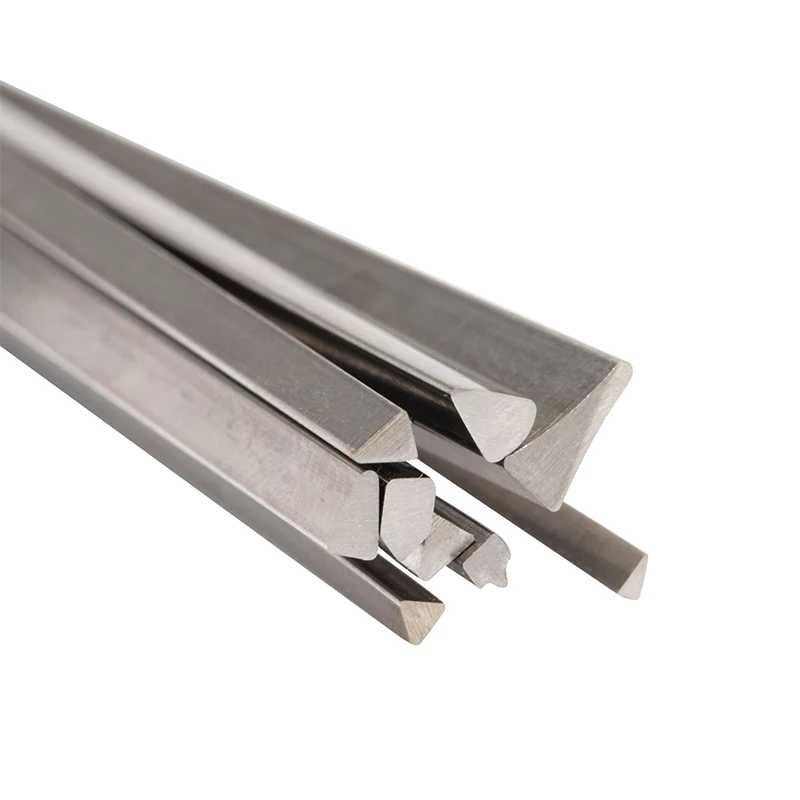
Inconel Nickel Alloy Wedge Wire Filter Elements & Cylinders
Custom-engineered Inconel wedge wire filter elements and cylinders designed for severe high-temperature and corrosive industrial…
View Details
Inconel nickel alloy wedge wire elements are precision-welded, continuous-slot tubular filtration components. Engineered by helically wrapping V-shaped profile wire around internal longitudinal support rods, these finished cylinders are designed for high-stress liquid and gas filtration. They offer highly stable structural integrity and are ideal for deployment in severe corrosive, high-temperature, or high-viscosity industrial environments where standard woven mesh may fail.
The core advantage of our wedge wire cylinder is the V-shaped (or wedge-shaped) profile wire. At every intersection, the wire is resistance-welded to the support rods. Because the slot widens inwardly, particles typically make only two-point contact at the surface. This design significantly reduces the risk of blinding and improves backwashing efficiency compared to square-mesh filters, though actual clogging resistance will depend on fluid viscosity and particle morphology.
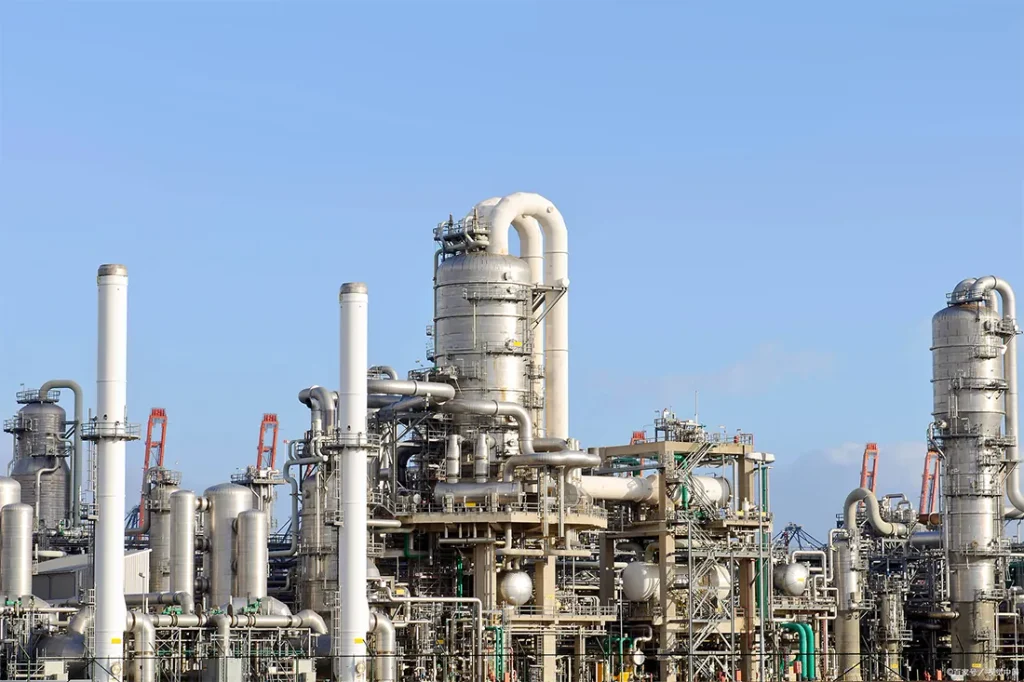
We manufacture custom wedge wire filter cylinders tailored to your specific vessel dimensions and process requirements. (Note: The extreme limits of these parameters cannot always be combined in a single product. Feasibility depends on the selected wire profile, alloy grade, and structural calculations.)
| Specification Parameter | Typical Range & Details |
| Slot Opening | Typically 0.02 mm to 10.0 mm (Achievability depends on wire profile) |
| Outside Diameter (OD) | 25 mm to 1000 mm+ |
| Wall Thickness | Determined by the combination of profile wire and support rod sizes |
| Length | Up to 6000 mm (Manufactured as a continuous wire wrapping without mid-body splice welds) |
| Flow Direction | FOTI (Flow-Out-to-In) or FITO (Flow-In-to-Out) |
| Support Structure | Customized rod count and profile based on required collapse/burst pressure |
| End Connections | Threaded fittings, Flanges, Welded rings, Plain ends, or Custom OEM designs |
| Slot Tolerance | Tightly controlled, typically down to ±0.015 mm – ±0.03 mm for fine slots (Subject to engineering confirmation) |
Understanding your process flow is critical for element design:
It is important to note that physical slot width does not equal absolute filtration rating. While our manufacturing process strictly controls the physical gap (e.g., a 0.10 mm slot), the actual particle retention capability in your system will be influenced by particle shape (spherical vs. needle-like), particle size distribution, fluid viscosity, operating pressure, and flow velocity.
| Nominal Slot Opening (mm) | Nominal Slot Opening (inches) | Approx. Physical Gap (Microns / μm) |
| 0.05 mm | 0.002″ | 50 μm |
| 0.10 mm | 0.004″ | 100 μm |
| 0.25 mm | 0.010″ | 250 μm |
| 0.50 mm | 0.020″ | 500 μm |
| 1.00 mm | 0.040″ | 1000 μm |
| (Engineers are advised to conduct pilot testing to verify exact retention rates under specific process conditions.) |
We select high-performance alloys based on the corrosive media and operating temperatures of your filtration system:
A: This page describes our finished, welded tubular filter elements and cylinders. If you are looking for the raw profile wire supplied on spools for your own manufacturing, please visit our Inconel Profile Wire page.
A: From a metallurgical standpoint, they are a welded structure, not a seamless extruded pipe. However, for lengths up to 6000mm, we manufacture them using a continuous spiral wire wrapping process. This means there are no circumferential splice joints (girth welds) along the screen body, which maximizes structural integrity.
A: While the expanding V-shaped slot design is highly “clog-resistant” and greatly facilitates backwashing compared to traditional woven wire mesh, no filter is 100% immune to clogging. Severe blinding can still occur depending on the concentration of deformable particles, heavy biological fouling, or improper backwashing protocols.
A: Maximum differential pressure (collapse or burst pressure) is not standard; it is highly dependent on your specific dimensions, flow direction (FOTI/FITO), support rod spacing, wire profile size, and the yield strength of the chosen Inconel grade at your operating temperature. Our engineering team can provide structural calculations based on your specified operating conditions.
Customers who viewed this item also looked at these industrial solutions.
Custom-engineered Inconel wedge wire filter elements and cylinders designed for severe high-temperature and corrosive industrial…
View Details
Tianjin Jingzhou Metal Products manufactures high-strength Stainless Steel Support Rods, the essential internal structural component…
View Details
Tianjin Jingzhou Metal Products offers the industry-standard Triangle Wire, also known as V-shaped Profile Wire,…
View Details
Tianjin Jingzhou Metal Products manufactures unique House-shaped Stainless Steel Profile Wire, characterized by its pentagonal…
View Details