Key Takeaways
- Spring temper comes from cold drawing, so the drawing schedule matters as much as the grade.
- A range such as 1,100–2,400 MPa describes what a mill can supply across its sizes and grades. Any single coil sits inside a much narrower band.
- Tensile strength falls as diameter rises, which is why a 0.2 mm wire reaches a higher figure than a 4 mm wire of the same grade.
- Surface defects cost more fatigue life than a slightly lower tensile figure ever will.
- An order that names grade, temper, diameter, tolerance, tensile window, surface finish, spool format, test documents and packing removes most of the disputes that follow a bad coil.
Most spring problems are settled long before the first coil reaches the machine. What follows explains what temper does to stainless wire, how to read the strength figures that come with it, and which details belong on an order so that the wire behaves the way the drawing expects.
What Spring Wire Is and How It Is Made
Spring wire starts as wire rod, a coil of hot-rolled stainless steel 5.5 mm across or more. To reach the diameters a spring needs, a mill pulls that rod through a series of dies, each one a little smaller than the last. Nothing melts and nothing is recast. The metal simply becomes thinner, longer and harder, because cold deformation rearranges its internal structure.
That hardening is the whole point. A spring has to bend far enough to store energy, then return to its original shape thousands or millions of times. Soft metal bends easily but refuses to spring back with force, while hard metal pushes back strongly and cracks when asked for too much. Spring wire is the compromise between those two behaviours, and the compromise is engineered at the drawing bench rather than ordered from a catalogue.
The same grade also arrives in more than one condition. Buyers who treat the material as a single item with a single price usually find out why on the shop floor.
What state does “spring state” describe?
Grade answers one question: what is this metal made of? Temper answers another: what has been done to it since then?
From Annealed Coil to Finished Temper
Cold drawing hardens stainless steel, and past a certain point the wire becomes too brittle to form into springs with a tight index. A mill therefore alternates drawing with annealing. Annealing lets the disturbed crystal structure recover, which restores ductility at the cost of strength. The final pass decides where the coil lands: strong enough to hold a working load, ductile enough to survive the coiler without cracking.
Three delivery conditions cover most orders.
| Condition | How it arrives | Behaviour at the coiler | Typical use |
| Annealed | Soft, fully ductile | Bends easily, low spring-back, low strength | Parts formed first and hardened later, or bent beyond what spring temper survives |
| Lightly drawn | Partially work-hardened | Moderate spring-back, moderate strength | Large diameters formed then heat treated |
| Spring temper | Cold drawn to final strength | High spring-back, cracks at sharp bends; feed and arbor must be set carefully | Compression, extension and torsion springs used as delivered |
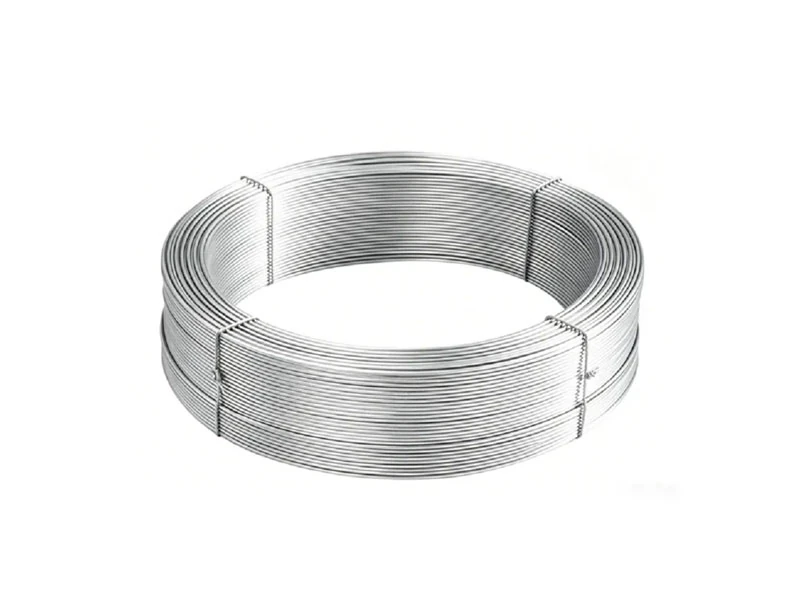
A coil of spring stainless steel wire is judged on how it behaves in the coiler, not on the figure printed on the tag. Two coils can share a grade, a diameter and a tensile figure, yet feed differently, because residual stress from the last passes changes how the wire springs back as it leaves the feed rolls.
What Each Drawing Pass Changes
Reduction in cross-section, die geometry, lubrication and drawing speed set the outcome of a pass. Intermediate annealing adds heat and soak time. Change any of them and the same starting rod produces wire with a different balance of strength and ductility. Holding a narrow band across a production run is therefore harder than landing in the middle of a wide one.
How to Read a Tensile Range Without Misreading It
Every stainless steel spring wire manufacturer publishes a range, and every range is honest in its own way. The trouble starts when a buyer reads a range as a promise for one coil. Figures like 1,100–2,400 MPa describe the span a mill can cover across its sizes and grades, and no single coil spans that whole range.
The Diameter Effect
Tensile strength falls as wire diameter rises. Thin wire work-hardens through its entire cross-section during drawing, while thick wire keeps a softer core that the dies never fully reach. A 0.2 mm wire and a 4 mm wire produced on the same line can therefore sit at opposite ends of the band. Compare offers at your own diameter, because a coil sold as high tensile stainless wire can still miss the band your spring needs.
What the Range Leaves Out
Four properties matter as much as tensile strength, and none of them appears in that range:
- Elongation, which shows how far the wire stretches before it breaks.
- Torsion behaviour, which exposes internal defects that a tensile test passes over.
- Residual stress, which decides whether a finished spring keeps its free length after a week on the shelf.
- Cast and camber, which decide how the wire behaves on the feed rolls.
Elastic Behaviour: Why Stiffness Is Not Strength
Stiffness and strength are often confused. Stiffness comes from the elastic modulus and the geometry of the spring, and for austenitic stainless steel the modulus sits near 193 GPa whatever the temper. Strength sets the stress the wire can carry before it takes a permanent set.
Diameter dominates that geometry. Stiffness rises with the fourth power of wire diameter, so a 1 mm wire makes a spring sixteen times stiffer than a 0.5 mm wire on the same coil count and mean diameter. Tensile figures move far more slowly across the same change, and that gap is where the two ideas part company.
Two springs wound from the same wire can still behave differently. More active coils make the spring feel softer, because the load spreads over a longer length of metal. A larger mean diameter does the same, and it lowers the stress at the same deflection. Neither change touches the tensile figure on the tag, yet both change what the spring does. The design decides how much stress the wire sees, and the temper decides how much it can accept.
Choosing the Grade for the Working Environment
Grade selection starts with the environment rather than with a preference.
302 and 304 cover most spring work because they balance strength and corrosion resistance at a sensible cost. Type 302 carries more carbon, which supports a slightly higher achievable strength in the spring temper, while 304 offers better weldability and a more predictable supply base. For automotive springs, electronic contact springs, industrial machinery and appliances, as well as clips and other precision parts, either will usually do.
316 earns its higher price wherever chlorides appear: coastal air, marine hardware and food processing washdown. It also suits medical and dental equipment, along with any assembly that needs a non-magnetic spring. The trade-off is strength, so a 316 spring carrying the same load as a 304 spring needs a larger wire or more coils.
Martensitic grades such as 410 can be hardened after forming, which suits parts that need more wear resistance than an austenitic grade can offer, at the cost of corrosion resistance. Above roughly 250–300 °C, austenitic grades begin to relax and lose load. Precipitation-hardening grades such as 631 take over there, with a tighter forming window and a higher price. At the cold end, sub-zero service favours the more ductile austenitic grades.
Where Spring Wire Fails in Production
Surface Defects That Become Cracks
A scratch, a die mark or a sliver of embedded oxide looks cosmetic on a spool. On a spring it becomes a stress raiser at the point of maximum bending, and fatigue cracks start there. Fine wire suffers most, because a defect occupies a larger share of the cross-section.
Cast, Camber and Feed Trouble
Cast is the natural curve the wire takes when it leaves the spool. Camber is the deviation from straight in cut lengths. Neither appears in a tensile test, and both show up as feed trouble at speed:
- Wire with too large a cast fights the feed rolls, so pitch varies from spring to spring.
- Cut lengths with heavy camber cannot enter an automated former without straightening, which adds a step and changes the stress state of the wire.
Two more problems come from how the spool is wound:
- A spool wound with uneven tension feeds in surges, which shows up as inconsistent free length.
- Tangled or crossed layers stop the machine and, in fine sizes, kink the wire beyond recovery.
Writing a Purchase Order That Gets the Wire You Need
A coil is only as good as the order that specified it, so these items deserve to be written out rather than implied.
| Item to state | Why it matters | Example wording |
| Grade and standard | Fixes chemistry and the test basis | 302 stainless, ASTM A313/A313M |
| Temper | Decides whether the wire can be coiled as delivered | Spring temper, cold drawn |
| Diameter and tolerance | Governs fit in the coiler and the spring rate | 0.80 mm, ±0.01 mm |
| Tensile window | Prevents a coil that passes inspection but cannot be used | 1,700–1,900 MPa at 0.80 mm |
| Surface finish | Affects friction, plating and fatigue | Bright, soap coated for feeding |
| Spool or coil format | Decides handling and machine fit | DIN 200 spool, 15–20 kg |
| Test documents | Supports incoming inspection and traceability | Mill certificate with heat number |
| Packing | Protects edges and keeps moisture out | Wooden spool, VCI wrap, desiccant |
Two of these are routinely under-specified. A steel spring wire order that names only the grade leaves the mill free to choose the temper, and the coil that arrives may be perfectly sound yet impossible to run. Spool format is the other, because a flawless coil on the wrong spool stops the machine as effectively as poor wire.
What Consistent Supply Looks Like
Batch Consistency
Tensile strength that drifts between coils forces the setter to adjust the machine, and every adjustment produces scrap. Uniform heat treatment during annealing keeps the figure steady across a batch. The pay-off end of the line matters as much as the furnace, because how the coil is paid off decides how evenly it meets the heat.
Diameter, Surface and Spooling
The mill holds ±0.01 mm on the sizes most springs use. The range itself runs from 0.018 mm to 10 mm, which leaves a designer room to work at both ends of the scale. A bright or matte finish, chosen to suit the coiler and any later plating, keeps friction predictable. Spooled on wood or steel with even tension and clean layer separation, the coil feeds without surges.
Documentation and Delivery
A mill certificate carrying the heat number, dimensional records and surface notes lets incoming inspection confirm what arrived. ISO 9001 certification covers the process side. A standard lead time of 7–15 days matters when a programme is waiting on a trial coil rather than a full container.
The Mill Behind the Coil
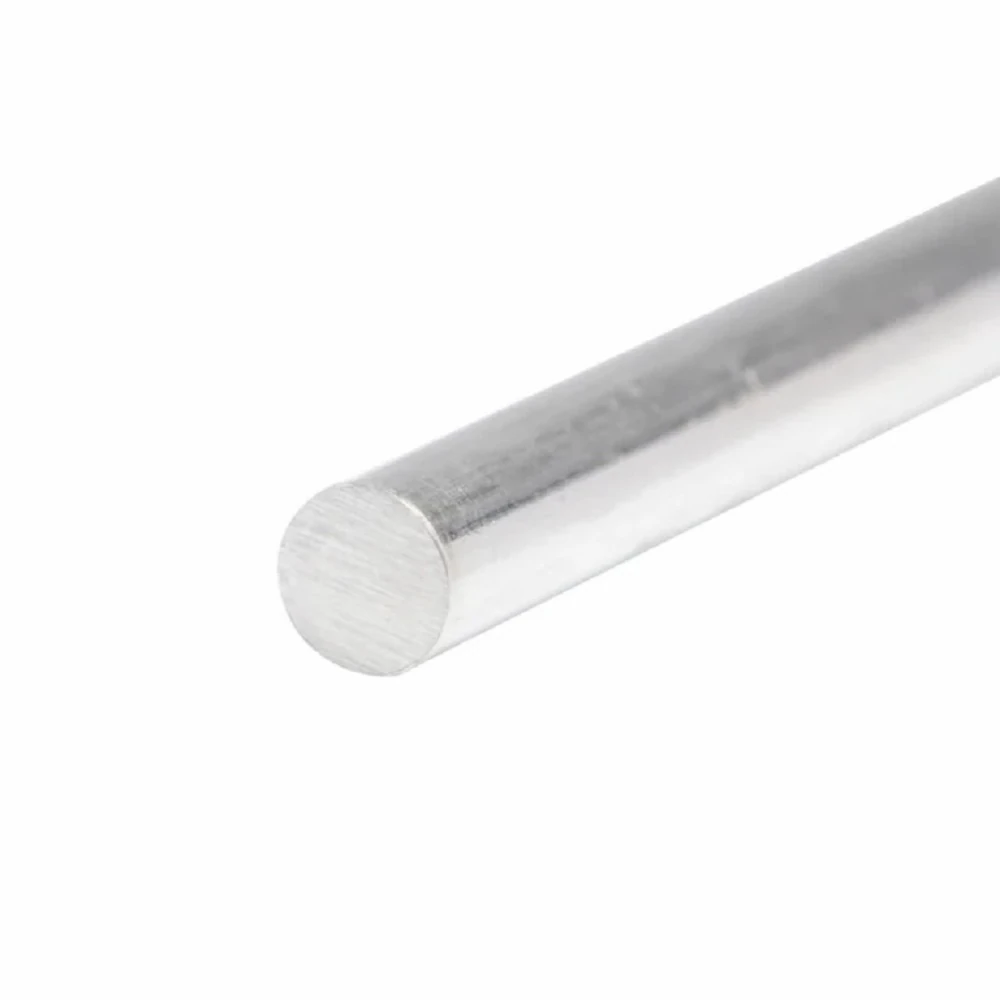
Stainless Steel Spring Wire from Tianjin Jingzhou Metal Products is drawn in 304, 316 and 410 at a capacity of around 1,200 tonnes per month, with annealing, drawing and take-up kept within one operation. That arrangement is what keeps a repeat order close to the coil that passed the trial, on diameter, on finish and on spooling. Type 302 can be supplied to order where a spring needs the extra carbon.
Frequently Asked Questions
What does temper mean, and what happens if I choose the wrong one?
Temper describes how far the wire was cold worked before delivery. Choose spring temper and you can coil a spring straight from the spool. Choose annealed and you must harden the part afterwards. Choose badly and the failure shows up quickly: wire that is too hard cracks at tight radii or at the cut end, while wire that is too soft winds into a spring that sags under load and loses free length within days.
Should I specify 302/304 or 316 for a spring?
Start with the environment. Where the spring works indoors, in ordinary humidity, or in contact with mildly aggressive media, 302 or 304 gives the best balance of strength and cost. Move to 316 when chlorides are present, when washdown is routine, or when a non-magnetic spring is required. 316 reaches a lower strength at the same diameter, so the design may need more wire.
Why does tensile strength drop as the wire gets thicker?
Deformation bites hardest at the surface, and as the section shrinks the worked zone reaches further in until a fine wire arrives fully worked. Heavy wire keeps a softer centre, so it never reaches the same band. A tensile figure means little until you know which diameter it was measured at.
Can I run spring temper wire on a machine set up for annealed wire?
Not without resetting it. Spring temper springs back much more as it comes off the feed rolls, so the arbor, the pitch and the cut-off all need adjustment, and the wire usually needs a larger bend radius. Run a short trial length first, check free length and load, then commit the coil to a production run.
What diameter tolerance is realistic for stainless spring wire?
For most spring work, ±0.01 mm is achievable and sufficient. It is also the figure that keeps spring rate predictable across a batch. Tighter tolerances are possible on fine sizes, though they add cost and rarely change how the finished spring behaves.
Conclusion
Spring wire repays a little attention at the ordering stage. Temper decides whether the coil can be formed at all, diameter decides what the tensile figure means, and surface condition decides how long the finished spring lasts. Get those three right and most production problems never appear. Share your spring drawing, working environment and annual volume with our team. We will recommend a grade and temper before sending a trial coil for your coiler.