Introduction
Selecting the right wedge wire screen panel is essential for achieving efficient filtration, reliable separation, and long service life. Stainless steel grade, slot opening, wire profile, and manufacturing precision directly affect flow capacity and clogging resistance—and ultimately drive maintenance requirements and overall operating costs. Choosing the right specification ensures your screen performs consistently under demanding industrial conditions.
Whether you’re processing starch, treating wastewater, dewatering minerals, or filtering chemicals, understanding these factors can help you avoid costly mistakes. This guide will help you compare material options, choose the right slot size, and match the screen design to your application.
What Is a Wedge Wire Screen Panel?
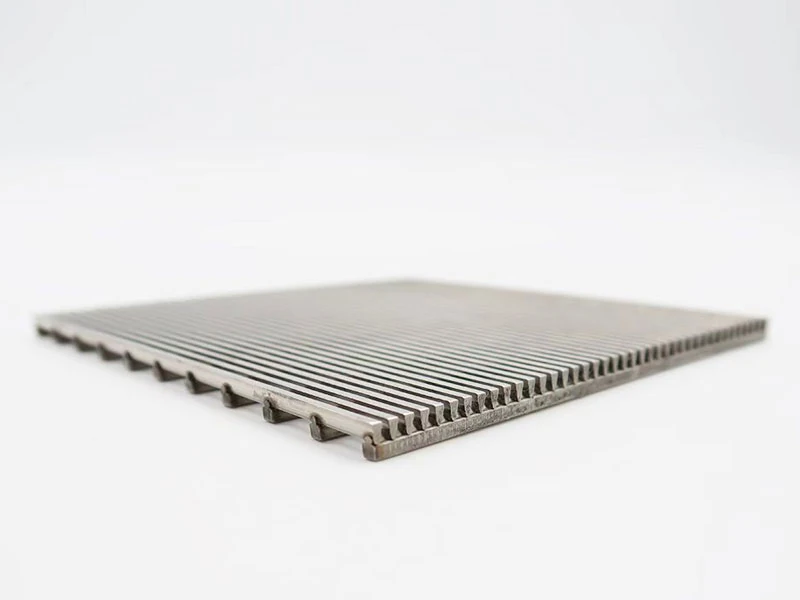
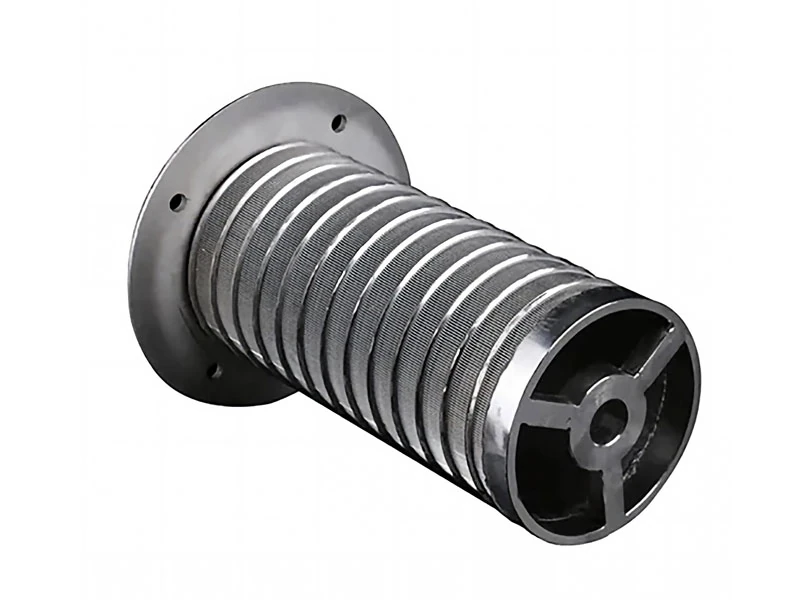
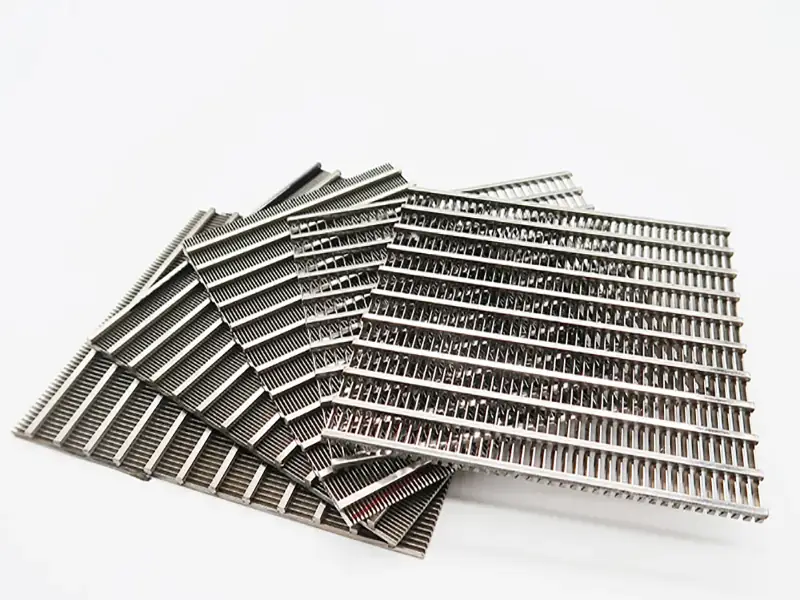
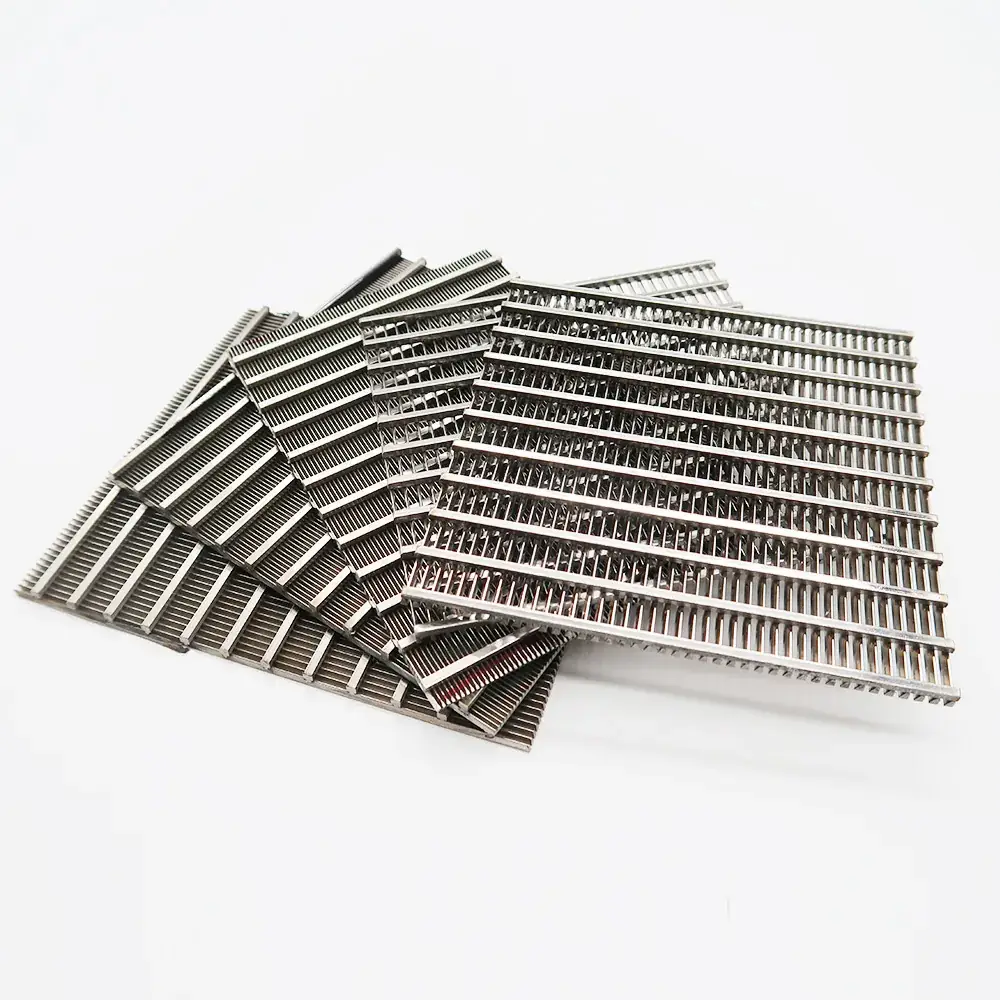
A wedge wire screen panel, also called a flat panel screen, is a rigid filtration surface made by fusion-welding V-shaped profile wires onto support rods. Unlike woven mesh, the panel forms a continuous, smooth surface with precisely calibrated slots that maintain slot accuracy under heavy vibratory loads.
Why the V-Shaped Wire Design Prevents Clogging
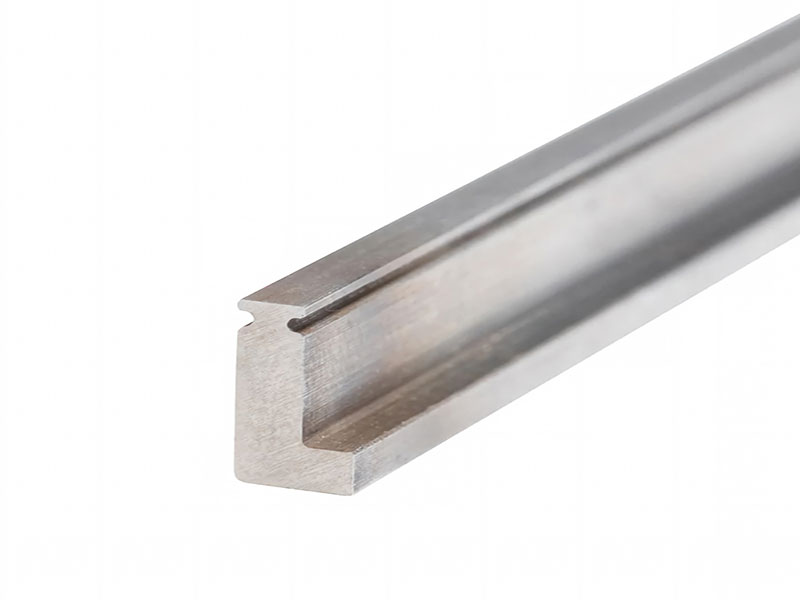
The core advantage of a wedge wire filter lies in its V-shaped profile wire. The flat side forms the screening surface, while the narrow base is welded to support rods to create a slot that widens downward. This design prevents particles from lodging by eliminating pinch points and using a two-point contact principle at the slot entrance. As a result, it reduces clogging, prevents screen blinding, and improves flow stability during continuous operation.
How to Choose the Right Stainless Steel Grade
Selecting the correct stainless steel wire grade is one of the most important decisions affecting screen service life. The wrong alloy choice can result in premature corrosion, reduced mechanical performance, and unnecessary replacement costs.
| Material Grade | Typical Applications | Main Advantages |
| SS 304 / 304L | Fresh water, neutral chemicals, general industrial filtration | Good corrosion resistance and cost-effectiveness |
| SS 316 / 316L | Food,dairy, beverage, starch filtration | Enhanced chloride resistance and superior hygiene performance |
| SS 430 | Dry abrasive applications, coal handling | Good wear resistance and economical option |
| Duplex 2205 | Seawater, desalination, high-chloride environments | High resistance to pitting and stress corrosion cracking |
| Super Duplex 2507 | Offshore applications, aggressive chemical environments | Excellent corrosion resistance in extreme conditions |
How to Select the Correct Slot Size
Designing an effective slotted wedge wire screen filter requires a systematic approach to slot sizing.
Match the Slot Width to the Particle Size
A common rule is to select a slot width 30% to 50% smaller than the diameter of the particle you aim to retain. This accounts for the two-point contact nature of the V-wire, where an elongated particle could theoretically pass through a slot matching its minimum dimension.
Common Wedge Wire Screen Slot Sizes
- 0.1–0.5 mm for Fine Filtration: This range is used in starch and gluten separation, catalyst recovery, and fine resin retention. The minimum filtration precision achievable by manufacturers like Jingzhou reaches 20 microns (0.02 mm), with general tight-tolerance production spanning 0.1 mm to 10 mm.
- 0.5–2.0 mm for General Industrial Filtration: Typical for liquid filtration in the beverage industry, diatomaceous earth dewatering, and chemical processing, this range balances flow rate with effective particle capture.
- 2–10 mm for Coarse Screening: Used for high-volume intake water screening, mining pre-classification, and architectural drainage grates, these larger slots handle high debris loads without clogging.
Why Slot Width Tolerance Matters
It’s not just the nominal slot size that matters—manufacturing precision is what delivers consistent real-world performance. Advanced automated resistance welding can hold slot tolerances as tight as ±0.01 mm across the entire panel. This uniformity is what ensures a reliable wedge wire filter doesn’t pass oversize particles due to localized inaccuracies.
Key Performance Factors to Compare Before Buying
Beyond materials and slots, compare these mechanical and performance attributes when evaluating products.
Filtration Precision: The minimum achievable slot, typically 0.02 mm, determines the finest possible separation threshold.
Open Area: Ranges between 15% and 65%, directly correlating to throughput capacity for a given pressure drop.
Mechanical Strength: Determined by the cross-sectional dimensions of the profile wire (1.0–5.0 mm) and the support rod diameter/spacing.
Tensile Strength: Premium wedge wire exhibits tensile strengths between 900 and 1100 MPa, providing a robust safety margin under high loads.
Corrosion Resistance: Must match the specific chemistry of the process fluid, from dilute caustics to concentrated chlorides.
Wear Resistance: A flat, smooth surface finish minimizes abrasive particle retention and promotes uniform wear over time.
Choosing the Right Wedge Wire Screen for Different Industries
Wedge Wire Screen for Starch Filtration
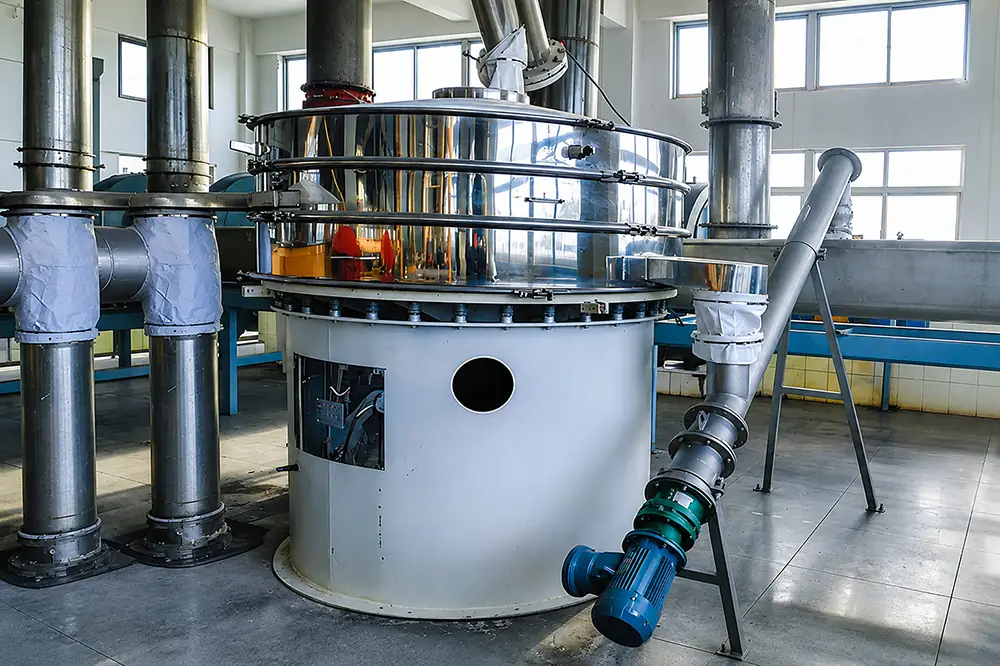
Starch processing demands high-capacity dewatering and washing while maintaining strict food-grade hygiene. A wedge wire screen for starch filtration typically uses 316L stainless steel with slot sizes between 0.1 mm and 0.5 mm. The non-clogging V-profile allows fiber and starch slurry to dewater efficiently without trapping particles, while the smooth surface meets clean-in-place sanitation requirements.
Water Treatment and Wastewater Screening
From municipal sewage pre-treatment to seawater desalination intake, wedge wire screens handle high-volume flows. Grade 316L or duplex 2205 is selected based on salinity, with larger 1–6 mm slots used for debris removal and finer slots for guard filtration protecting downstream reverse osmosis membranes.
Oil and Gas Filtration
In downhole sand control and refining catalyst recovery, extreme pressures (up to 6 Kg/cm²) and aggressive fluids demand robust materials. Super duplex 2507 or 8825 alloys resist chloride stress cracking at high temperatures, providing reliable sand exclusion without eroding.
Mining and Coal Processing
Heavy-duty wedge wire panels with large-diameter support rods withstand the impact and abrasion of ore classification and coal washing. Wear-resistant SS 430 or 304 with slot sizes from 0.5 mm to 10 mm handles tailings dewatering and media recovery under severe vibration.
Chemical Processing
The diversity of chemicals requires a broad alloy selection—from 304 for mild acids to 2507 for hot chlorides. The ability to customize panel dimensions and wire profiles allows engineers to design reactor screens and centrifuge liners that fit directly into existing support structures.
Questions to Ask Your Wedge Wire Screen Supplier Before Ordering
Can the Manufacturer Offer Multiple Stainless Steel Grades?
If a supplier only stocks 304 and 316, they cannot adequately serve applications requiring duplex or superalloy corrosion resistance. Verify that they have the in-house inventory and forming expertise for the exact alloy your process demands.
What Slot Size Tolerance Can They Guarantee?
Ask for a quantifiable tolerance, such as ±0.01 mm, rather than a vague promise of “high precision.” Request that this tolerance be backed by documented inspection reports from automated optical measurement systems.
Do They Have In-House Production or Outsourcing?
Outsourced wire drawing or panel welding introduces quality gaps and communication delays. A supplier with complete in-house manufacturing, from raw material to finished product, can better control delivery dates and quickly resolve any technical issues.
What Is the Typical Production Lead Time?
Standard lead times range from 20 to 45 days. Complex, curved, or multi-radius profiles may require more than 45 days. An experienced manufacturer will confirm your drawing on the day of inquiry and, if new tooling is needed, complete mold design within 3 to 4 days before sample production begins.
Can They Provide Custom Drawings and Prototypes?
Many industrial systems require screens with customized dimensions or mounting configurations. A responsive supplier provides prototypes (typically 7–10 days without new tooling) and submits detailed inspection reports so you can verify fit and filtration performance before mass production commences.
Why Choose Jingzhou as Your Wedge Wire Screen Manufacturer
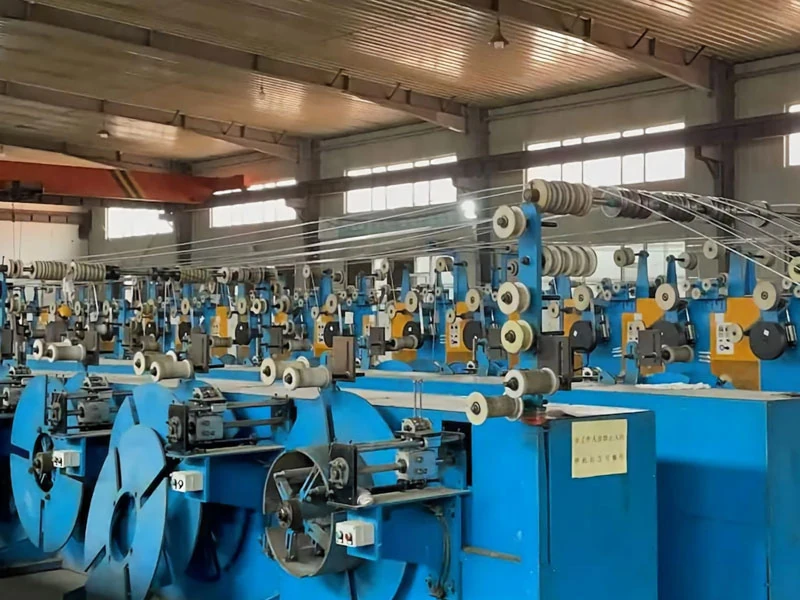
Jingzhou has manufactured stainless steel wire and wedge wire screens since 2009, shipping to customers across Europe, America, Southeast Asia, and the Middle East. As an ISO 9001 certified National High-Tech Enterprise, several factors set Jingzhou’s screens apart:
- 10+ Stainless Steel Grades In-House: From 202B and 304L for general filtration to 2205, 2507, and 8825 for seawater and high-chloride environments—no need to source specialty alloys from a second supplier.
- Two-Draw Two-Anneal Wire Processing: Wire rod is drawn and annealed twice before profiling, relieving internal stress and refining the grain structure for more uniform mechanical properties—the foundation for consistent slot tolerances across every panel.
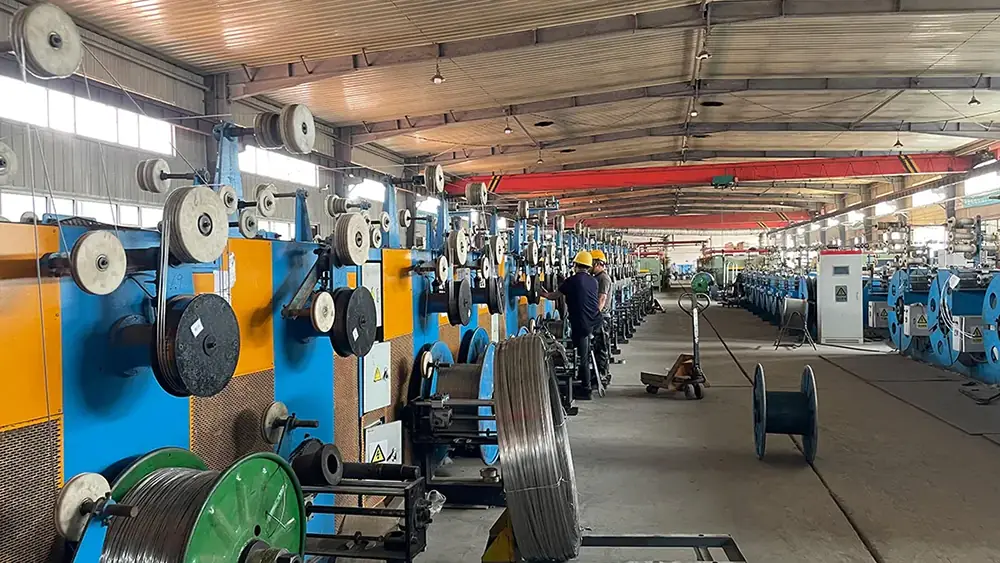
- Full In-House Production at Scale: 117 production lines and an 18,000-ton annual capacity spanning raw material processing, drawing, annealing, forming, and welding, with no outsourced steps to slow delivery.
- Customized Sizes and Profiles: Profile wire from 1.0–5.0 mm, support rods from 2.0–8.0 mm, panel heights of 6–40 mm, and lengths up to 6000 mm, built to fit your existing equipment.
Frequently Asked Questions (FAQ)
Q1: What stainless steel grade is best for wedge wire screen panels?
It depends on your environment. SS 316L is most common for food and light chemical applications due to its corrosion resistance and hygienic surface finish. For seawater or high-temperature chloride streams, duplex 2205 or super duplex 2507 is necessary to prevent pitting and stress corrosion cracking.
Q2: How do I choose the right slot size for a wedge wire filter?
Identify the particle size you need to retain and select a slot that is 30–50% smaller. For example, to separate 1.0 mm particles, a 0.5 mm to 0.7 mm slot is typically effective. Providing your target micron rating and particle shape to an experienced manufacturer will help refine the final specification for your slotted wedge wire screen filter.
Q3: What information is needed for a custom wedge wire screen panel quotation?
To receive an accurate quotation, prepare your desired panel dimensions (length, width, height), the required slot size and tolerance, the process fluid composition and temperature, the type of support structure or frame needed, and your estimated annual quantity. This allows the manufacturer to recommend the correct stainless steel wire grade and mechanical design.
Conclusion
Choosing the right wedge wire screen panel depends on factors such as particle size, slot opening, stainless steel wire grade, and operating conditions. By selecting the appropriate screen design and material, you can improve filtration efficiency, reduce maintenance requirements, and extend service life.
Jingzhou provides customized wedge wire screen solutions with various materials, slot sizes, and panel configurations for different industrial applications. Contact Jingzhou today to learn more about our wedge wire screen panels and request a quote.