Key Takeaways
- A wedge wire sieve bend is a curved, static screen that separates solids from liquids using gravity alone — no motor, no vibration, and no moving parts.
- The curved surface and V-shaped slots give it higher capacity and better anti-clogging performance than flat panels or perforated plates.
- Three numbers matter most when choosing one: slot width (sets the separation size), arc angle (matches the solid content of your slurry), and screen width (matches your flow rate).
- Materials, slots, arcs, and dimensions can all be customized to fit an existing line.
What Is a Wedge Wire Sieve Bend?
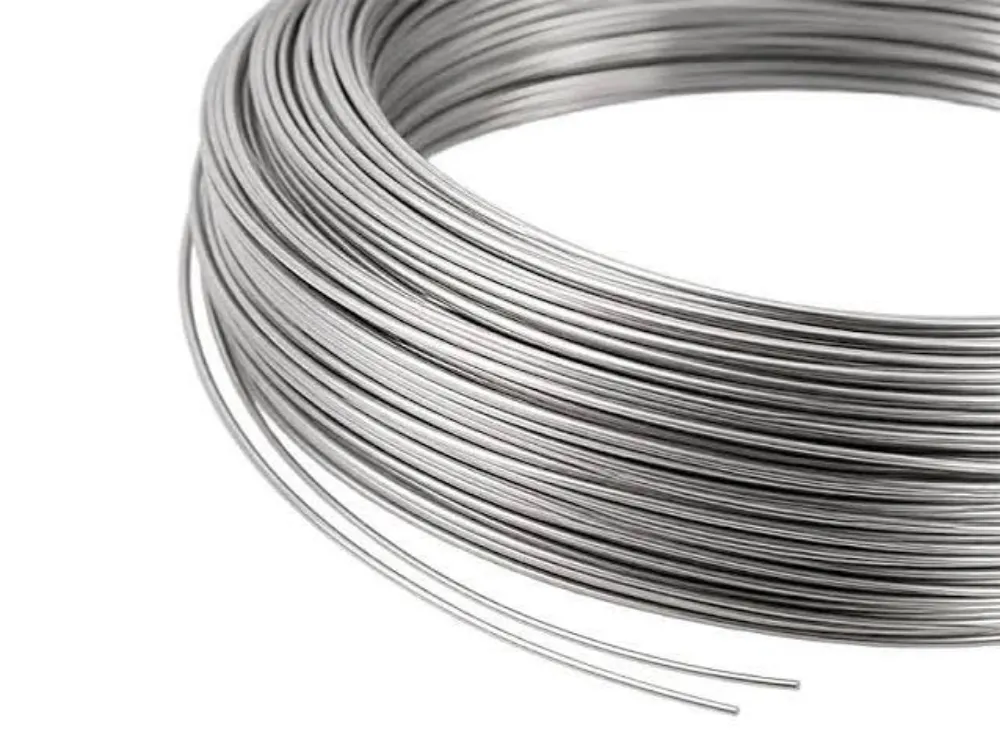
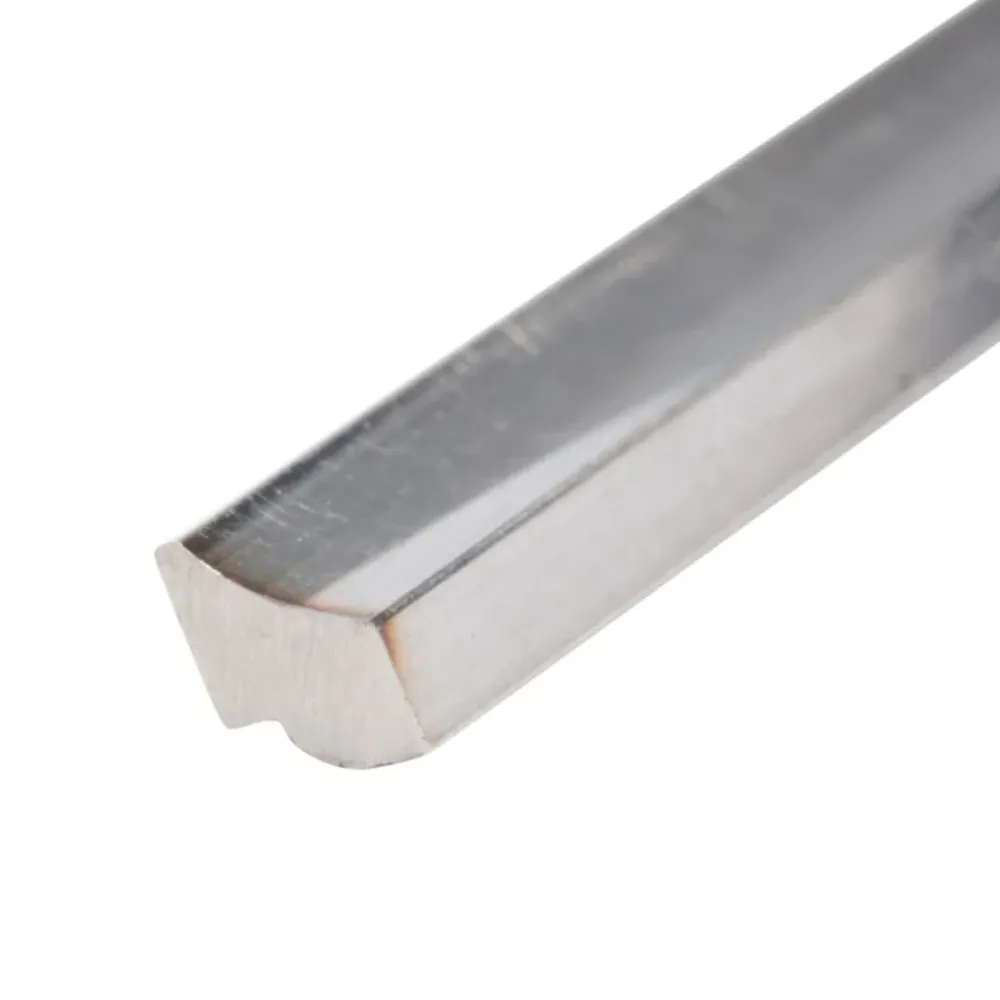
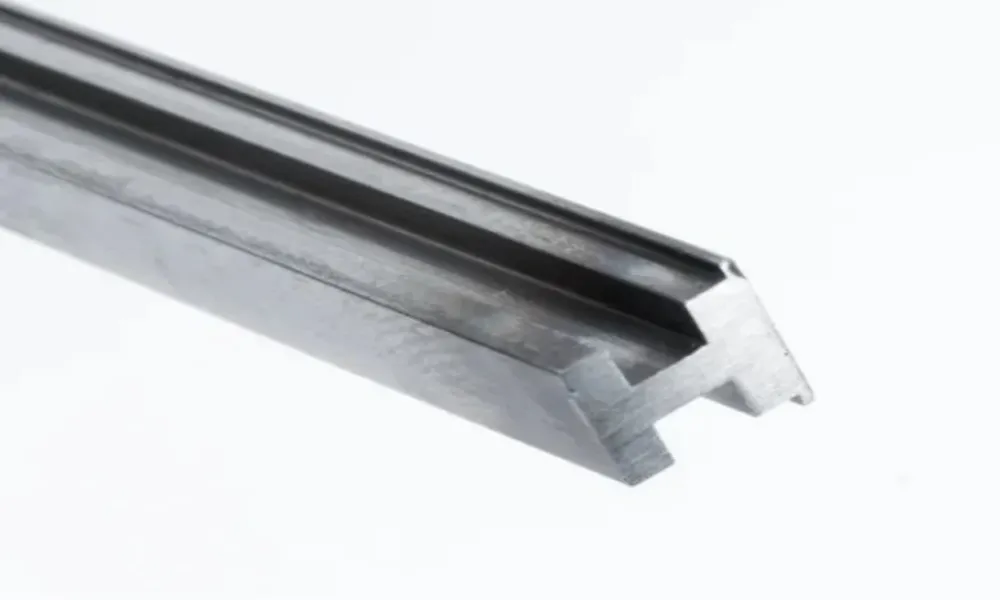
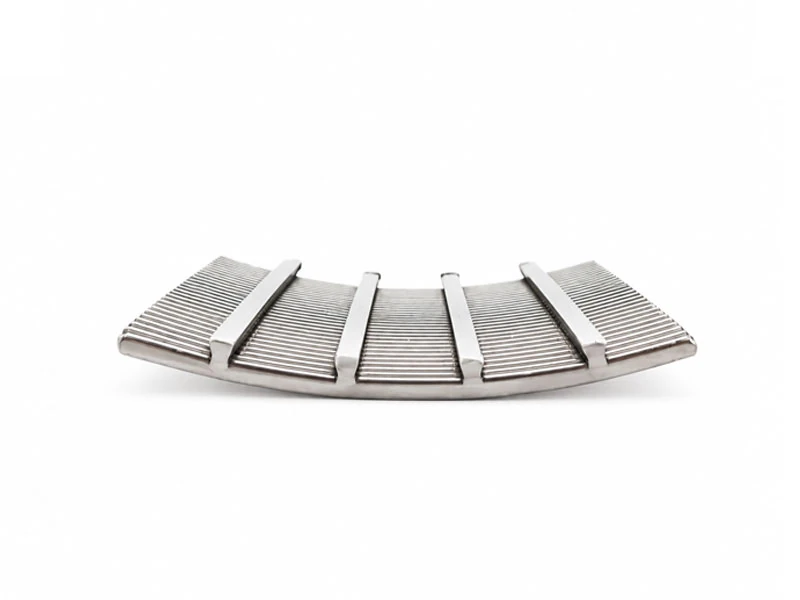
A wedge wire sieve bend is a curved screening element used for solid-liquid separation, dewatering, and classification. Engineers also call it a DSM screen, a curved screen, or simply a sieve bend. Whatever the name, the idea is the same: instead of pushing material through a flat mesh, you let it flow down a concave surface made of V-shaped stainless steel wires.
Those wires are the key. Each one is welded to support rods underneath, and the gaps between them form continuous slots that run across the screen. Because the slots are narrow at the surface and widen toward the inside, particles either pass through cleanly or stay on top — they do not get wedged in the middle. That is why a sieve bend keeps working without frequent cleaning, even with sticky or fibrous materials.
The whole assembly sits in a stainless steel frame, which makes installation into existing equipment straightforward. A typical unit is curved at 45° or 60°, although other arc angles are available.
How Does a Wedge Wire Sieve Bend Work?
The working principle is simple, and it costs nothing to run. Slurry is fed tangentially onto the upper part of the curved surface. As the liquid flows down the concave screen, the sharp edge of each V-shaped wire cuts through the thin water layer and breaks its surface tension. Water and fine particles are deflected and pass through the slots, while larger solids keep sliding along the arc and drop off at the lower end.
Two effects make this more efficient than ordinary sieving. First, the Coanda effect: liquid tends to hug the curved surface, which extends its contact time with the screen and gives more water a chance to escape through the slots. Second, the V-shape itself: since each slot is wider on the inside, a particle that clears the opening never gets stuck further down. The result is a screen that separates continuously and stays open without power.
With no rotating parts, there are no bearings, belts, or motors to service. Many plants use sieve bends as a low-cost first stage, removing the bulk of suspended solids before water reaches pumps, cyclones, or biological treatment.
Key Parameters at a Glance
When you compare sieve bend options, four parameters describe most of the performance. The table below shows the typical ranges.
| Parameter | Available Range / Value |
| Arc angle | 45°, 60°, 90°, 120°, 140°, 150°, 180°, 270°, 300° |
| Slot width | 1 mm – 10 mm |
| Dimensional tolerance | ±0.05 mm |
| Treatment capacity | 60 – 750 m³/h, rising with screen width |
Arc angle controls how long the material stays on the screen. Slot width controls what size of particle gets through. Tolerance matters when you need consistent separation in a continuous process. Capacity tells you how much slurry one unit can handle, and wider screens simply move more.
Where Are Sieve Bends Used?
Sieve bends appear wherever a plant needs to take solids out of a liquid stream cheaply and reliably. The most common applications include:
- Starch processing — separating starch granules from fiber, protein, and other residues when processing potatoes, corn, or cassava
- Wastewater treatment — removing suspended solids before downstream treatment stages
- Laundry and washing water cleanup — recovering water and capturing lint and fibers
- Livestock, aquaculture, and fruit-and-vegetable processing wastewater — reducing organic load before discharge
- Mineral processing — dewatering and desliming in coal and ore washing lines
- Paper production — recovering fiber from white water
- Textile plants — filtering fibers and solids from dyeing and washing effluents
In a starch line, for example, the slurry is passed over a series of screens so that starch granules are concentrated while fibers and proteins are washed away. A wedge wire screen for starch filtration does this without clogging, which matters a great deal when the feed is as sticky as starch slurry. In wastewater plants, the same geometry acts as a cheap insurance policy: it protects pumps and biological tanks from heavy solids before more expensive equipment has to handle them.
Sieve Bend vs. Other Screening Options
Why choose a curved screen over a flat one or a perforated plate? The differences come down to three practical points.
- Better anti-clogging. The continuous V-shaped slots leave no place for near-size particles to lodge, unlike round holes in a perforated plate. This matters most when the material is sticky, fibrous, or high in solids.
- Higher open area. Because the slots run continuously across the surface, liquid finds more passage than it would through punched holes, so flow moves faster with less pressure loss.
- Greater capacity per unit. As material flows against a curved surface, the screen processes more than a flat panel of the same footprint, which is why sieve bends suit high-throughput lines.
None of this means flat screens are wrong. Flat wedge wire panels still win when you need a large, simple surface for gravity drainage. The curved design simply earns its place where throughput matters and space is tight.
How to Choose the Right Sieve Bend
Choosing a sieve bend does not require an engineering degree, but a few decisions do shape the result.
Start with your separation target
Decide the particle size you want to remove. As a rule of thumb, the actual separation point is about half the slot width. If you need to hold back particles around 0.5 mm, a 1.0 mm slot is usually a reasonable starting point. Fine slots give cleaner liquid; wider slots give higher flow.
Match the arc angle to your slurry
The arc angle sets how long the material stays in contact with the screen. Low angles such as 45° suit high-volume, coarse separation. Larger angles such as 60° or 120° give more residence time, which helps with finer cuts and higher solid content. For slurries with a lot of solids, plan on a bigger arc so the water has time to drain.
Size the width for your flow
The wider the screen, the more slurry it can handle. Capacity rises with width, typically within the 60 to 750 m³/h range depending on the configuration. Estimate your peak flow first, then leave a margin so the screen never becomes the bottleneck.
Choose the material for the environment
Stainless steel grades are the default for good reason: they resist corrosion, abrasion, and heat. For food and starch applications, choose a grade that meets food-contact expectations. For highly corrosive or abrasive slurries, a higher-alloy grade costs more, but it lasts much longer. With the right material, a wedge wire sieve bend screen holds its slot accuracy over a long service life.
Tianjin Jingzhou Metal Products’ High-Efficiency Wedge Wire Curved Screen (DSM Sieve Plate)
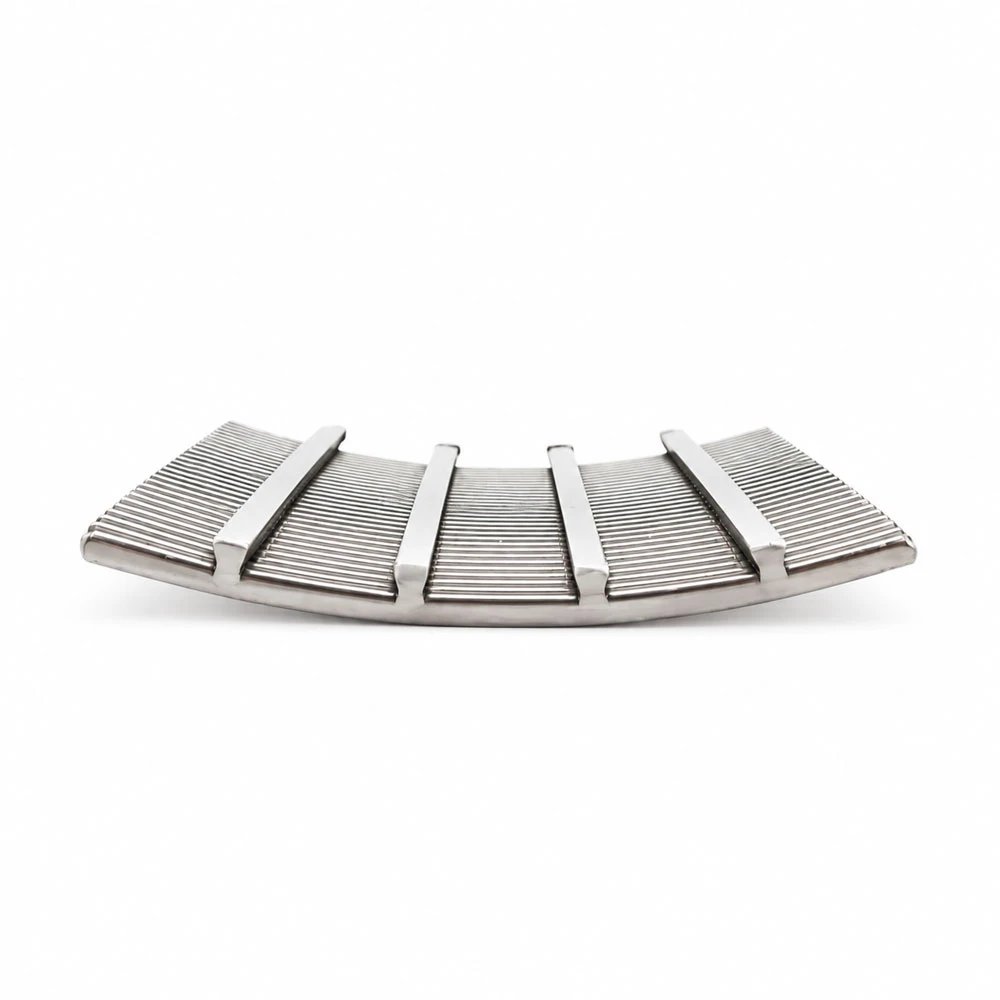
Tianjin Jingzhou Metal Products manufactures the high-efficiency wedge wire curved screen as a complete, welded unit: V-shaped profile wires fusion-welded to support rods, formed into the arc you specify, and finished with a stainless steel frame. Everything is made to order, so the screen fits the machine you already have rather than the other way around.
Built for continuous, non-clogging separation
The continuous V-slot design keeps the surface open even when the feed is sticky or high in solids. Because the screen cleans itself as material slides down, it runs continuously without frequent stops — which is the difference between a screen that earns its place and one that spends its life being scrubbed.
Customization that fits your line
Slot width, arc angle, size, and material are all adjustable. The standard offering covers arc angles from 45° to 300°, slot widths from 1 to 10 mm, and a dimensional tolerance of ±0.05 mm, with treatment capacity from 60 to 750 m³/h depending on screen width. Send a drawing or a few key numbers, and the screen is built around your process.
A field example: wastewater treatment in Mexico
One recent installation shows how the numbers come together. A Mexican customer treating wastewater ordered three 60° sieve bends in one batch, each measuring 130 cm by 120 cm and built from 2.3 × 3.5 mm wedge wire on 3 × 4.5 mm support bars. The three screens carried slot widths of 1.0, 2.0, and 3.0 mm because each treatment stage needed a different cut point. Ordering all three from one source kept the delivery dates aligned. The screens came from a source manufacturer that controls the full chain from wire rod to profile wire to finished panel. Precision cold drawing holds the wire diameter within ±0.01 mm, so all three slot widths meet the same precision standard. A two-draw, two-anneal cycle keeps the wire material consistent, which is why all three screens match in corrosion and wear resistance. The staged setup covered a wide particle range while keeping maintenance simple — the kind of fit that comes from treating each screen as a custom component rather than a shelf item.
FAQ
What is the core separation principle of a sieve bend?
The separation relies on the Coanda effect and a “cutting” action. As the liquid stream flows along the curved screen surface, the sharp side edge of the wedge wire cuts through and breaks the surface tension of the water film, so that water and fine particles are stripped off and pass through the slots. Solid particles, because of their inertia, cannot follow the sharp turn of the flow and are retained on the surface. Unlike simple sieving through a common mesh, this cutting action separates more efficiently.
Why doesn’t a sieve bend clog easily?
The wedge wire slots are narrow at the top and widen toward the inside. A particle touches the slot at only two points as it enters: particles larger than the slot are retained, while smaller ones pass through smoothly, with no mid-size zone where particles can jam. The unit has no moving parts, so solids slide off the curved surface on their own, which gives the screen strong self-cleaning ability.
What should you pay attention to in daily maintenance?
Check the screen surface for clogging and wear on a regular schedule. Reversing the panel from time to time keeps the wear even. Also check whether the feed box distributes the material evenly — uneven feeding lets water run through part of the screen and lowers the utilization of the screen surface. If clogging becomes severe, a high-frequency knocker or an automatic water flushing system can be installed.
What feeding methods are available?
Two main options exist. Gravity feeding relies on the natural fall of the slurry and suits coal preparation and mineral processing. Pressure feeding requires a pump and suits applications that need a higher feed pressure, such as classification in cement grinding. Feed uniformity directly affects how much of the screen surface is used, so a buffer distribution box is recommended.
Conclusion
A wedge wire sieve bend is one of the simplest pieces of separation equipment a plant can install. It needs no power, it resists clogging, and it keeps working while surrounding machines stop for maintenance. The curved geometry raises throughput, while the V-shaped slots keep uptime high. Start with three numbers — slot width, arc angle, and screen width — and the right choice usually becomes clear. If you are planning a new dewatering line or replacing an existing sieve bend, send us your slot width, arc angle, and flow rate. We will come back with the matching technical datasheet, CAD drawing, and quotation.