Introduction
Selecting the right stainless steel zipper wire grade is one of the most critical decisions in metal zipper manufacturing. The material choice directly affects magnetic properties, corrosion resistance, manufacturing costs, and—most importantly—whether the finished zipper can pass the needle detector test required by garment and luggage manufacturers.
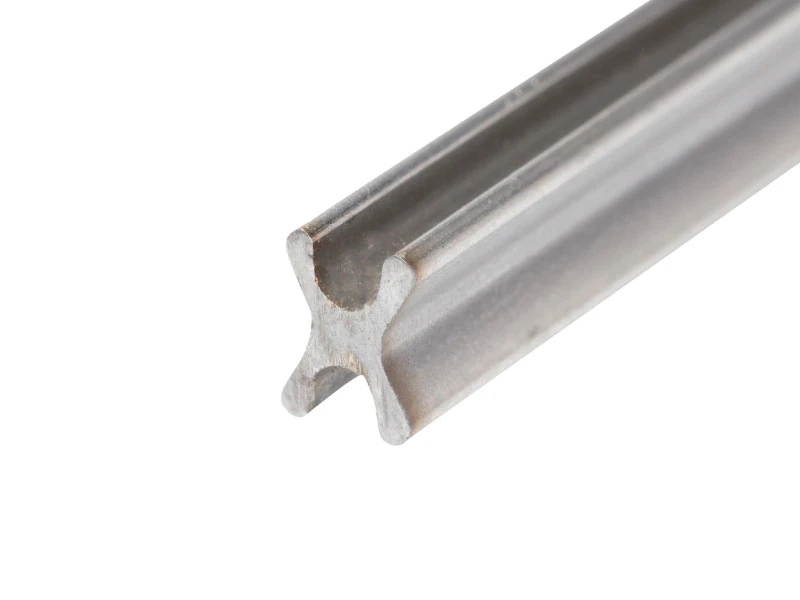
For engineers and procurement specialists working with Y-type zipper wire (zipper teeth), X-type zipper wire (bottom stops),understanding the performance differences between available stainless steel grades is essential.
This guide provides a systematic comparison of four stainless steel grades—430, 304, 204W, and 300W—and explains how to match each grade to your specific application requirements, from cost-sensitive general use to high-performance applications demanding the lowest possible magnetic response.
Understanding Zipper Wire Types: Y and X
Before selecting a material grade, it is important to understand the two primary zipper wire profile types and their respective functions in zipper construction.
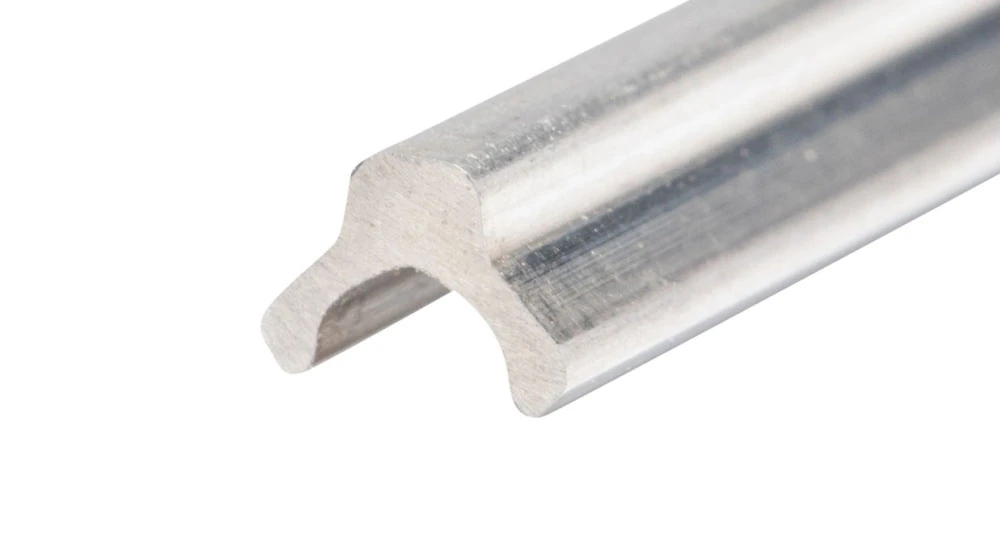
Y-Type Zipper Wire (Zipper Teeth)
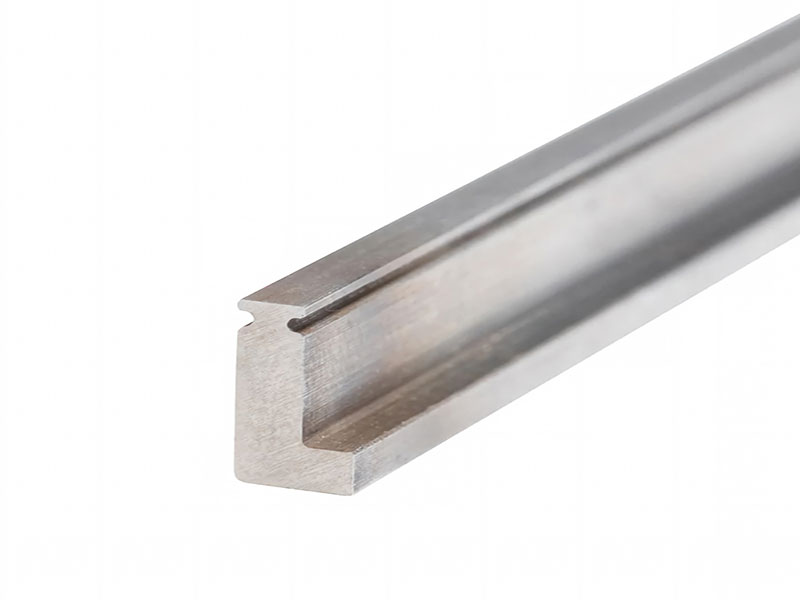
Y-type zipper wire features a Y-shaped cross-section that, after stamping, forms the interlocking teeth running along the entire length of the zipper chain. These are the teeth that engage and disengage when the zipper is opened and closed. The Y-shape provides the structural symmetry and occlusal stability required for smooth, high-speed zipper operation. This is the most common and highest-volume zipper wire application.
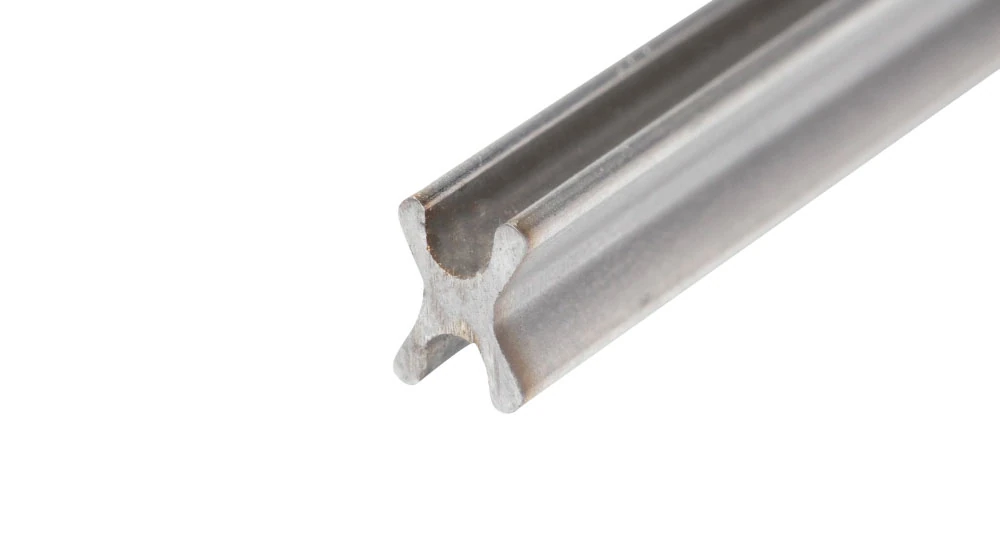
X-Type Zipper Wire (Bottom Stops)
X-type zipper wire has a cross-shaped or X-shaped cross-section. It is used to manufacture bottom stops (also called rear stops) that are attached to the bottom of the zipper chain. The X-shape creates a symmetrical four-prong structure that securely anchors the bottom of the zipper, preventing the slider from sliding off the chain.
Surface Treatment Options for Zipper Wire
The surface treatment applied to stainless steel zipper wire directly affects its performance in downstream processes.
Plain Water Rinsing is the standard process for most zipper wire products. Rinsing with clean tap water removes residual acids, alkalis, and lubricant powders left over from drawing and pickling. This is a cost-effective option that meets the requirements of standard zipper production.
DI-Water Rinsing uses deionised water with extremely low impurity content. This minimises water spots and salt residues on the wire surface, improving corrosion resistance and providing a cleaner surface for downstream electroplating. This option is recommended for high-end quality orders and applications requiring high salt-spray performance.
Heavy-Wash Treatment is a pre-treatment process that enhances the material’s resistance to corrosion before the zipper goes through severe washing cycles. Once finished, the zipper can withstand the high-temperature stone washing and enzyme washing commonly used in denim and workwear production. This significantly reduces the risk of zipper blackening, rusting, or discolouration.
Bright Drawn wire is produced by drawing the material through dies that create a smooth, bright surface without the need for additional polishing. The bright appearance and consistent surface quality improve stamping stability and provide a uniform base for electroplating. This is a popular surface condition for metal zippers where appearance matters.
Four Stainless Steel Grades Compared
The table below provides a side-by-side comparison of the four stainless steel zipper wire grades covered in this guide, based on magnetic properties, corrosion resistance, cost, and typical applications.
| Property | 430 | 304 | 204W | 300W |
| Magnetic Property | Magnetic | Weakly magnetic | Non-magnetic | Non-magnetic |
| Needle Detector Test Level | Fails (below Level 1) | Fails | Levels 5–6 | Level 8 and above |
| Corrosion Resistance | Poor | Excellent | Better than 430, below 304 | Close to 304 |
| Relative Cost | Low | High | Moderate | Same as 304 |
| Suitable for Electroplating | No | Yes | Yes | Yes |
Detailed Grade Analysis
430 Stainless Steel – The Budget Option
430 is a ferritic stainless steel grade that is magnetic and offers the lowest corrosion resistance among the four grades. It is the most cost-effective option but cannot pass the needle detector test at any meaningful level. This grade is suitable for basic garment zippers, luggage zippers, and leather goods where corrosion resistance is not a critical requirement and no chemical washing or electroplating is involved.
304 Stainless Steel – The Industry Benchmark
304 is the most widely used austenitic stainless steel grade. It offers excellent corrosion resistance and is weakly magnetic in its annealed condition. However, 304 cannot pass the needle detector test in most garment manufacturing settings, as it retains sufficient magnetic response to trigger detection equipment. Buyers of 304 zipper wire often perform additional demagnetisation treatment after receiving the material. This grade suits basic garment zippers, luggage zippers, and leather goods without critical corrosion resistance requirements, chemical washing, or electroplating.
204W – The Balanced Non-Magnetic Option
204W is a non-magnetic stainless steel grade developed by Jingzhou Metal for zipper wire applications. It offers:
- Low magnetic properties – passes needle detector test at Levels 5–6
- Corrosion resistance – superior to 430 but does not reach the level of 304
- Cost – moderate, positioned between 430 and 300W/304
- Electroplating suitability – performs well with electroplating processes
204W is the ideal choice for electroplated zippers and decorative hardware requiring non-magnetic properties at a moderate cost.
300W – The High-Performance Non-Magnetic Option
300W is a non-magnetic stainless steel grade that represents Jingzhou Metal’s latest advancement in zipper wire material development. Key characteristics include:
- Ultra-low magnetic properties – passes needle detector test at Level 8 and above, the highest classification
- Corrosion resistance – approaches that of 304 stainless steel
- Cost – same as 304, offering premium performance at a competitive price point
- Composition – features a +0.5% copper (Cu) addition compared to standard 300 series, enhancing corrosion resistance and non-magnetic stability
300W is the recommended choice for high-end garment applications, export markets with strict needle detector requirements, and any application where the lowest possible magnetic response is critical.
How to Choose the Right Grade for Your Application
| Application Scenario | Recommended Grade | Rationale |
| Basic zippers, no chemical washing, no electroplating | 430 | Lowest cost, corrosion resistance not critical |
| Electroplated zippers, moderate budget | 204W | Non-magnetic, electroplating-friendly, moderate cost |
| Heavy washing, marine environments, high corrosion resistance | 304 | Excellent corrosion resistance, demagnetisation can be applied |
| Export markets with strict needle detector standards | 300W | Passes Level 8+, meets international compliance requirements |
Why Choose Jingzhou Metal for Your Zipper Wire
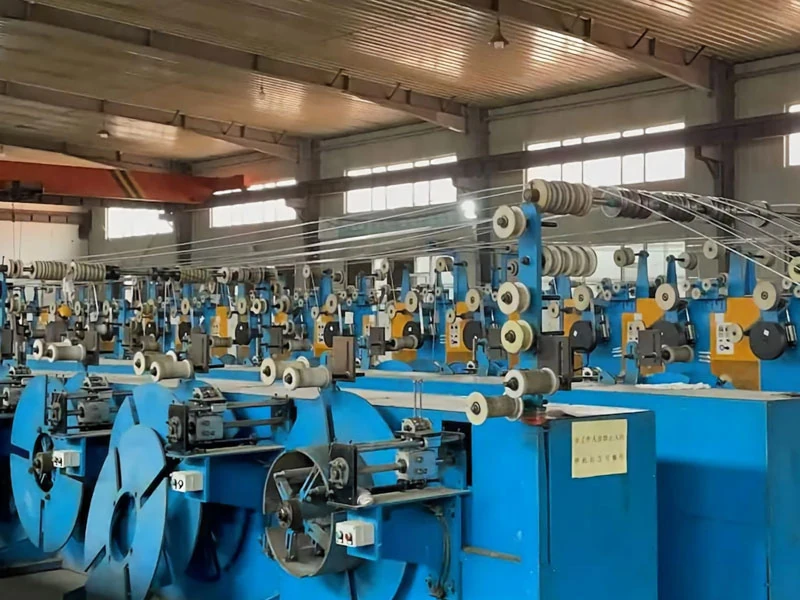
Tianjin Jingzhou Metal Products Co., Ltd. (Jingzhou Metal) has been manufacturing precision stainless steel zipper wire and profile wire products since 2009. The company operates three production facilities spanning 18,000 square metres with over 80 production lines and an annual production capacity of 18,000 tonnes.
Jingzhou Metal has developed 204W and 300W as proprietary non-magnetic zipper wire grades specifically engineered for the zipper industry. These grades meet precise dimensional tolerances and come with full material traceability and inspection certificates.
Key capabilities:
- Proprietary 204W and 300W non-magnetic stainless steel grades
- Precision cold drawing with tolerances down to ±0.01mm
- Full OEM/ODM customisation for Y-type, X-type
- ISO 9001 certified quality management
- Strategic location near Tianjin Port for efficient global export logistics
Frequently Asked Questions (FAQ)
Q1: Which stainless steel grade passes the needle detector test?
A: 204W passes at Levels 5–6, while 300W passes at Level 8 and above—the highest classification. Standard 304 and 430 grades cannot pass the needle detector test at meaningful levels.
Q2: What is the difference between 204W and 300W?
A: Both are non-magnetic zipper wire grades developed by Jingzhou Metal. 204W offers moderate corrosion resistance (better than 430, below 304) and passes needle detector at Levels 5–6, at a moderate cost. 300W offers corrosion resistance approaching 304 and passes at Level 8+, at the same cost as 304.
Q3: What surface treatment options does Jingzhou Metal offer for zipper wire?
A: Jingzhou Metal offers four surface treatment options: plain water rinsing (standard), DI-water rinsing (for electroplating and high salt-spray requirements), heavy-wash treatment (for denim and workwear), and bright drawn (for high-appearance applications).
Q4: What dimensional tolerances does Jingzhou Metal guarantee on zipper wire?
A: Jingzhou Metal maintains dimensional tolerances of ±0.01mm across all stainless steel zipper wire products, achieved through advanced cold drawing and ISO 9001 quality control.
Conclusion
Selecting the right stainless steel zipper wire grade requires balancing magnetic properties, corrosion resistance, and cost. For applications where the needle detector test is a critical requirement, 204W (Levels 5–6) and 300W (Level 8+) offer non-magnetic solutions that standard 304 and 430 grades cannot provide.
Jingzhou Metal supplies custom zipper wire in Y-type, X-type, and H-type profiles, with proprietary 204W and 300W non-magnetic grades, precise tolerances, and full material traceability. Contact Jingzhou Metal today to discuss your zipper wire requirements or request a technical consultation.