Key Takeaways
- A V-shaped profile creates slots that are narrow at the surface and wider beneath it, so particles tend to pass through instead of lodging in the gap.
- Four details define the wire: width, height, apex angle, and how faithfully the outline is held from one coil to the next.
- A taller wire does not automatically make a stronger screen, because support rods, weld quality, and drum diameter also carry the load.
- The apex angle shapes the outline, while slot width comes from how closely the wires are spaced and which way they face.
- Buyers get fewer surprises when the drawing names the grade, both profile dimensions, the angle, the dimensional tolerance, the surface, the hardness state, the packing, and the end use.
What V-Shaped Wedge Wire Actually Is
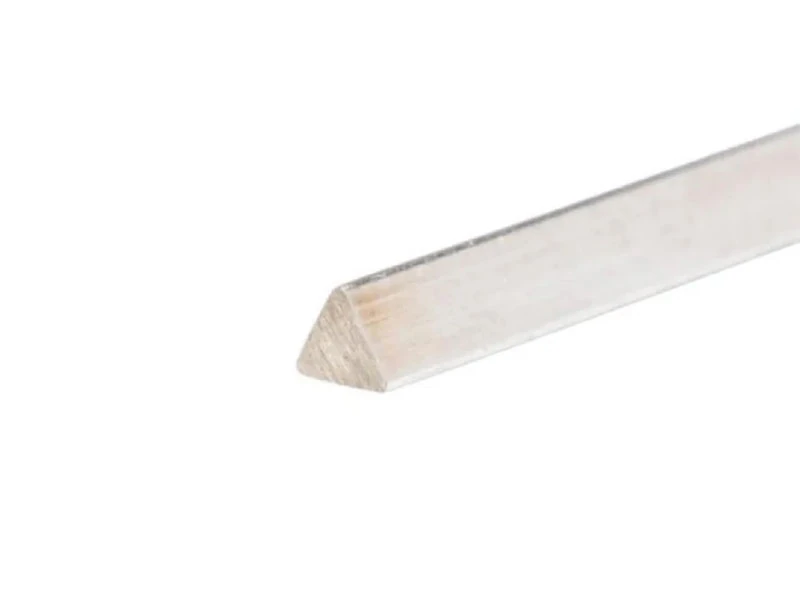
Most industrial screens are built by laying shaped wires side by side at a controlled pitch, then welding each one to a row of support rods. What varies is the cross section of the wire itself. A Wedge Wire uses a triangular section rather than a round one, and suppliers also call it Triangular Wire. The names sound interchangeable in casual conversation, yet both point to the same geometry.
Why the V Shape Exists
The V Wire label comes from the two sloping sides, which converge toward the back of the section. Because the gap widens behind the surface, a particle that enters the slot finds more room, not less. It keeps moving instead of wedging in place. During backwash, debris releases easily, which makes the surface self-cleaning.
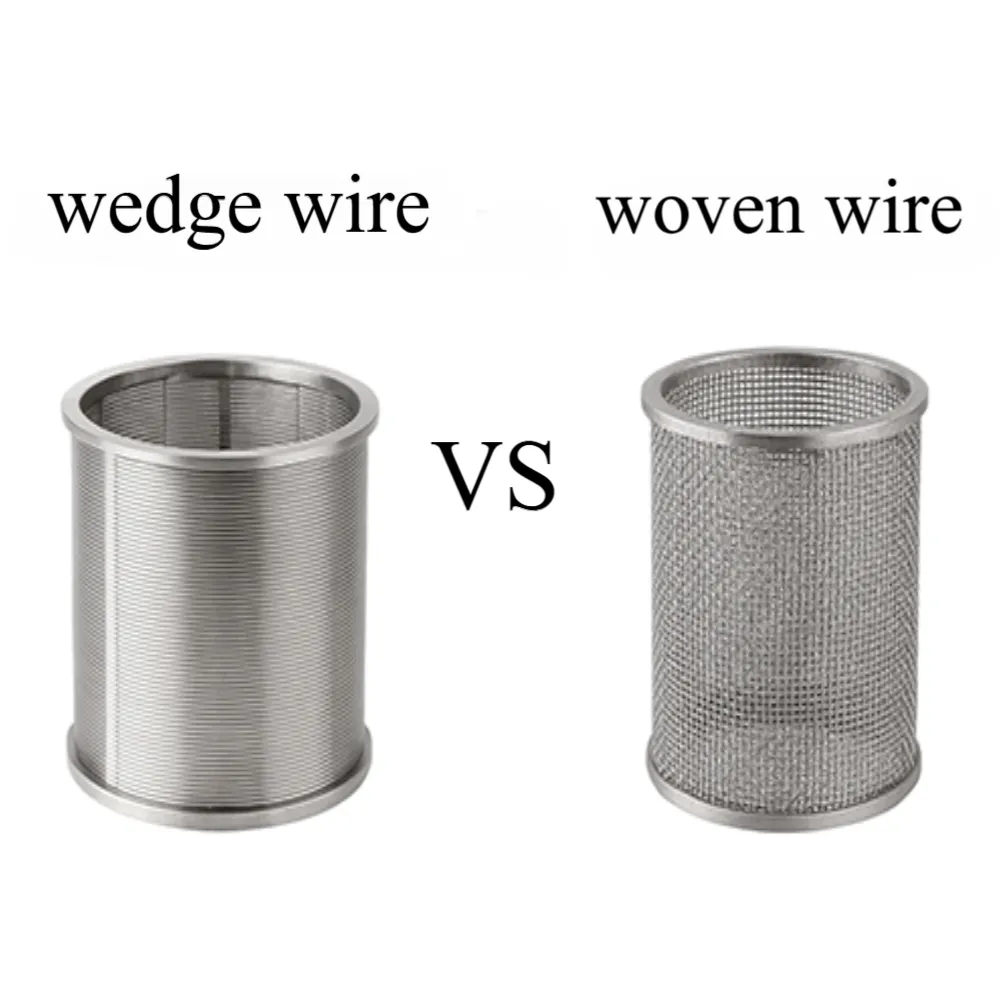
Round wire behaves differently. Two round wires touch along a narrow line, and the gap behind that line pinches shut. Grains get trapped there. Punched plate has straight holes that plug from the inside. Because neither shape clears itself, the filter media has to be replaced sooner.
Where These Wires Are Used
Coal preparation plants rely on them for dewatering and desliming, and quarries fit them into vibrating screens and wash-plate decks. Starch, sugar, and brewing lines use the same geometry to separate solids from a liquid stream without losing throughput. Water wells place it in sand-control screens, while wastewater and chemical plants use it where a smooth surface and an open flow path matter. In all three sectors, engineers pick a Profile Wire for the same reason: the surface stays open while the slots stay accurate. In each case the wire is only one part of the assembly, because the frame, the support rods, and the weld pattern decide how the finished panel behaves.
Four Dimensions That Define a Profile
Engineers who work with a Triangle Wire have to settle four details before production starts. Width and height set the size of the section. The apex angle sets how sharply the sides converge. The outline itself has to stay consistent along the whole coil. None of these four works in isolation, which is why a screen that looks correct on paper can still behave badly in service.
Width, Height, Apex Angle, and Profile Symmetry
| Dimension | What it controls | Supplied range, tolerance, or checks | Common mistake |
| Width | Wire density on the surface, metal coverage, contact area for wear, and room left for slots | 1.0–5.0 mm | Assuming a wider wire leaves more open area |
| Height | Section stiffness, fit against support rods, overall build depth, and stability while welding | 2.0–6.5 mm | Treating a deeper section as a stronger screen |
| Apex angle | The taper, outline uniformity, wire orientation, and which winding equipment fits | Tolerance: ±1° | Using the angle to set slot width |
| Outline | Whether both slopes are even, whether top and bottom follow the drawing, and whether coils match | Symmetry, burrs, local deformation | Checking one coil and assuming the rest match |
Height does not decide how much load a screen can carry. It is tempting to assume that a deeper section will resist collapse better, because a taller beam looks stronger. In a finished screen, however, the load travels through the support rods as well. Rod size, rod spacing, weld quality, drum diameter, and the overall structure all take a share. A deeper wire helps stiffness, although it cannot compensate for a weak weld pattern or rods set too far apart.
The apex angle causes a similar misunderstanding. It defines the taper, not the gap. Slot width comes from the spacing between adjacent wires and the direction in which they are installed. Once the layout is fixed, changing the angle changes the outline, whereas changing the pitch changes the slot. Fabricators can build slots from 0.025 mm to 25 mm by choosing the matching pitch, and that range is set by the pitch rather than by the angle.
How Geometry Turns Into Screen Performance
Width has the clearest link to flow. When the slot stays the same, a wider surface wire occupies more of the screen, so less of the area is left open. Narrower wires leave more open area, although they also offer less metal to absorb wear. Fabricators balance one against the other rather than maximising either.
Depending on the wire width and the slot chosen, open area usually sits between 25% and 40% and can reach 60%. At a given filtration accuracy, that translates into a higher flow rate than a round-wire or punched surface can deliver. Because debris releases during backwash, the surface stays open for longer, so throughput does not fall away as quickly as the screen ages.
Outline consistency matters just as much, even though it rarely shows up in a single number. If the two slopes are uneven, wires sit at slightly different heights. Welding becomes harder to position accurately, and the finished panel drifts out of tolerance. A buyer who checks symmetry, burrs, and local deformation early avoids most of these problems later.
What to Put on the Drawing Before You Order
A mill can only hold what the drawing defines. The following items belong on it:
- Material grade: 304, 304L, 316, 316L, duplex stainless, or another agreed alloy
- Width: the dimension of the wider face
- Height: the full depth from the wide face to the narrow end
- Apex angle: the angle required between the two slopes
- Dimensional tolerance: the allowed deviation for width, height, and other key dimensions
- Surface finish: bright, matte, or another agreed treatment
- Hardness state: annealed, hard drawn, or a state chosen for the downstream process
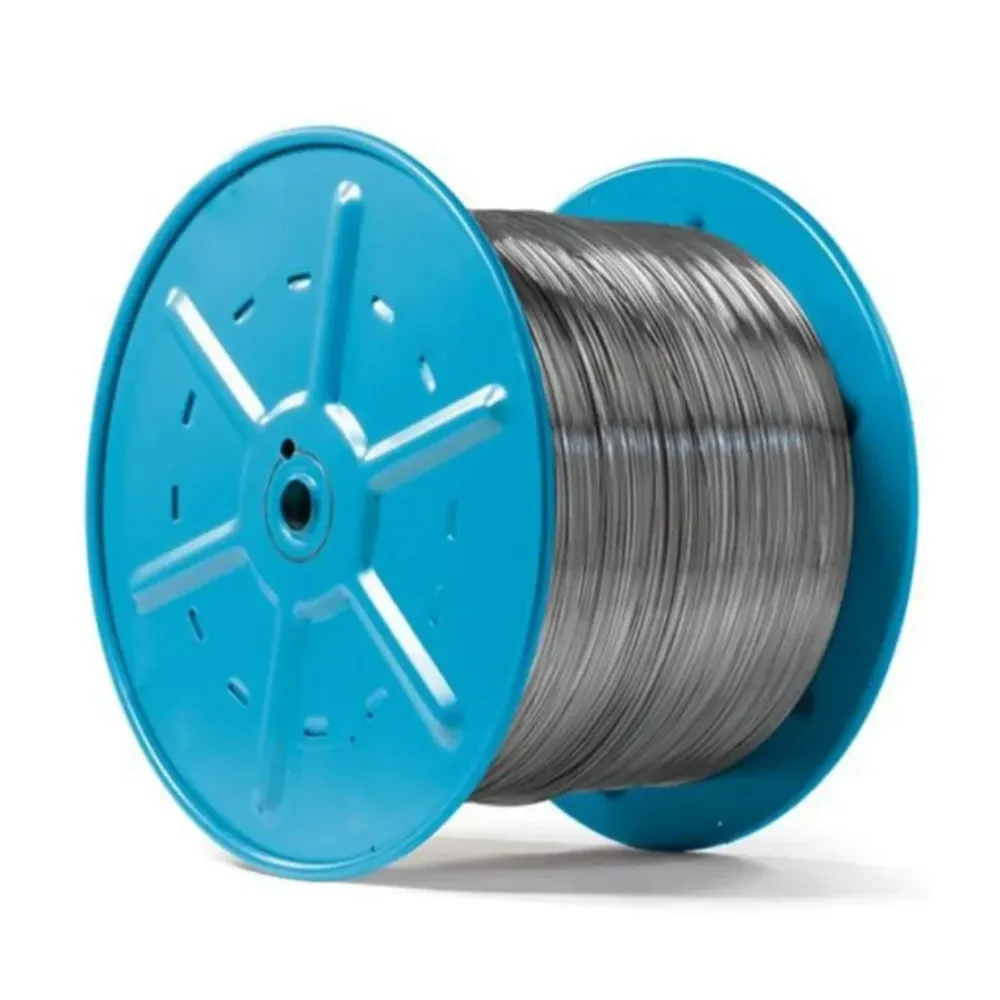
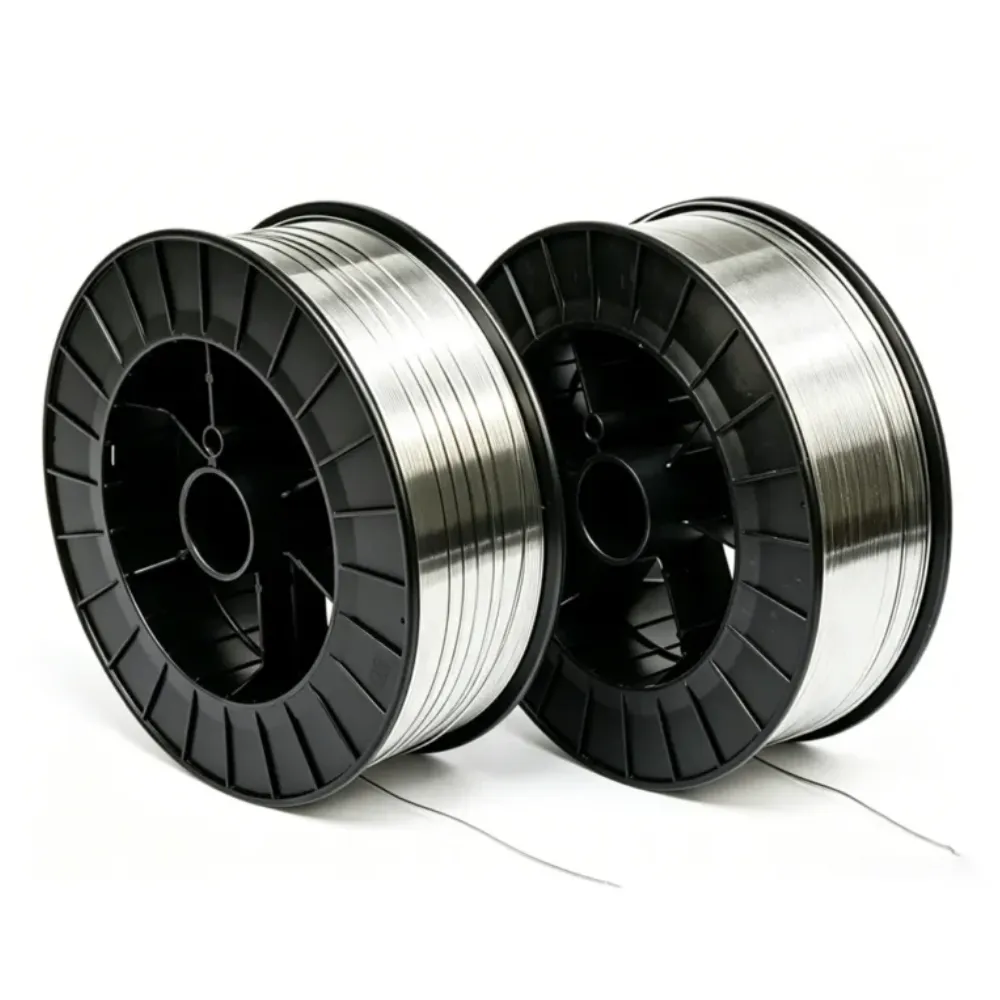
- Packing: coil, wooden spool, or steel spool
- End use: screen cylinder, screen panel, water well screen, or another filtration product
Matching the Profile to the End Product
The end use is more than a box to tick. A cylinder that will be wound and welded continuously needs a wire supplied in a form that suits that process, whereas a flat panel may tolerate a different hardness state. When fabricators name the finished product at the enquiry stage, the producer can align the profile and the packing with the way the wire will actually be handled.
Stainless Steel Triangle Wire from Tianjin Jingzhou Metal Products Co., Ltd.
Tianjin Jingzhou Metal Products Co., Ltd. has drawn stainless steel wire since 2009. Three plants on an 18,000 m² site in the Saida Industrial Park in Tianjin operate under a quality system certified to ISO 9001. V-shaped Stainless Steel Triangle Wire is one of the shaped-wire lines the plant produces regularly, and it reaches screen builders in Europe, America, Southeast Asia, and the Middle East.
Section Range, Grades, and Supply Forms
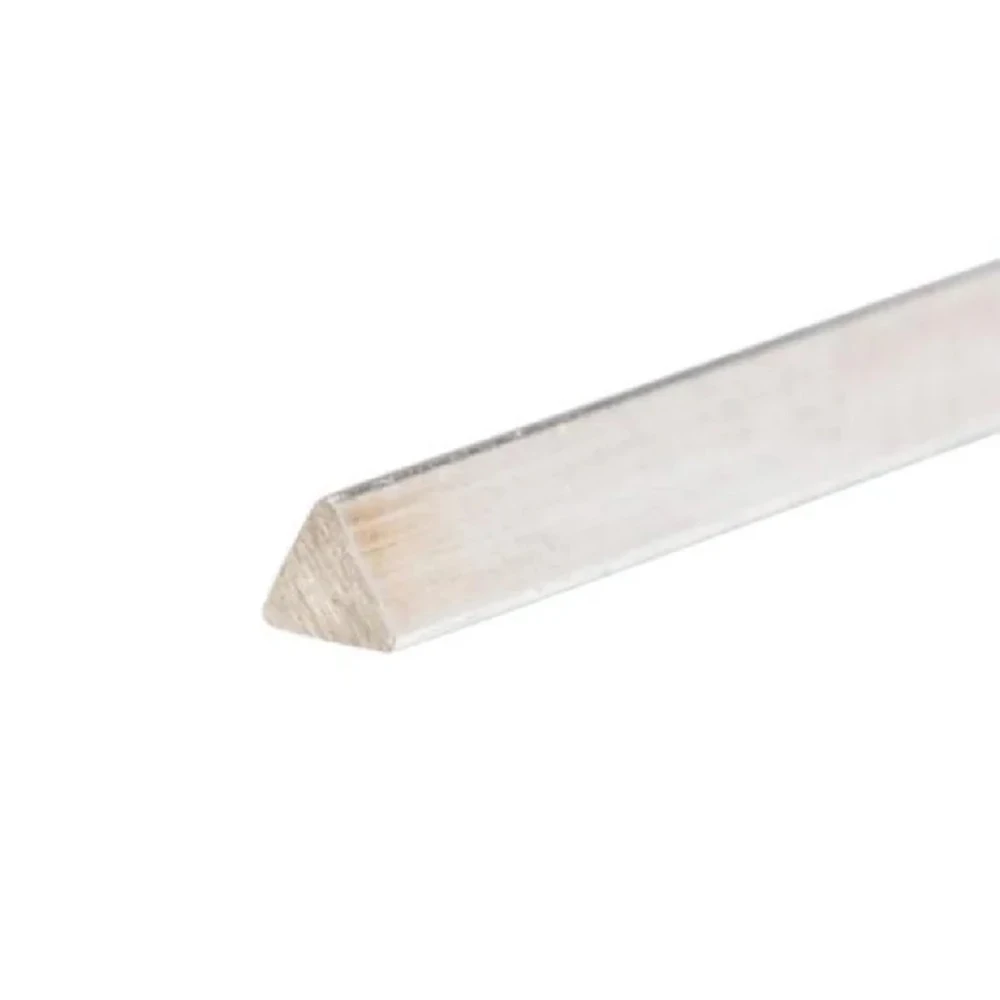
Stainless Steel Triangle Wire is available in widths from 1.0 to 5.0 mm and heights from 2.0 to 6.5 mm. Sections the plant regularly produces and can supply include 1.0×2.0, 1.52×2.7, 1.8×3.0, 2.2×4.5, and 3.0×5.0 mm, with tensile strength of 1200–1400 MPa. Buyers can choose 304, 304L, 316, 316L, or duplex stainless, and other alloys where the application calls for them. A bright or matte surface, an annealed or hard-drawn state, and packing on coils, wooden spools, or steel spools are all available.
Drawing Control and Apex Angle Tolerance
During drawing, operators adjust the tooling gap to the size and shape of the section. That gives the wire an accurate grip and keeps the triangular dimensions close to the drawing. Operators can hold the apex angle to a tolerance of ±1°. The wound wire goes into screen cylinders, flat panels, and water well screens. Fabricators use it for coal dewatering, starch and sugar filtration, brewing, wastewater treatment, or chemical processing.
Inspection Documents and Sample Support
Buyers can request dimensional inspection reports with each batch, so the delivered section can be checked against the drawing. A section size chart and a sample coil are available on request before a full order is placed, which lets fabricators confirm the profile, the surface, and the packing on a real wire first.
Frequently Asked Questions
What is the real difference between V-shaped wire and round wire in filtration?
A V-shaped section forms a slot that is narrow at the surface and wider behind it. Particles that enter rarely lodge, and backwash releases them easily, so the surface is self-cleaning. Open area is also higher, usually 25%–40% and up to 60%, which gives more flow at the same filtration accuracy. Round wire creates a gap that narrows behind the contact line, so grains jam inside and cleaning becomes difficult.
Does a taller profile make a stronger screen?
Not by itself. Height raises the stiffness of the individual wire, yet the finished screen carries load through several parts at once. Support rod size, rod spacing, weld quality, drum diameter, and the overall structure all matter. A deeper section cannot make up for rods placed too far apart.
Does the apex angle set the slot width?
No. The angle defines how sharply the two slopes converge and which equipment suits the wire. Slot width is set by the spacing between neighbouring wires and the direction they are installed. Change the pitch and the slot changes; change the angle and only the outline changes.
What should an enquiry include?
Name the grade, width, height, apex angle, dimensional tolerance, surface finish, hardness state, packing form, and end use. Stating the finished product early helps the producer match the wire to the winding or welding process it will meet.
Conclusion
Profile geometry is not a minor detail that can be left to the end of a drawing. Width decides how much of the surface stays open. Height shapes stiffness, although it does not decide load capacity on its own. The apex angle sets the taper, while the pitch sets the slot. Outline consistency ties all four together, because a wire that varies along the coil will not weld into a stable panel. Once a buyer sees those links, the choice of grade, finish, hardness state, and packing becomes much easier to justify. Screens built this way keep their flow longer. They need less frequent cleaning. Contact Tianjin Jingzhou Metal Products Co., Ltd. for the section size chart and a sample coil before you commit the full order, so the numbers on your drawing can be checked against a real wire.