Introduction
Water diversions for irrigation, hydroelectric power, municipal water supply, and industrial cooling create unavoidable risks to aquatic ecosystems. Fish eggs, larvae, and juvenile fish can be entrained into intake flows. Larger fish can become impinged against screening surfaces. The result is often injury or mortality to fish populations—and regulatory consequences for facility operators.
Wedge wire fish screens have emerged as one of the most effective technologies for excluding fish from water intakes while maintaining required flow rates. Unlike woven wire mesh or perforated plate screens, wedge wire screens offer a combination of structural strength, hydraulic efficiency, and biological performance. This makes them uniquely suitable for fish protection applications.
What Is a Wedge Wire Fish Screen?
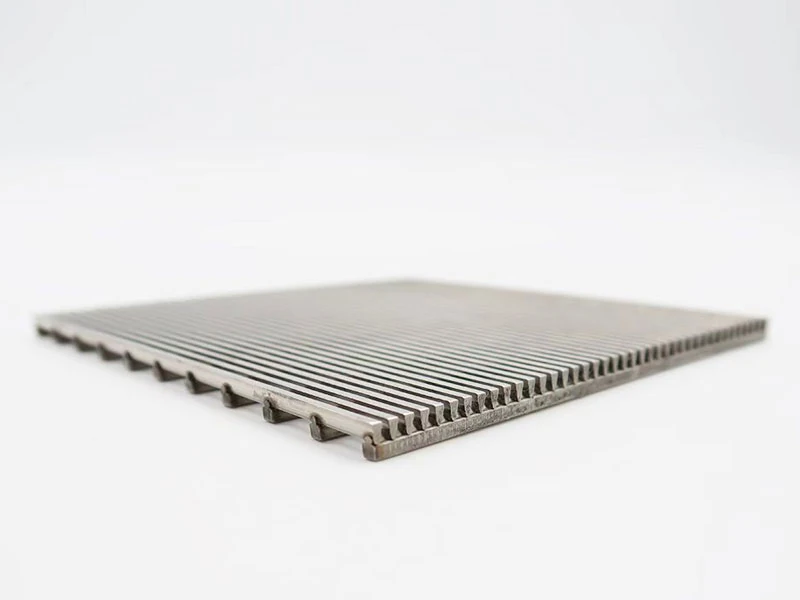
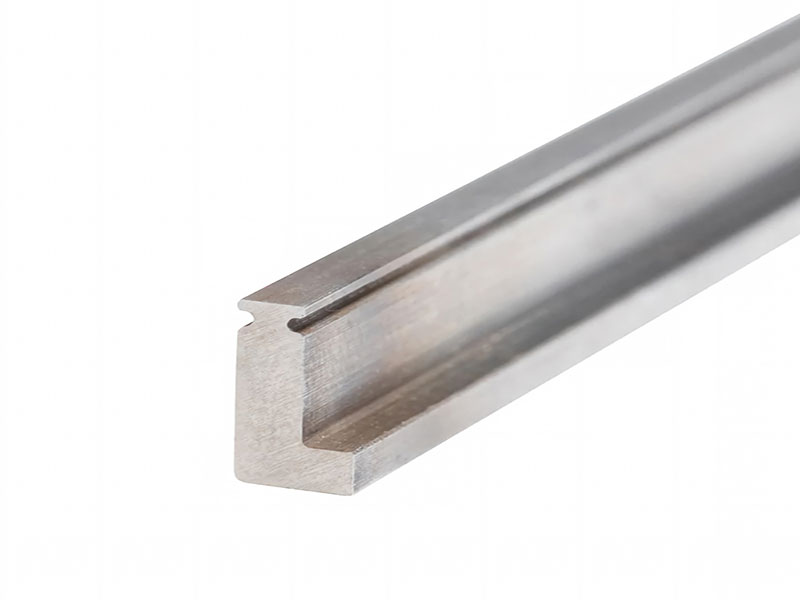
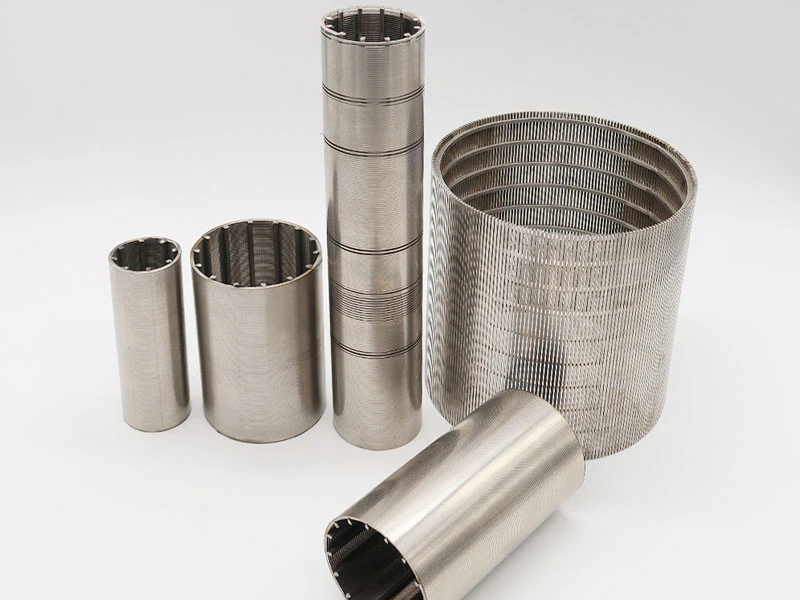
A wedge wire fish screen is a filtration device constructed from V-shaped (wedge) profile wires welded to longitudinal support rods. The V-shaped wire presents a flat surface to the incoming flow. The narrow base is welded to the support structure below. This creates continuous slots that are precisely calibrated to exclude fish and fish eggs while allowing water to pass through.
The key distinction between wedge wire screens and other screening media lies in the V-shaped profile itself. The slot is narrowest at the water-facing surface and gradually widens toward the interior. Any particle or organism small enough to pass through the surface opening encounters no pinch points or friction below. This reduces the likelihood of injury to fish that do pass through the screen. The two-point contact principle at the slot entrance also prevents debris from lodging and blinding the screen—a common problem with woven wire mesh and perforated plate screens.
Why Choose Wedge Wire Fish Screens for Fish Protection?
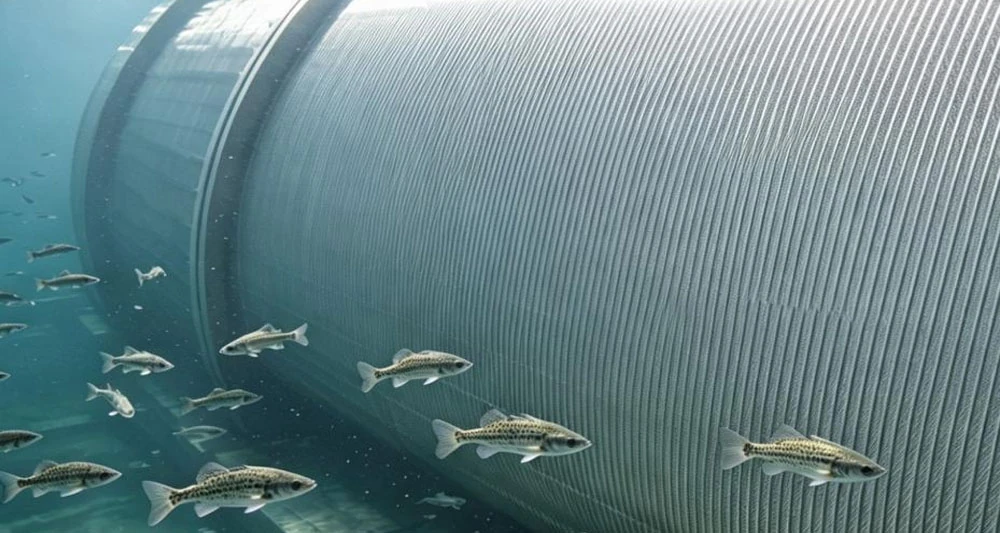
Fish exclusion screens must balance three often-conflicting requirements. They must physically exclude target fish species and life stages. They must maintain adequate flow rates for the diversion. And they must do so with minimal maintenance and without harming fish that come into contact with the screen surface.
Wedge wire fish screens excel in every aspect:
- Physical Exclusion: Slot sizes range from as small as 0.02mm up to 10mm, allowing precise matching to the target species and life stages requiring protection. Most fish exclusion applications use slot sizes between 1mm and 3mm.
- Hydraulic Performance: The continuous-slot design provides high open area (typically 25% to 60%), reducing through-slot velocities and the hydraulic forces that can draw fish toward the screen surface.
- Self-Cleaning Action: The V-shaped profile and smooth surface minimise debris accumulation. Fish exclusion screens have operated in harsh conditions for up to 20 years with minimal maintenance.
Key Design Parameters for Fish Exclusion Screens
Choosing a wedge wire fish screen starts with the right hydraulic and biological parameters. The goal is simple: protect fish while keeping water flowing smoothly through the intake.
Four factors deserve close attention: slot size, approach velocity, sweep velocity, and through-slot velocity. Each one affects fish protection and screen performance.
Slot Size
Slot size determines what can pass through the screen. For many fish protection projects, a 2 mm slot provides a good balance between fish protection and water flow. When the project also needs to protect eggs or very small larvae, a 1 mm slot may be more suitable.
As a general rule, choose a slot that is smaller than the minimum body size of the fish life stage you need to protect.
However, a smaller slot is not always better. It reduces the open area of the screen. This can increase the required screen area and may also increase cleaning needs.
Approach Velocity
Approach velocity describes how fast water moves toward the screen. It is one of the most important factors in fish protection.
A lower approach velocity gives fish more time to detect the screen and move away. For fish exclusion applications, designers commonly aim for an average approach velocity of 0.12 m/s or less.
Sweep Velocity
Sweep velocity moves water along the screen surface rather than directly toward it. It helps carry fish and debris past the screen and toward the downstream bypass area.
For effective fish protection, the sweep velocity should be higher than the approach velocity. A common design target is a sweep-to-approach velocity ratio of at least 2:1. In many applications, a ratio of 4:1 to 5:1 provides better guidance for fish movement.
Through-Slot Velocity
Through-slot velocity is the speed at which water enters the intake through the screen openings. Keeping this velocity low helps prevent fish from being pulled against or through the slots.
For fish protection applications, a through-slot velocity of 0.15 m/s or less is commonly recommended.
Material Selection for Fish Screens
The choice of stainless steel grade for wedge wire fish screens depends on the water chemistry and environmental conditions. The table below provides a quick reference for material selection.
| Material Grade | Typical Applications | Key Advantages |
| SS 304 / 304L | Freshwater, neutral pH, low chloride | Good corrosion resistance, cost-effective |
| SS 316 / 316L | Brackish water, estuaries, higher chlorides | Molybdenum content resists pitting and crevice corrosion |
| Duplex 2205 | Seawater, high-chloride environments | High strength, excellent pitting resistance |
| Duplex 2507 | Marine, aggressive chemical environments | Superior corrosion resistance in extreme conditions |
Screen Configurations
Wedge wire fish screens are available in several configurations. Each is suited to different site conditions and diversion types.
Flat Panel Screens
Flat panel wedge wire screens serve in bypass channels and fish capture facilities. They also operate in gravity diversions where space constraints or flow conditions favour a flat orientation.
Cylindrical Screens
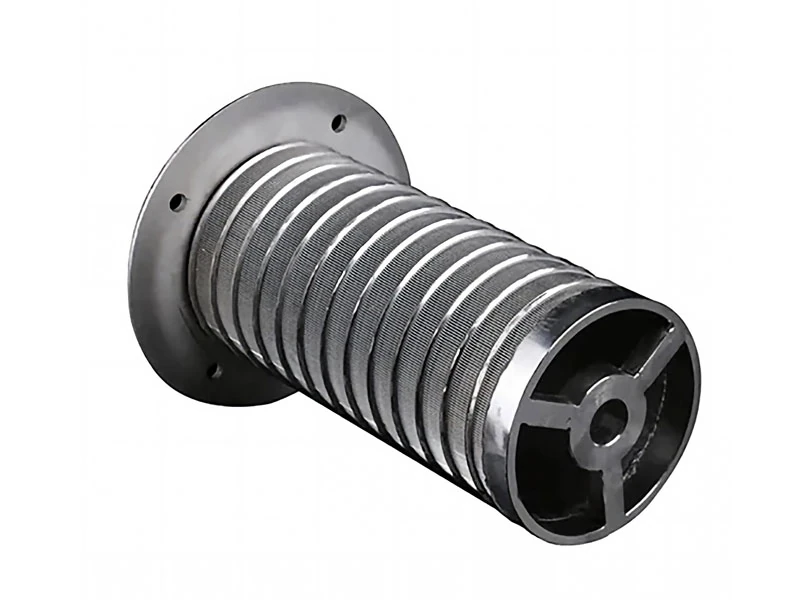
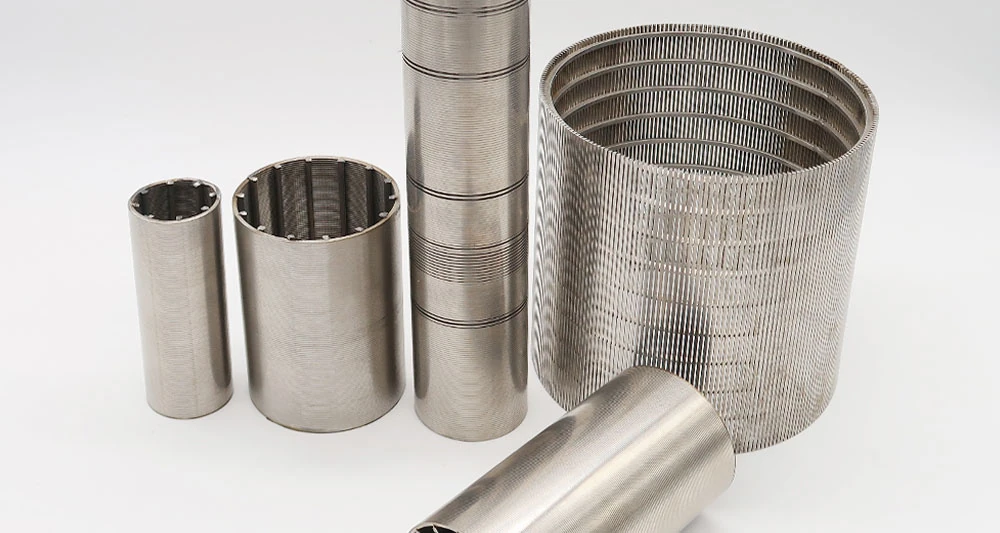
Cylindrical wedge wire screens offer maximum surface area for a given footprint. This reduces approach velocities and provides superior hydraulic performance. They are commonly used in river and canal diversions where space is limited but flow requirements are high.
Rotary Drum Screens
Rotary fish barrier screens incorporate wedge wire panels mounted on a rotating drum. They provide continuous self-cleaning action. These are particularly suited to high-debris waterways and applications requiring automated operation.
Installation Considerations
Successful fish exclusion screen installations depend on several site-specific factors.
Water depth affects screen sizing and configuration. Minimum and maximum depths must be assessed. Flow characteristics also matter—fast-flowing rivers, slow-moving canals, and gravity diversions each require different design approaches. Access for transportation, cranage, and maintenance influences installation methods and costs. Debris loading determines cleaning frequency; high-debris waterways may require more frequent cleaning or automated cleaning systems.Finally, automated cleaning and monitoring systems require power availability.
Why Choose Jingzhou Metal for Your Wedge Wire Fish Screen
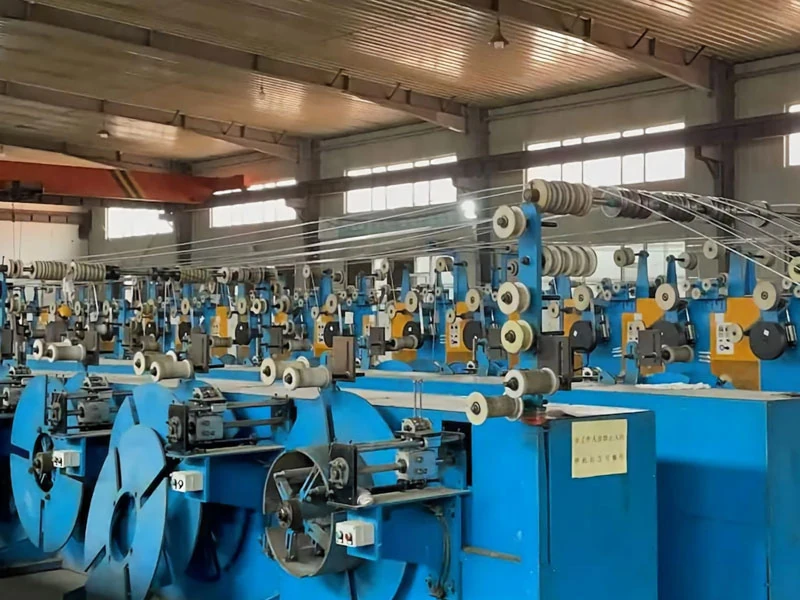
Tianjin Jingzhou Metal Products Co., Ltd. (Jingzhou Metal) has been manufacturing precision stainless steel wedge wire and profile wire products since 2009. The company operates three production facilities spanning 18,000 square metres. With over 80 production lines, it maintains an annual production capacity of 18,000 tonnes.
Product Specifications at a Glance
| Parameter | Specification |
| Material Grades | 304, 304L, 316, 316L, 321, 310S, 2205, 2507 |
| Slot Size Range | 0.02mm – 10mm |
| Slot Tolerance | ±0.01mm |
| Screen Length | Up to 6,000mm |
| Screen Diameter | 25mm – 1,000mm |
| Panel Height | 6mm – 40mm |
After-Sales Support & Technical Service
Jingzhou Metal provides comprehensive after-sales support for all wedge wire screen and fish exclusion screen products. The technical team offers drawing review, specification optimisation, and installation guidance. Jingzhou Metal also provides samples for large-volume custom orders, allowing clients to verify wedge wire quality and slot accuracy before mass production. With a strategic location near Tianjin Port, Jingzhou Metal offers efficient export logistics for global B2B buyers.
Frequently Asked Questions
Q1: Can Jingzhou Metal customise wedge wire profiles according to my drawings or specifications?
Yes. Jingzhou Metal provides full OEM/ODM customisation for wedge wire screens and stainless steel wedge wire products based on client drawings. We support custom profiles for fish exclusion screen, fish protection screen, and fish diversion applications, with slot sizes available from 0.02mm to 10mm in various stainless steel grades.
Q2: What slot size should I choose for a fish exclusion screen?
Selecting the right slot size depends on the smallest fish life stage requiring protection. A 2mm opening is the industry standard for general fish protection. If you are protecting fish eggs and small larvae, 1mm slots work better. For larger species that do not require fine exclusion, you can use slots up to 3mm.
Q3:Where is Jingzhou Metal located and what are the logistics advantages?
Tianjin, China, adjacent to Tianjin Port. This enables rapid container loading and lower freight costs for international buyers of stainless steel wedge wire and wedge wire fish screens.
Conclusion
Selecting the right wedge wire fish screen requires balancing biological protection requirements with hydraulic performance and site-specific constraints. Slot size, approach velocity, sweep velocity, and material selection are the key parameters that determine screen effectiveness.
By specifying 2mm wedge wire screens, maintaining approach velocities below 0.12 m/s, ensuring sweep velocities at least twice the approach velocity, and selecting the appropriate stainless steel grade for the water chemistry, facility operators can achieve effective fish exclusion with minimal maintenance and long service life.
Jingzhou Metal provides custom wedge wire solutions for fish protection applications, with precise slot tolerances, multiple material options, and flexible production capacities. Contact Jingzhou Metal today to discuss your fish screen requirements or request a technical consultation.