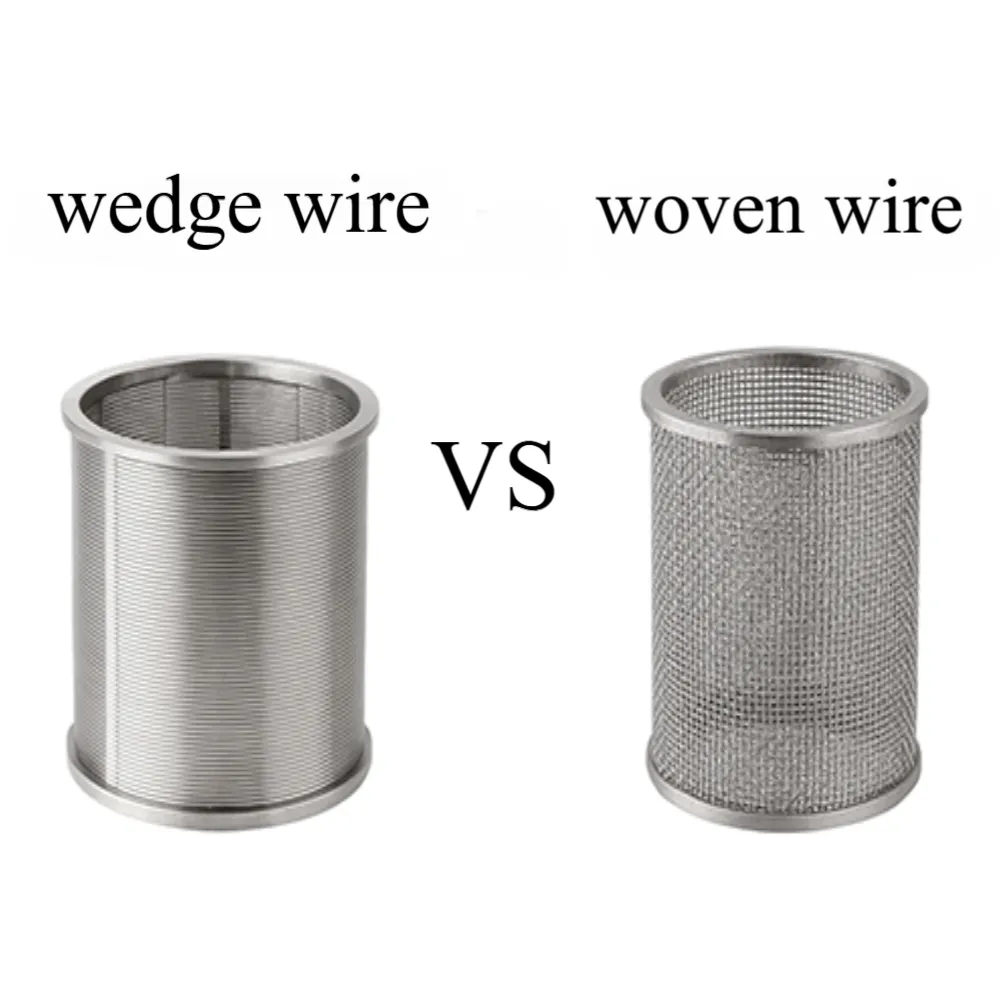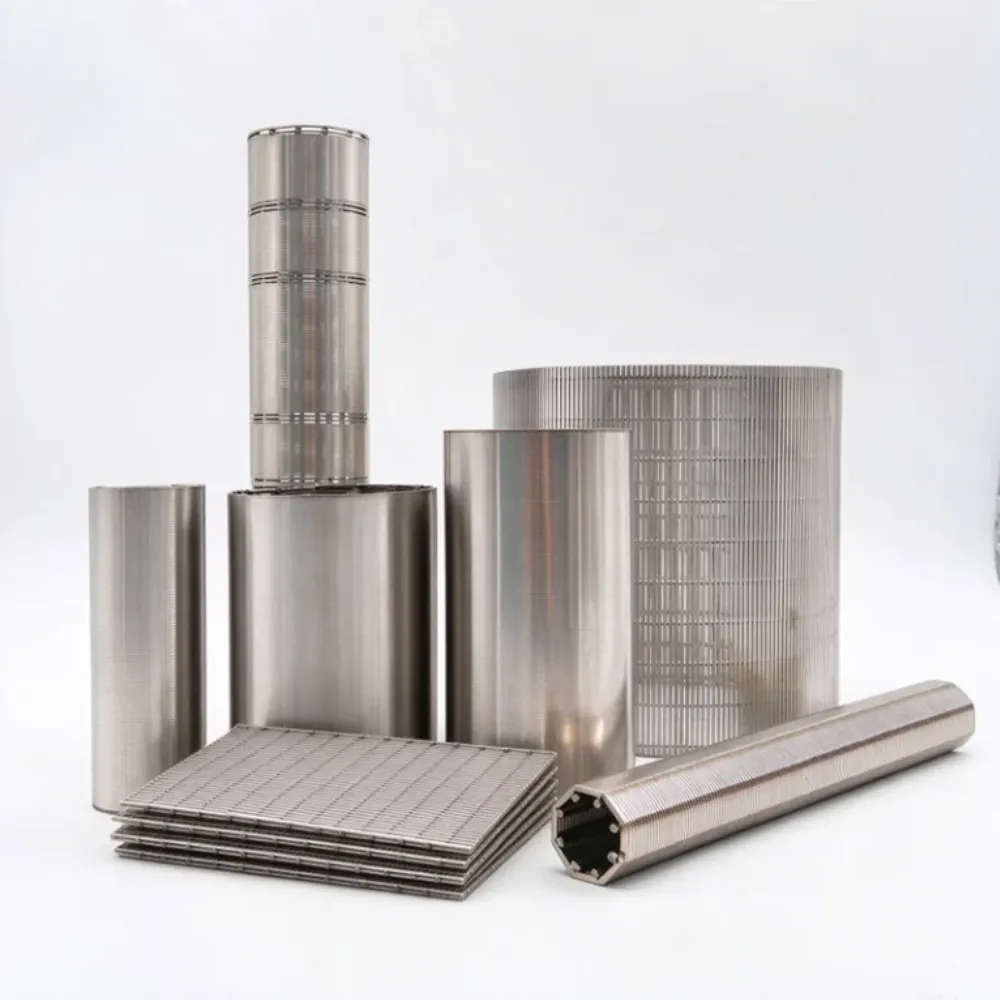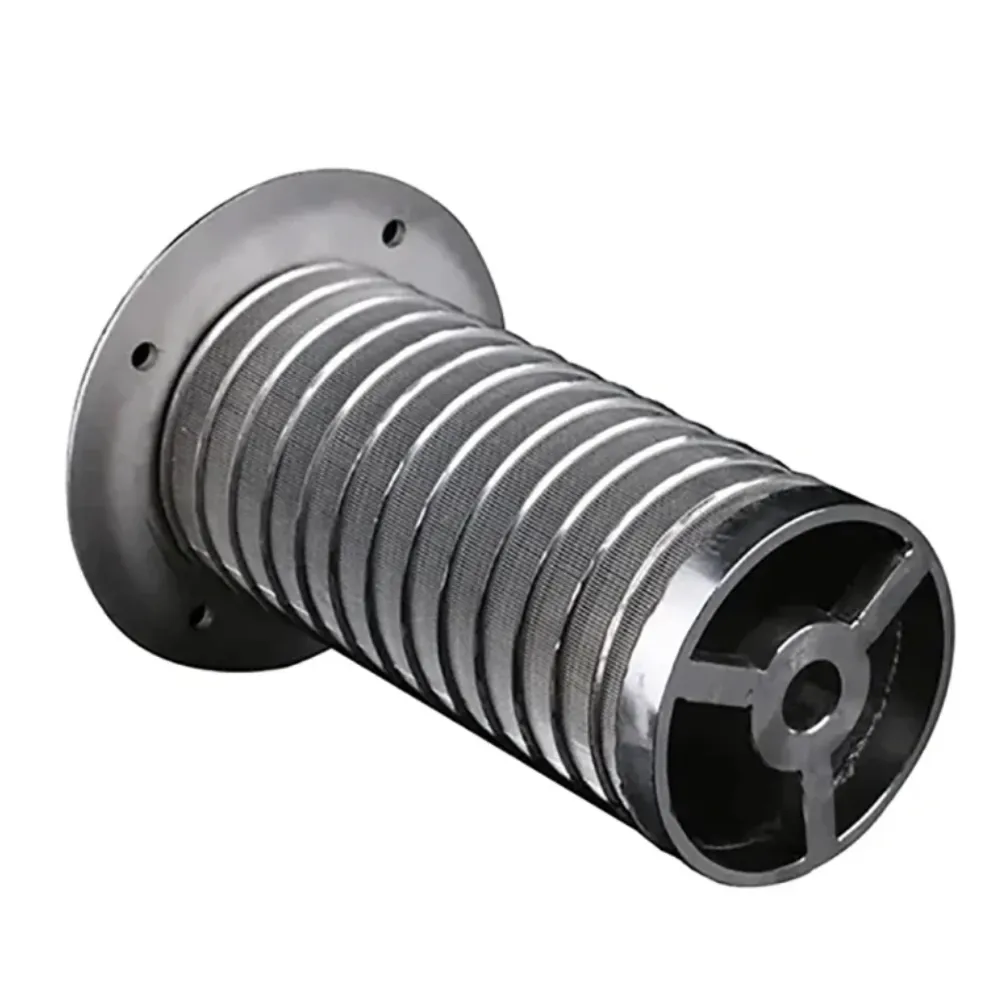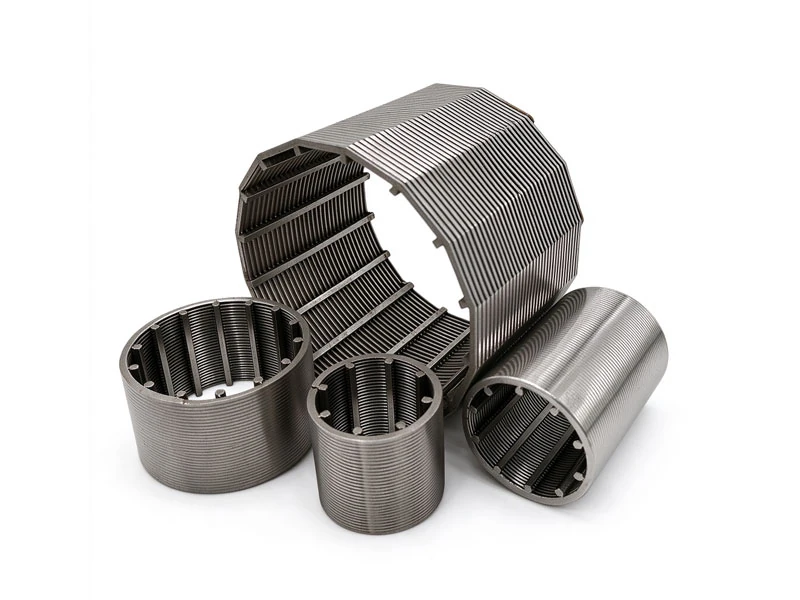
For a regular parallel-wire surface, wedge wire screen open area (%) equals clear slot opening divided by the sum of clear slot opening and wire surface width, multiplied by 100. Use the same units for both inputs and state which surface the percentage describes.
Two screen offers can have the same slot opening yet show different open-area figures. The difference may come from wire width, or the suppliers may be using different area boundaries. You need those details before the figures are useful for comparison.
This guide explains wedge wire screen open area through a worked calculation, a comparison, and an inquiry checklist. You’ll see what the geometry tells you, what it leaves out, and which questions to resolve before approving a screen.
Key takeaways
- Use clear slot and wire width measured at the same screening face.
- Keep surface wire width separate from wire depth and support dimensions.
- Identify the active surface and any excluded regions before comparing percentages.
- A geometric open-area percentage alone does not establish flow capacity.
What wedge wire screen open area measures
Clear slot, surface width, and pitch
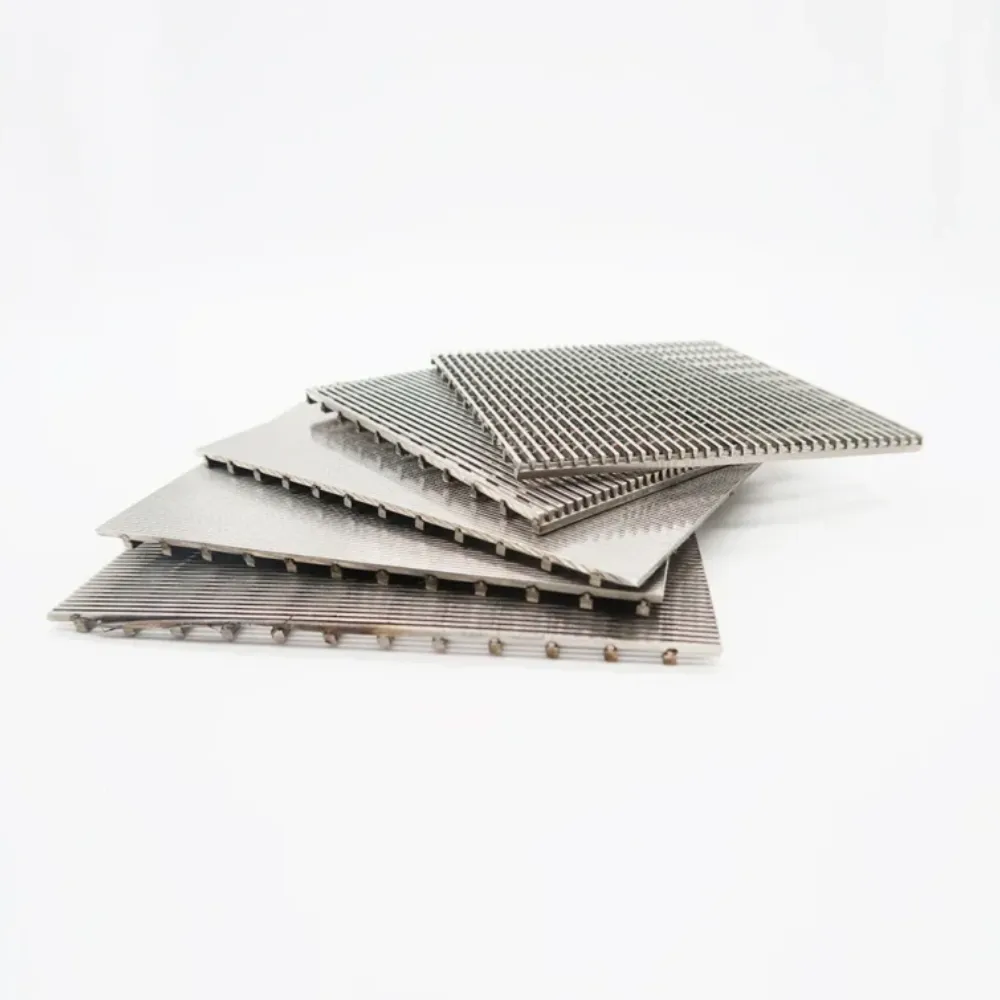
Picture one repeat across a regular screening face: a strip of wire next to a clear slot. The pitch is the combined width of that wire and slot. The open fraction compares the gap with the whole repeat.
Qiusuo’s open-area reference publishes this slot-to-pitch formula. It is a surface geometry relationship. Wire depth and the support layout describe other parts of the construction and do not replace surface wire width in the equation.
For wedge wire screen open area, identify the width at the working face, across the slots. A profile name or its maximum depth does not supply that value. If the drawing lacks the relevant dimension, ask the supplier to identify it rather than guessing from a photograph.
Name the surface being compared
Write down whether your result describes the regular active screening surface or a broader assembly boundary. A frame, solid end section, or fitting can occupy space without belonging to the repeating slot-and-wire pattern.
Our wedge wire screen selection guide puts the screen form and duty in context. Use this article when the task is to check the geometric percentage for a defined surface.
Illustrative scenario: A buyer receives two offers with the same slot. One uses a wider surface wire. Before treating the different percentages as a mistake, the buyer asks for the width and area basis behind each result.
Comparing wedge wire screen open area for a project? Send your drawing and calculation inputs to Tianjin Jingzhou Metal. Include the slot, wire profile, and surface you want the figure to describe.
How to calculate wedge wire screen open area
Confirm units and geometry first
Use this model for a regular surface with uniform, parallel slots and wires. Let s be the clear slot opening and w the wire surface width. Both dimensions must use the same units and refer to the same face.
Theoretical open area (%) = s ÷ (s + w) × 100
Before entering values, check the following:
- Is the slot a clear opening, rather than center-to-center spacing?
- Does the wire width come from the screening face?
- Do both values use the same unit?
- Does the drawing show a regular repeating pattern?
- Have you identified the boundary to which the result applies?
For wedge wire screen open area, keep the input source with the calculation. A value from an approved drawing and a value estimated from a worn part have different bases. Label each accordingly when reviewing wedge wire screen open area.
Follow a worked example
Illustrative calculation: Assume a regular surface with a 0.40 mm clear slot and a 1.60 mm wire surface width. These are hypothetical teaching inputs, not Jingzhou Metal stock dimensions, manufacturing tolerances, or a product recommendation.
| Step | Calculation | Result |
|---|---|---|
| Find pitch | 0.40 mm + 1.60 mm | 2.00 mm |
| Find the open fraction | 0.40 mm ÷ 2.00 mm | 0.20 |
| Express as a percentage | 0.20 × 100 | 20% |
The result means that the gaps occupy 20% of this ideal repeating surface. It does not say that 20% of a complete machine is open, or that the machine delivers a particular flow rate.
For wedge wire screen open area, write the assumptions next to the result. In this example, the calculation describes the uniform face before separate accounting for frames, supports, solid sections, or blocked regions.
Check what the result refers to
A useful wedge wire screen open area note contains more than a final number. Write the slot and surface width, their units, the drawing reference, and the model used. Then name the regions that have not been assessed. Another reviewer should be able to repeat the arithmetic without guessing what you entered.
For a revised proposal, keep the earlier calculation as a separate record. Mark which input changed and why the new value is being considered. If only the drawing revision changes, still check whether the relevant geometry is unchanged. A new file name does not by itself show that an earlier result remains valid.
You can also check the result against the repeating pattern: the gap is part of a pitch that includes both gap and wire. If the entered dimensions are positive, the open fraction must lie between zero and one. A result outside that range calls for an input or arithmetic check, not a performance explanation.
Round the result, not the input history
Keep the supplied input precision through the calculation, then round the displayed answer as appropriate. Record the units and the rounding used. A calculator may show many decimal places. That does not mean the actual geometry was measured that precisely.
When checking wedge wire screen open area against a catalog table, first confirm its wire profile and slot. A rounded table entry may differ slightly from an unrounded calculation. Resolve the basis before assuming either number is wrong.
Compare slot and wire-width changes
Keep the slot fixed to compare wire width
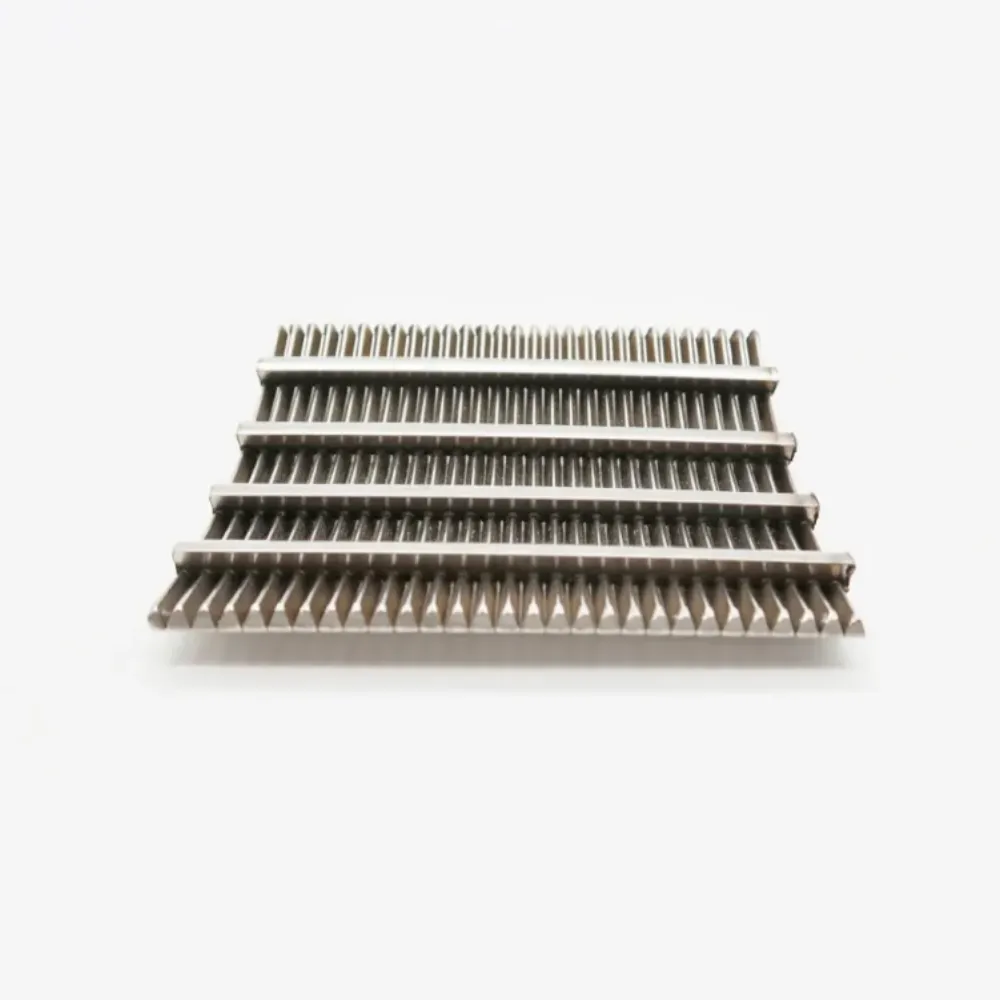
Use the same hypothetical 0.40 mm slot, but change the surface wire width to 1.20 mm. Pitch becomes 1.60 mm, and the theoretical ratio is 0.40 ÷ 1.60 × 100 = 25%.
| Hypothetical surface | Clear slot | Surface wire width | Pitch | Theoretical open area |
|---|---|---|---|---|
| A | 0.40 mm | 1.60 mm | 2.00 mm | 20% |
| B | 0.40 mm | 1.20 mm | 1.60 mm | 25% |
Here, wedge wire screen open area rises by five percentage points. The table describes geometry only. It does not show a five-point increase in separation efficiency or a confirmed increase in usable flow.
A narrower surface wire occupies less of each repeat when the slot stays fixed. That explains the arithmetic, but it does not establish which profile is suitable for a particular load or installation.
Review retention and structure separately
Don’t enlarge the slot just to obtain a higher percentage. Slot selection needs an application basis for what must be retained or allowed to pass. Changing it affects more than the ratio shown in the calculation.
Likewise, don’t select a narrower wire solely to maximize wedge wire screen open area. Give the responsible designer the proposed profile, support layout, span, mounting, and relevant service information. Ask for the actual assembly to be reviewed.
The wedge wire screen product overview is a starting point for discussing available forms. A surface calculation is one input to that discussion, alongside the construction and project requirements.
Hold the comparison basis constant
If slot and wire width both change, record both changes. Otherwise, a reader may attribute the whole difference to the wrong input. Keep dimensions and assumptions visible when comparing wedge wire screen open area.
When evaluating wedge wire screen open area, ask suppliers to use the same reference boundary or explain the difference. Two correct calculations can still be unsuitable for direct comparison when they answer different questions.
Account for supports, frames, and the assembly
Separate active dimensions from overall dimensions
The active screening dimensions identify the patterned surface being considered. Overall dimensions may include a frame, fittings, or solid margins. Show both boundaries on a drawing before converting a percentage into an opening area.
The panel fit and support guide covers panel boundaries in more detail. For cylinders, distinguish active length from total length including end connections. Use the actual form and dimensions rather than applying a flat-panel area assumption to every assembly.
Illustrative scenario: Two panels have the same surface ratio but different active dimensions. The buyer records both the percentage and the reference area. This prevents the matching percentages from hiding a difference in geometric opening area.
For wedge wire screen open area, a percentage without a stated boundary is incomplete information. Ask which dimensions were used and which regions were left out.
Check actual blocked regions
For an ideal, uniform, unobstructed face, multiplying its area by the open fraction gives a geometric opening area. A real assembly may require separate accounting for frames, supports, joints, and solid regions. Use the actual drawing to identify their effect.
Avoid subtracting the same region twice where obstructions overlap. Also avoid applying a general support deduction to every screen. The arrangement needs to be known before a net geometric area can be reviewed.
A short calculation note should identify:
- The surface and drawing revision used.
- The regions included in the reference area.
- Any excluded or blocked regions.
- How overlapping regions were handled.
- What remains unresolved in the assembly review.
This record makes wedge wire screen open area easier to discuss without pretending that one formula describes every feature of the finished part.
Distinguish clean geometry from operating condition
Wedge Wire Works’ slot and open-area guide explains the difference between the surface ratio, assembly restrictions, and flow evaluation. Use that distinction when reviewing a percentage supplied with a quotation.
Fouling and accumulated material concern the operating condition. They are not captured by the two input dimensions in the basic formula. Keep any operating allowance separate and ask for its application-specific basis.
Don’t label an assumed clean condition as an observed in-service condition. For wedge wire screen open area, make clear whether the statement comes from nominal geometry, an assembly calculation, or an inspection of the actual screen.
Why open area is not a flow-capacity rating
Identify the missing process inputs
The basic equation contains no fluid properties, pressure difference, feed condition, or system layout. It cannot establish a usable flow by itself. A capacity claim needs a defined duty and evidence for that task.
Provide the relevant medium, normal duty, other specified design conditions, installation arrangement, and cleaning information. Ask the process or equipment owner which inputs govern the review. Don’t infer those inputs from the screen’s product name.
When discussing wedge wire screen open area, keep the proposed geometry separate from any accepted operating result. This helps reviewers see what has actually been established and what still needs engineering review or testing.
Ask for the basis of a performance claim
If a proposal states a flow or pressure result, ask which conditions and configuration it covers. Check whether the offered screen matches that configuration. A change in supports, active size, or installation may require a new review.
Don’t convert an increase in wedge wire screen open area into the same percentage increase in throughput. Keep the geometric comparison and the process evaluation as distinct records that can be assessed on their own terms.
Check the calculation in a screen inquiry
Compare inputs and exclusions
Ask the supplier to identify the dimensions behind its figure. Record them next to the result, including the drawing revision and whether they are required values or a proposed construction. Leave missing values open for clarification.
| Comparison field | What to record |
|---|---|
| Slot | Clear opening, unit, and source |
| Surface wire | Width at the defined screening face |
| Pattern | Pitch and applicability of the repeating model |
| Reference area | Active boundaries and dimensions |
| Exclusions | Frames, supports, joints, solid or blocked regions |
| Result | Surface percentage or assembly opening area, with units |
| Status | Nominal, proposed, calculated, or measured basis |
| Review | Drawing revision, owner, and open questions |
This is a calculation aid, not a complete purchase specification. Use the screen drawing and RFQ checklist for the wider inquiry package.
Resolve differences before approval
Illustrative scenario: One quote gives a theoretical surface percentage; another reports an assembly opening area. The buyer asks both suppliers to state their boundaries and exclusions before comparing the results. Neither figure is treated as equivalent just because it appears under an “open area” heading.
A useful wedge wire screen open area review identifies the reason for a difference: inputs, units, rounding, reference area, or exclusions. It does not start by choosing whichever percentage looks larger.
Keep the final calculation with the approved drawing and any agreed changes. If the surface wire, slot, or assembly changes, check whether the earlier calculation still applies. Record the new basis for wedge wire screen open area where required.
Open-area FAQ and next step
Which wire width should I use?
Use the width occupied by the working wire at the defined screening face, across the slots. Don’t substitute profile depth, support size, or an unverified nominal profile label. Ask for the relevant drawing dimension when it is missing.
Is higher open area always better?
A higher surface ratio is not a complete design decision. Slot selection, profile and support suitability, mounting, and operating requirements still need review. Compare the whole proposed assembly against the task.
Does the formula include the frame?
The simple slot-and-wire equation describes the regular surface pattern. It does not separately account for a frame or solid end sections. State your reference boundary and review the actual assembly before reporting a net area.
Can I calculate capacity from the percentage?
Not from the percentage alone. Capacity requires application-specific inputs and a suitable evaluation. Wedge wire screen open area is a geometric input, not evidence of a universal flow or pressure rating.
Prepare a clear calculation inquiry
Ready to review wedge wire screen open area for your screen? Send the drawing, slot, wire profile, and duty. Include the area basis already used and mark any dimensions or exclusions that still need confirmation.